Perseid Meteor Shower Dazzles with Over 1,700 Streaks in All-Sky Spectacle
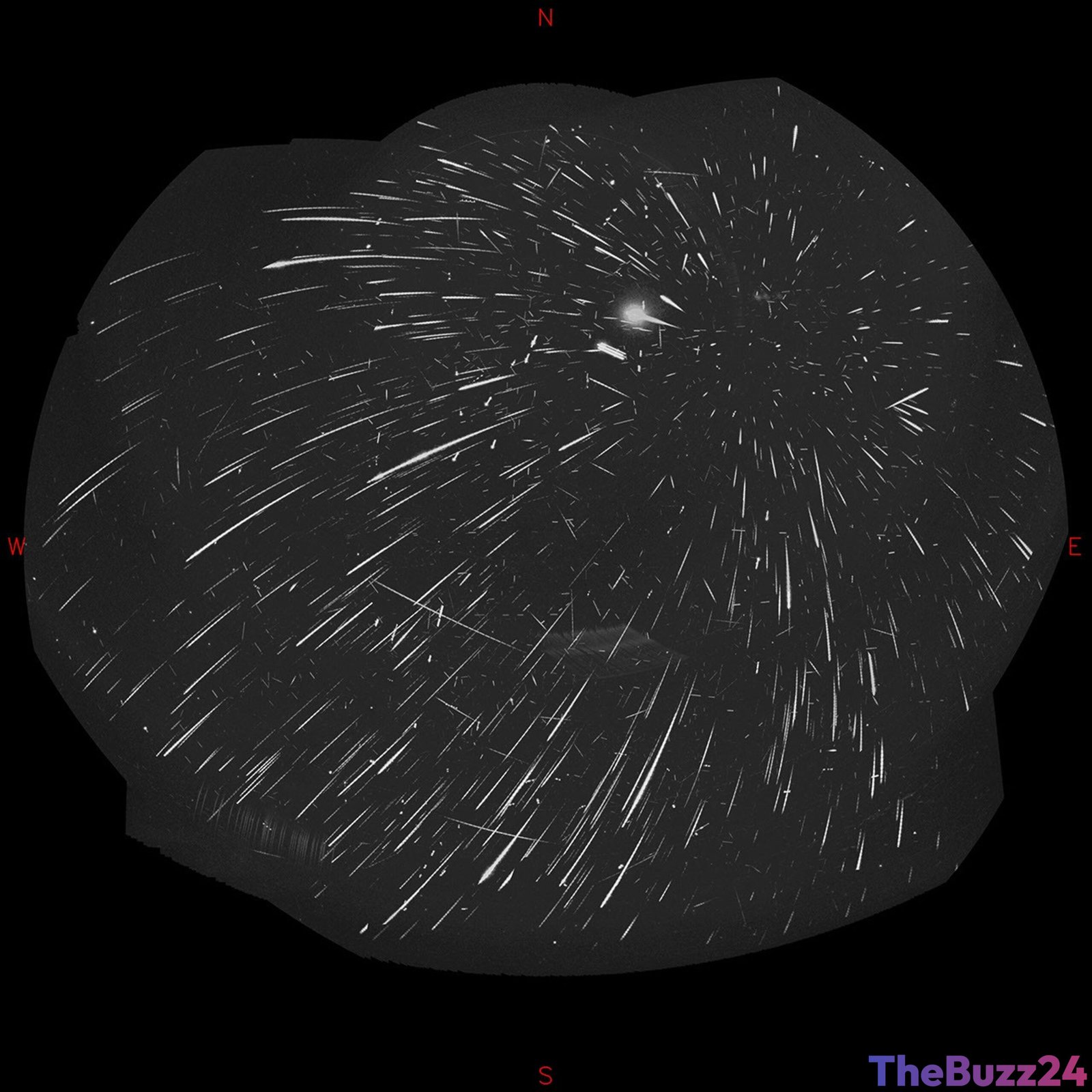
Astronomers captured a breathtaking, all-night, all-sky panorama of the Perseid meteor shower, documenting an astonishing 1,706 meteors on the night of August 12-13, 2026. The stunning composite image was created by combining data from four specialized meteor-monitoring cameras situated at an astronomical observatory in the Czech Republic.
This year’s Perseid shower proved particularly prolific, with the vast majority of the observed streaks identified as Perseids. These meteors are known for their abundance, making them relatively easy to detect. Their trails convincingly converge towards a single point in the sky, known as the radiant, located in the constellation Perseus, which gives the annual shower its name.
While the Perseids dominated the celestial display, the detailed composite image also revealed meteors from other, less active showers. Astronomers were able to identify the radiants of these fainter showers, including the Kappa Cygnids, whose trails were seen crossing the paths of the Perseids. Additionally, a weak source of meteors was identified in the antihelion complex, a region in the sky opposite the Sun, generally located near Aquarius.
The image, a testament to dedicated observation and advanced imaging techniques, offers a comprehensive view of the night sky’s activity during the peak of one of the year’s most anticipated meteor showers. It highlights not only the power of the Perseids but also the subtle contributions of other celestial events.
Key Takeaways
- Over 1,700 meteors were recorded during the peak of the 2026 Perseid meteor shower.
- An all-sky composite image was created using data from four meteor-monitoring cameras in the Czech Republic.
- The display included not only the dominant Perseid meteors but also fainter meteors from other showers like the Kappa Cygnids.
Editor’s Analysis & Impact
The exceptional number of meteors captured during the 2026 Perseid shower highlights the dynamic nature of our solar system and the consistent activity of cometary debris trails. Such detailed, wide-field observations are crucial for understanding meteor shower intensity, composition, and potential impacts on Earth’s atmosphere. The ability to differentiate between various meteor shower sources within a single composite image showcases advancements in astronomical observation technology and data processing. This event serves as a reminder of the predictable yet awe-inspiring celestial phenomena accessible to us, encouraging further public interest in astronomy and space science.
Frequently Asked Questions
Q: What is the Perseid meteor shower?
A: The Perseid meteor shower is an annual event caused by the Earth passing through the debris trail left behind by the comet Swift-Tuttle. These small particles burn up as they enter Earth's atmosphere, creating streaks of light.
Q: When is the best time to view the Perseid meteor shower?
A: The Perseid meteor shower typically peaks around August 12-13 each year. While the shower can be observed for several weeks, the highest number of meteors are usually seen during its peak.
Q: What is a meteor radiant?
A: A meteor radiant is the point in the sky from which meteors in a particular shower appear to originate. For the Perseids, this radiant is located in the constellation Perseus.
AI Disclosure: This article is based on verified data and official reports. Our Team and AI have cross-referenced every financial detail with primary sources to ensure total accuracy.
More from this Category