India’s Airbound Secures $37 Million to Revolutionize Logistics with Rocket-Like Drones
Indian startup Airbound has successfully raised $37 million in a Series A funding round, signaling a significant push to transform goods transportation by making aerial delivery as cost-effective as traditional trucking. The investment, spearheaded by Greenoaks and joined by prominent investors including DoorDash, Lachy Groom, Lightspeed, and Humba Ventures, follows a $8.65 million seed round less than a year ago. This latest infusion brings Airbound’s total funding to nearly $50 million, fueling its ambitious vision for the future of logistics.
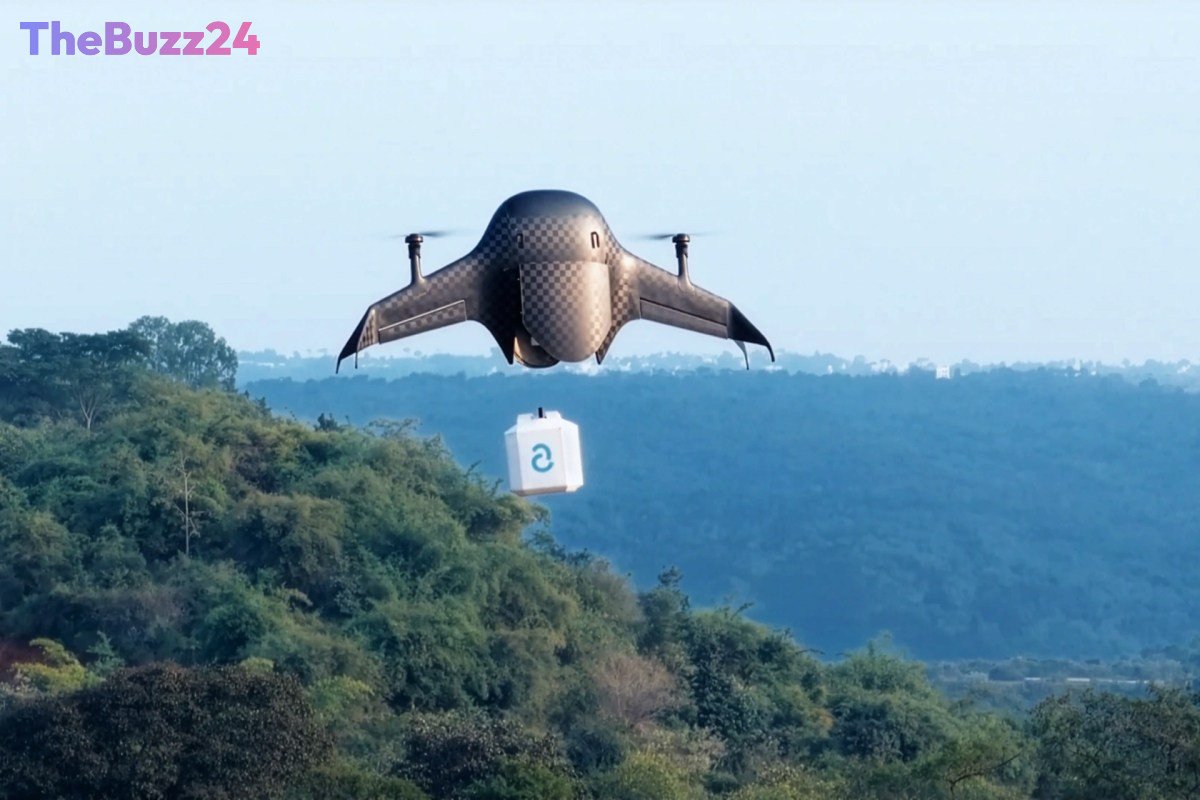
Airbound is challenging the status quo by developing autonomous drones designed to overcome the inherent cost inefficiencies of conventional aircraft, which often expend significant energy simply lifting their own weight. The company’s innovative approach focuses on creating vertical-flight drones that are lighter than the cargo they carry. Founder and CEO Naman Pushp explained that their current TRT drone weighs approximately 3.3 pounds and can transport up to 2.2 pounds. Future iterations are slated to increase this capacity, with a next-generation model expected to weigh around 6.6 pounds and carry up to 11 pounds.
The startup employs a distinctive rocket-like, tail-sitter design, enabling vertical takeoff and landing in an upright position before transitioning to horizontal flight. This design choice is crucial for Airbound’s strategy to avoid reliance on traditional runways, even as they scale up to larger aircraft. Pushp articulated the company’s overarching goal: to achieve cost parity with trucking for all types of deliveries, thereby democratizing aerial logistics.
With a track record of over 13,000 autonomous flights completed across Bengaluru and Guntur, Airbound has already demonstrated its capabilities, notably through a partnership with the Narayana Health hospital network. In this collaboration, drones transport diagnostic samples between healthcare facilities, drastically reducing delivery times from hours to mere minutes. This success is paving the way for expanded services, including supporting new hospitals designed with remote diagnostic capabilities.
Looking ahead, Airbound is embarking on a major initiative to establish a three-city drone delivery network in Andhra Pradesh, backed by an agreement with the state government. The long-term objective is to facilitate up to 10,000 daily flights for retail, e-commerce, and healthcare sectors. While this venture does not involve government subsidies, the state is actively assisting Airbound in navigating the necessary regulatory landscape. The company aims to position itself as a foundational technology provider, akin to Boeing’s role in aviation, enabling other logistics networks to utilize their advanced drone systems.
Key Takeaways
- Indian startup Airbound has raised $37 million in Series A funding to develop cost-effective drone delivery solutions.
- The company's innovative drone design prioritizes lightweight construction to carry heavier payloads, aiming for cost parity with trucking.
- Airbound is expanding its operations with a planned three-city drone network in Andhra Pradesh and a focus on enabling other logistics providers.
Editor’s Analysis & Impact
Airbound’s substantial funding round underscores the growing investor confidence in the potential of drone logistics to disrupt traditional transportation models. By focusing on cost-efficiency and innovative aircraft design, the company is positioning itself to address a significant market gap. The partnership with Narayana Health provides a crucial real-world validation of their technology, particularly in the high-stakes healthcare sector. However, the path forward hinges on overcoming regulatory hurdles, especially for Beyond Visual Line of Sight (BVLOS) operations, which are critical for scaling. If Airbound can successfully navigate these challenges and achieve its ambitious network goals, it could redefine last-mile delivery and set a new standard for aerial logistics in India and beyond.
Frequently Asked Questions
Q: What is Airbound's primary goal?
A: Airbound's primary goal is to make aerial goods transportation as cheap as trucking by road, aiming for cost parity with ground transportation through the development of innovative autonomous drones.
Q: What makes Airbound's drones unique?
A: Airbound's drones feature a rocket-like, tail-sitter design that allows for vertical takeoff and landing. Crucially, they are engineered to be lighter than the cargo they carry, optimizing energy efficiency and reducing operational costs compared to conventional aircraft.
Q: What are the biggest challenges for Airbound?
A: The biggest challenge for Airbound, and the drone delivery sector in general, is securing regulatory approvals, particularly for Beyond Visual Line of Sight (BVLOS) operations, which are essential for large-scale delivery networks. The company is also pre-revenue, indicating a long-term growth strategy.
AI Disclosure: This article is based on verified data and official reports. Our Team and AI have cross-referenced every financial detail with primary sources to ensure total accuracy.
More from this Category