Pakistan’s Emergency Rule in Khan’s Stronghold Sparks Backlash Warnings
Pakistan’s federal government has dramatically escalated its standoff with former Prime Minister Imran Khan’s party by suspending the provincial administration in Khyber Pakhtunkhwa, a region long considered a stronghold of Khan’s Pakistan Tehreek-e-Insaf (PTI) party. This declaration of emergency rule, enacted under constitutional provisions, is officially justified as a measure to protect the populace from terrorism, a claim that has drawn skepticism from various quarters.
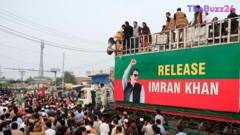
Federal Information Minister Attah Tarrar asserted that the PTI’s provincial government was collaborating with terrorists, though he has yet to provide substantiating evidence. Despite the emergency, daily life in many parts of the province, including Peshawar, saw schools reopen and internet services restored. However, a significant crackdown is evident, with reports of PTI leaders going into hiding and protests, such as those in Bara, Khyber district, being met with tear gas. The timing of this emergency declaration coincides with extensive marches by thousands of Imran Khan’s supporters across Khyber Pakhtunkhwa, demanding his release from prison.
Analysts and commentators, including Farzana Sheikh of Chatham House and journalist Arifa Noor, question the government’s terrorism narrative, suggesting the move is more likely a political maneuver to suppress opposition and weaken Khan’s party. Michael Kugelman, a senior South Asia fellow at the Atlantic Council, notes growing unrest among PTI ranks due to concerns over Khan’s health and prolonged incarceration. This action is widely perceived as an assertion of power by Pakistan’s influential military establishment, which is believed to hold significant sway over the current federal government.
Critics, including Islamabad-based author Zahid Hussain and Michael Kugelman, warn that this aggressive approach risks exacerbating political instability. Pakistan is already grappling with rising militancy, economic challenges, and complex regional dynamics. They argue that taking direct control of a province without a buffer could backfire, fueling public anger and potentially leading to further unrest. Historically, such interventions in Pakistan have often led to unforeseen and negative consequences, raising concerns that this move could deepen the country’s multifaceted crises.
Key Takeaways
- Pakistan's federal government has imposed emergency rule in Khyber Pakhtunkhwa, a stronghold of Imran Khan's PTI party, suspending its provincial government.
- The government cites a terror threat as justification, but critics and analysts widely view the move as a politically motivated attempt to suppress dissent and weaken the opposition.
- Experts warn that this escalation risks increasing political instability in Pakistan, potentially backfiring and exacerbating the country's existing challenges with militancy and economic woes.
Editor’s Analysis & Impact
The imposition of emergency rule in Khyber Pakhtunkhwa represents a significant escalation in Pakistan’s political landscape, signaling a hardening stance against the opposition. This move could deter foreign investment and create short-term market volatility due to heightened uncertainty. The future outlook suggests a deepening of political polarization, making reconciliation efforts more challenging and potentially leading to further suppression of dissent. Broader implications include a reinforcement of the military establishment’s influence over civilian politics. Internationally, this situation raises concerns about human rights, democratic stability, and the potential for increased internal conflict in a nuclear-armed nation already facing economic and security challenges. The risk of public backlash and sustained unrest remains high.
Frequently Asked Questions
Q: What is the primary reason given for the state of emergency in Khyber Pakhtunkhwa?
A: The federal government stated the emergency was necessary to protect the province's population from the threat of terrorism, accusing the suspended PTI provincial government of complicity with militant groups.
Q: How have critics and analysts interpreted this move?
A: Many observers and analysts view the emergency declaration as a politically motivated escalation aimed at suppressing dissent and weakening Imran Khan's party, especially given its timing amidst widespread protests demanding his release.
Q: What are the potential consequences of this emergency rule?
A: Experts warn that the move could exacerbate political instability, fuel public anger, and potentially backfire, leading to increased unrest and further challenges for Pakistan, which is already grappling with rising militancy and economic issues.
AI Disclosure: This article is based on verified data and official reports. Our Team and AI have cross-referenced every financial detail with primary sources to ensure total accuracy.
More from this Category