NASA’s Pandora Mission Embarks on Groundbreaking Exoplanet and Star Study
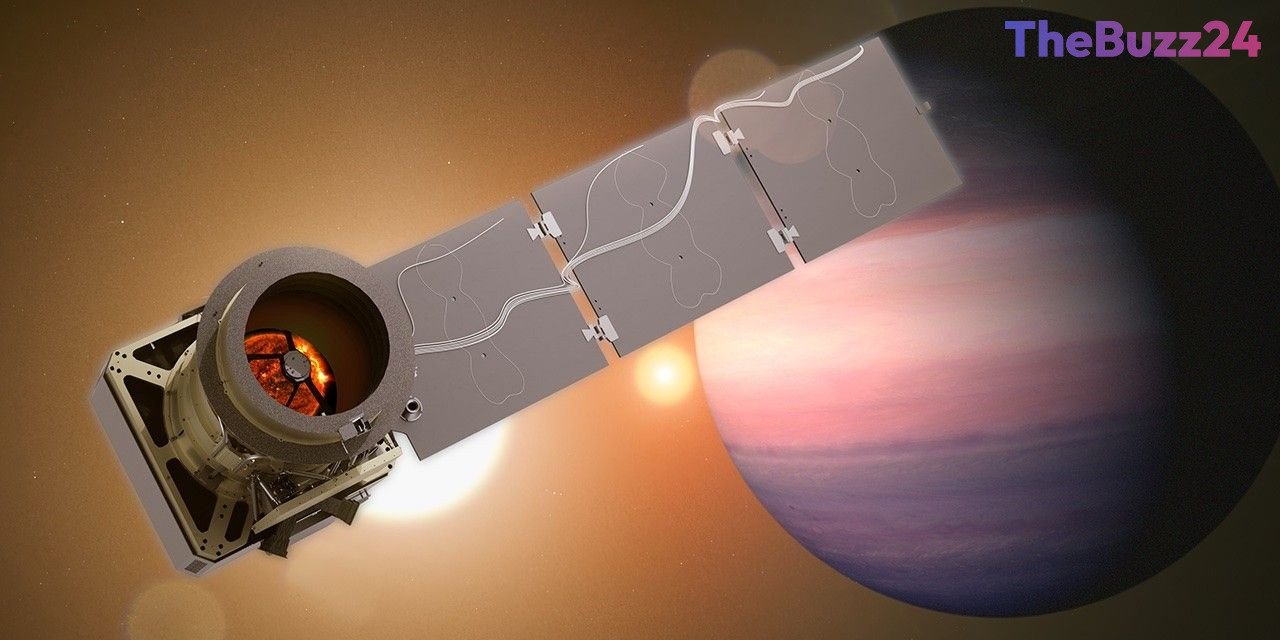
NASA’s innovative Pandora mission has officially commenced its scientific observations, marking a major milestone as the first satellite launched under the agency’s Astrophysics Pioneers program. Designed to investigate worlds beyond our solar system, the mission aims to characterize the atmospheric compositions of at least 20 exoplanets, identifying the presence of water, clouds, and hazes. By simultaneously observing exoplanets and their host stars, the mission addresses a critical blind spot in modern astronomy: separating planetary chemical fingerprints from the disruptive signals of stellar surfaces.
The spacecraft utilizes an 18-inch all-aluminum telescope and dual-detector system to capture visible light and near-infrared spectra concurrently. Unlike large flagship observatories such as the James Webb Space Telescope, which face intense scheduling demands, Pandora is dedicated to prolonged, 24-hour monitoring of specific targets. This extended observation capability allows researchers to untangle stellar activity—such as sunspots and faculae—from atmospheric data gathered during planetary transits, ensuring greater accuracy in exoplanet characterization.
Operating in low Earth orbit, the small satellite paves the way for future astronomical discoveries by providing foundational data that will complement observations from larger telescopes. As the mission progresses through its year-long primary phase, the collected insights will significantly enhance humanity’s understanding of planetary formation and aid in the ongoing search for potentially habitable worlds across the galaxy.
Key Takeaways
- NASA's Pandora mission has officially begun its primary science operations to study at least 20 exoplanets and their host stars.
- The spacecraft is engineered to separate planetary atmospheric signals from stellar surface interferences using simultaneous visible and near-infrared observations.
- As part of the low-cost Astrophysics Pioneers program, Pandora complements larger observatories like the James Webb Space Telescope by providing long-duration, continuous monitoring.
Editor’s Analysis & Impact
The launch and operation of the Pandora mission represent a pivotal shift in how astrophysicists approach exoplanet characterization. By employing a cost-effective, targeted SmallSat approach, space agencies can bridge critical observational gaps that are impractical to tackle with massive, oversubscribed flagship telescopes like the James Webb Space Telescope. The ability to isolate stellar contamination from actual planetary atmospheric signatures is perhaps the single greatest hurdle in modern astrobiology, directly impacting our capability to confirm habitability and detect biosignatures. Success in this mission model could catalyze a wave of similar focused, high-cadence satellite missions, drastically accelerating the pace of discovery in extrasolar planetary science and democratizing deep-space analytical capabilities.
Frequently Asked Questions
Q: What is the primary goal of NASA’s Pandora mission?
A: The primary goal of Pandora is to determine the atmospheric composition of at least 20 exoplanets while accurately separating their chemical signals from the light and surface variations of their host stars.
Q: How does Pandora differ from larger telescopes like the James Webb Space Telescope?
A: Pandora is a smaller, lower-cost satellite designed for extended, continuous observation periods (such as 24-hour stares) on specific targets, an operational luxury that high-demand flagship observatories cannot regularly accommodate.
Q: What makes the Pandora spacecraft's design unique?
A: Pandora is unique because it carries an all-aluminum telescope, studies planets and stars simultaneously in both visible and infrared light, and is optimized for long-duration observation windows to eliminate stellar noise.
AI Disclosure: This article is based on verified data and official reports. Our Team and AI have cross-referenced every financial detail with primary sources to ensure total accuracy.
More from this Category