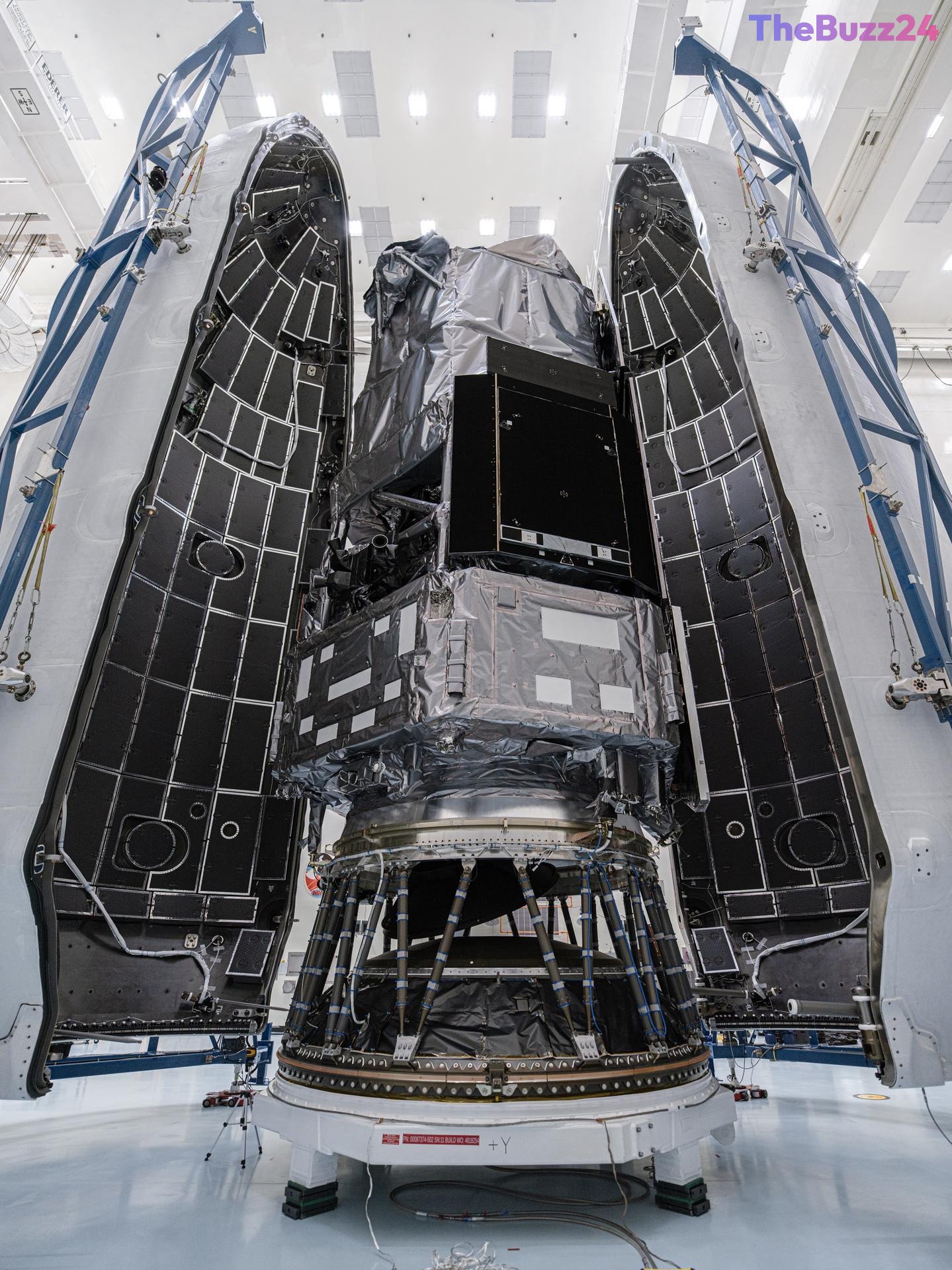
The Nancy Grace Roman Space Telescope: A New Era of Cosmic Discovery
The upcoming launch of the Nancy Grace Roman Space Telescope marks a significant milestone in astrophysics. Scheduled for liftoff on August 30, 2026, from Kennedy Space Center, the mission is named in honor of Dr. Nancy Grace Roman, the pioneering astronomer often referred to as the ‘mother’ of the Hubble Space Telescope. Her legacy of championing space-based observatories continues with this flagship mission, which aims to provide unprecedented insights into the mysteries of dark energy, dark matter, and the distribution of exoplanets throughout the galaxy.
Positioned at the second Sun-Earth Lagrange point (L2), approximately one million miles from Earth, the telescope will operate in a stable environment similar to that of the James Webb Space Telescope. The spacecraft is equipped with two primary instruments: a 300-megapixel Wide Field Instrument, which offers a field of view 100 times larger than Hubble’s while maintaining comparable resolution, and a Coronagraph Instrument designed to directly image planets orbiting distant stars. This technological leap will allow researchers to study giant, colder worlds that have previously remained hidden from view.
Beyond its primary mission, the Roman Space Telescope is designed to function as a collaborative hub within the global astronomical community. By working in tandem with other observatories like Euclid and the Vera C. Rubin Observatory, the mission will provide a comprehensive, multi-layered view of the cosmos. With a primary mission life of five years and the potential for a five-year extension, the telescope is poised to deliver a massive influx of public data, enabling scientists worldwide to conduct simultaneous research on everything from black holes to the outer reaches of our solar system.
Key Takeaways
- The Nancy Grace Roman Space Telescope will utilize a 300-megapixel camera to capture images with 100 times the field of view of the Hubble Space Telescope.
- The mission is specifically designed to investigate dark energy, dark matter, and the direct imaging of exoplanets using advanced coronagraph technology.
- The telescope will be stationed at the L2 Lagrange point, joining other major observatories to create a collaborative, multi-mission approach to deep-space observation.
Editor’s Analysis & Impact
The deployment of the Nancy Grace Roman Space Telescope represents a strategic shift in space observation, moving from targeted, high-resolution snapshots to massive, wide-field surveys. By prioritizing a larger field of view, the mission addresses a critical bottleneck in modern astrophysics: the ability to process vast amounts of cosmic data to identify statistical trends in galaxy formation and dark energy expansion. Economically and scientifically, this mission serves as a vital bridge between current capabilities and future concepts like the Habitable Worlds Observatory. Its ability to provide public, high-quality data will likely accelerate the pace of discovery across the global scientific community, fostering a new era of collaborative research that leverages the combined strengths of ground-based and space-based assets.
Frequently Asked Questions
Q: What is the primary goal of the Nancy Grace Roman Space Telescope?
A: The mission aims to investigate dark energy and dark matter, conduct a statistical census of planetary systems, and provide a broad range of data for general astrophysics research.
Q: How does the Roman Space Telescope differ from the Hubble Space Telescope?
A: While the Roman Space Telescope offers similar angular resolution to Hubble, its Wide Field Instrument provides a field of view at least 100 times larger, allowing it to scan vast swaths of the sky much more efficiently.
AI Disclosure: This article is based on verified data and official reports. Our Team and AI have cross-referenced every financial detail with primary sources to ensure total accuracy.
More from this Category