Tirana Erupts: Anti-Government Protests Escalate into Violent Clashes
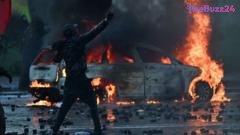
The streets of Tirana have transformed into a volatile battleground as thousands of protesters, led primarily by students, engage in intense confrontations with riot police. Demonstrators, many equipped with protective gear, have utilized petrol bombs, fireworks, and rocks against security forces guarding key government buildings, including the Ministry of Education and the office of Prime Minister Edi Rama. In response, police have deployed water cannons, tear gas, and, according to reports, rubber bullets to disperse the swelling crowds.
What began as student-led demonstrations during the summer has evolved into a broader anti-government movement fueled by widespread allegations of corruption within the administration. Protesters are demanding the resignation of Prime Minister Rama, who has held power for over a decade. The atmosphere in the capital remains tense, with reports of significant property damage, numerous injuries on both sides, and hundreds of arrests as the unrest shows no signs of abating.
Prime Minister Rama has dismissed the protests as the work of opposition political factions and unnamed foreign actors attempting to derail Albania’s path toward European Union membership. However, the administration is simultaneously facing pressure from a series of high-level corruption investigations, including the arrest of the secret service chief. As the political crisis deepens, the government remains under immense scrutiny, with analysts suggesting that the concentration of power has left the Prime Minister uniquely vulnerable to public backlash.
Key Takeaways
- Anti-government protests in Tirana have escalated into violent clashes between students and riot police.
- Demonstrators are calling for the resignation of Prime Minister Edi Rama, citing systemic corruption and long-term political dominance.
- The government is currently facing both civil unrest and internal pressure from high-level corruption investigations involving key officials.
Editor’s Analysis & Impact
The ongoing unrest in Albania represents a critical juncture for the nation’s political stability and its aspirations for European Union integration. By centralizing power over his 13-year tenure, Prime Minister Edi Rama has become the singular focal point for public frustration, making his administration highly susceptible to volatility. The intersection of grassroots student activism and formal legal investigations into his inner circle creates a ‘pincer movement’ that threatens to dismantle his political authority. If the government fails to address the underlying corruption allegations or initiate a credible path toward political reform, the risk of prolonged instability could severely damage Albania’s international standing and delay its EU accession goals. The situation remains fluid, with the potential for further escalation if the administration continues to rely on force rather than dialogue to manage the dissent.
Frequently Asked Questions
Q: What is the primary cause of the protests in Albania?
A: The protests are driven by widespread allegations of corruption within the government, a desire for political change, and frustration with the long-term rule of Prime Minister Edi Rama.
Q: How has the government responded to the demonstrations?
A: The government has utilized riot police to defend key buildings, employing water cannons, tear gas, and rubber bullets to disperse crowds, while the Prime Minister has publicly blamed the opposition and foreign actors for the unrest.
AI Disclosure: This article is based on verified data and official reports. Our Team and AI have cross-referenced every financial detail with primary sources to ensure total accuracy.
More from this Category