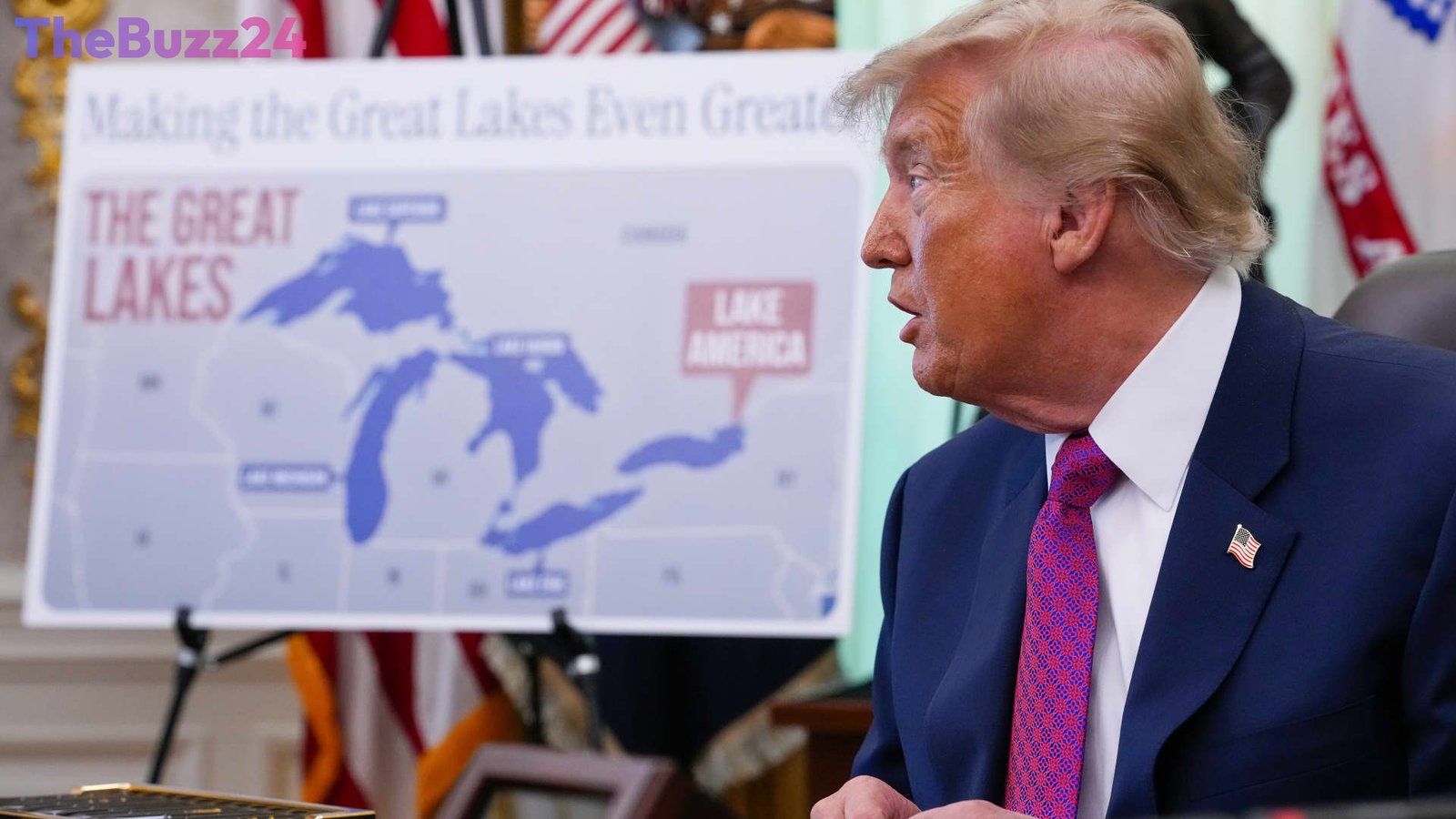
Trump Renames Lake Ontario ‘Lake America’ Amid Escalating Trade Dispute with Canada
President Donald Trump has signed an executive order officially renaming Lake Ontario to “Lake America,” a symbolic move that escalates the ongoing trade tensions between the United States and Canada. The decision comes in the wake of a significant breakdown in bilateral trade negotiations, which has led to the imposition of retaliatory tariffs by both nations and a marked deterioration in diplomatic relations.
This is not the first time the President has attempted to rename a major body of water. Last year, he issued a similar order to rename the Gulf of Mexico as the “Gulf of America.” While the White House directed the Interior Secretary to update official records, Canadian officials have stated they will not recognize the name change, asserting that their country will continue to refer to the lake by its established name. This highlights the potential for differing international perspectives on geographical nomenclature, even when official decrees are issued.
The renaming of Lake Ontario, which forms part of the border between the U.S. and Canada, appears to be a direct response to recent trade actions. Trump has repeatedly accused Canada of unfair trade practices and has expressed frustration over the U.S. trade deficit with its northern neighbor. The imposition of substantial tariffs on Canadian goods by the U.S. was met with reciprocal measures from Canada, further intensifying the dispute. While Canada has since adjusted some of its retaliatory tariffs, the underlying trade conflict remains unresolved.
Critics, including several U.S. governors, have responded with mockery and defiance, suggesting that such symbolic actions do little to address substantive trade issues and may even be counterproductive. The historical name “Lake Ontario” originates from the Iroquoian word “oniatarí:io,” meaning “lake of shining waters,” a name that has been recognized for centuries. The long-term implications of this symbolic renaming on the broader U.S.-Canada relationship and future trade discussions remain to be seen.
Key Takeaways
- President Trump has officially renamed Lake Ontario to 'Lake America' via executive order.
- The renaming is linked to an escalating trade dispute and retaliatory tariffs between the U.S. and Canada.
- Canada has stated it will not recognize the name change, continuing to use 'Lake Ontario'.
Editor’s Analysis & Impact
This symbolic renaming of Lake Ontario by President Trump underscores the heightened tensions in the U.S.-Canada trade relationship. While the name change itself has no direct economic impact, it serves as a potent political statement amidst ongoing tariff disputes. The move highlights a broader trend of using nationalistic rhetoric and symbolic actions to address complex trade imbalances. The international disregard for the new name, particularly from Canada, suggests that such unilateral decrees may have limited practical effect but can further complicate diplomatic efforts. The long-term implications will depend on whether this symbolic escalation leads to further punitive trade measures or if a diplomatic resolution can be found to de-escalate the conflict.
Frequently Asked Questions
Q: Why did President Trump rename Lake Ontario?
A: President Trump stated the renaming was a response to Canada's alleged unfair trade practices and the ongoing trade dispute between the two countries, which has involved retaliatory tariffs.
Q: Will Canada recognize the new name 'Lake America'?
A: No, Canadian officials have explicitly stated that Canada will continue to call the lake 'Lake Ontario' and will not recognize the U.S. executive order.
Q: What is the origin of the name 'Lake Ontario'?
A: The name 'Lake Ontario' originates from the Iroquoian word 'oniatarí:io,' which translates to 'lake of shining waters.'
AI Disclosure: This article is based on verified data and official reports. Our Team and AI have cross-referenced every financial detail with primary sources to ensure total accuracy.
More from this Category