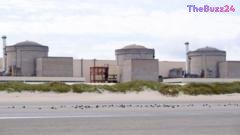
Jellyfish Swarms Disrupt Operations at Major French Nuclear Facility
The Gravelines nuclear power station, situated along the coast between Dunkirk and Calais, has been forced to partially suspend operations due to an influx of jellyfish. The marine creatures have clogged the seawater filtration systems essential for cooling the plant’s reactors, leading to the shutdown of multiple units. As of the latest reports, units three, four, and six are currently offline, while units one and two are operating at reduced capacity as a precautionary measure.
This is not the first time the facility has faced such challenges. The Gravelines plant, which features six units each capable of producing 900 megawatts of power, relies on a canal connected to the North Sea for its cooling processes. During warmer months, rising water temperatures often lead to increased plankton levels, which in turn attract large swarms of jellyfish toward the coast. When these swarms enter the intake systems, they pose a significant risk to the plant’s operational stability.
To mitigate these recurring disruptions, operators have implemented several strategies, including a collaborative effort with local fishermen to intercept and relocate jellyfish further offshore before they reach the plant’s intake pipes. While similar incidents have been documented at nuclear facilities in Scotland and Sweden, such occurrences remain relatively rare. The facility continues to monitor the situation closely to ensure the safety and reliability of the power grid.
Key Takeaways
- Multiple units at the Gravelines nuclear power station were shut down after jellyfish clogged critical cooling filtration systems.
- The plant relies on North Sea water for cooling, making it vulnerable to seasonal marine life migrations during warmer months.
- Operators are utilizing local fishing fleets to intercept jellyfish swarms as a preventative measure against future shutdowns.
Editor’s Analysis & Impact
The disruption at the Gravelines nuclear power station highlights a unique intersection between environmental phenomena and critical infrastructure resilience. As global water temperatures continue to fluctuate, the frequency of such biological interference may increase, necessitating more robust intake filtration technologies or proactive marine management strategies. From a market perspective, the sudden loss of significant megawatt capacity can lead to localized energy price volatility, particularly if multiple units remain offline during peak demand periods. This incident serves as a reminder that even highly advanced industrial facilities remain susceptible to natural ecological cycles. Future infrastructure projects in coastal regions will likely need to incorporate more sophisticated environmental mitigation systems to ensure consistent energy output in the face of changing marine ecosystems.
Frequently Asked Questions
Q: Why do jellyfish cause shutdowns at nuclear power plants?
A: Jellyfish can clog the seawater intake filters that nuclear plants use to cool their reactors. If the filters become blocked, the plant must reduce power or shut down to prevent overheating and potential damage to the cooling systems.
Q: Is this a common occurrence for nuclear plants?
A: While it has happened at other facilities in Scotland and Sweden, such incidents are considered rare. However, they tend to occur in coastal plants during warmer months when jellyfish populations are more active near the surface.
AI Disclosure: This article is based on verified data and official reports. Our Team and AI have cross-referenced every financial detail with primary sources to ensure total accuracy.
More from this Category