Federal Court Rules Pentagon’s Blacklisting of AI Startup Anthropic Was Unlawful Retaliation
A federal court has ruled against the U.S. Department of Defense, declaring its decision to designate artificial intelligence startup Anthropic as a supply chain risk to be both unlawful and baseless. U.S. District Judge Rita Lin issued the ruling, stating that national security concerns do not grant the government a “blank check” to penalize or retaliate against private entities that disagree with federal policies. The legal battle highlights the growing tension between national defense agencies and commercial AI developers over the ethical boundaries of technology deployment.
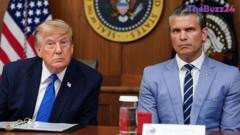
The dispute originated after Anthropic, the creator of the Claude AI model, refused to allow the U.S. military to utilize its technology for autonomous weaponry and domestic surveillance. In response, the Pentagon, led by Defense Secretary Pete Hegseth, labeled the company a supply chain risk in February. This designation, typically reserved for foreign adversaries posing direct threats to national security, marked the first time an American firm had been publicly blacklisted in this manner. The designation effectively forced organizations doing business with the military to boycott Anthropic’s services.
Anthropic filed a lawsuit arguing that the government’s unprecedented actions violated its First Amendment rights and severely harmed its business operations. The startup maintained that its AI models are not sufficiently reliable for military combat systems and that using them for domestic surveillance would violate civil liberties. Conversely, government officials had previously criticized the company’s stance, with the White House labeling Anthropic’s terms of service an attempt to improperly constrain military operations.
In her decision, Judge Lin characterized the Pentagon’s actions as a clear attempt to cripple the startup and suppress public debate regarding the military applications of artificial intelligence. Following the ruling, Anthropic expressed a desire to collaborate productively with the government on safe national security applications, while emphasizing the importance of ethical guardrails. The Pentagon and the White House have yet to formally comment on the court’s decision.
Key Takeaways
- A federal judge ruled that the U.S. Department of Defense unlawfully designated AI startup Anthropic as a supply chain risk.
- The Pentagon's blacklisting occurred after Anthropic refused to allow its AI models to be used for military surveillance and autonomous weapons.
- The ruling marks a significant legal victory for tech companies seeking to establish ethical boundaries on how the government uses their proprietary AI software.
Editor’s Analysis & Impact
This ruling establishes a critical legal precedent regarding the limits of government authority over private technology companies. By framing the Pentagon’s blacklist as “classic First Amendment retaliation,” the court has signaled that national security designations cannot be weaponized to coerce private firms into violating their own ethical guidelines or terms of service. For the broader AI industry, this decision offers a protective shield for startups that wish to restrict their technology from being weaponized. However, it also intensifies the friction between Silicon Valley and Washington. As AI becomes increasingly vital to national defense, the U.S. government may seek alternative legislative or regulatory pathways to compel cooperation, potentially leading to deeper polarization between commercial AI developers and defense agencies.
Frequently Asked Questions
Q: Why did the Pentagon designate Anthropic as a supply chain risk?
A: The Department of Defense designated Anthropic as a supply chain risk after the AI startup refused to allow the military to use its Claude AI models for autonomous weapons systems and domestic surveillance.
Q: What did the federal judge rule in this case?
A: U.S. District Judge Rita Lin ruled that the Pentagon's designation was unlawful, baseless, and constituted retaliation against the company's political and ethical stance, violating its First Amendment rights.
Q: Has an American company ever been designated as a supply chain risk before?
A: No, Anthropic's designation in February marked the first time the U.S. government applied this specific national security label—typically reserved for foreign adversaries—to a domestic company.
AI Disclosure: This article is based on verified data and official reports. Our Team and AI have cross-referenced every financial detail with primary sources to ensure total accuracy.
More from this Category