Into the Dark: NASA’s Roman Space Telescope Launches on SpaceX Falcon Heavy to Map the Universe
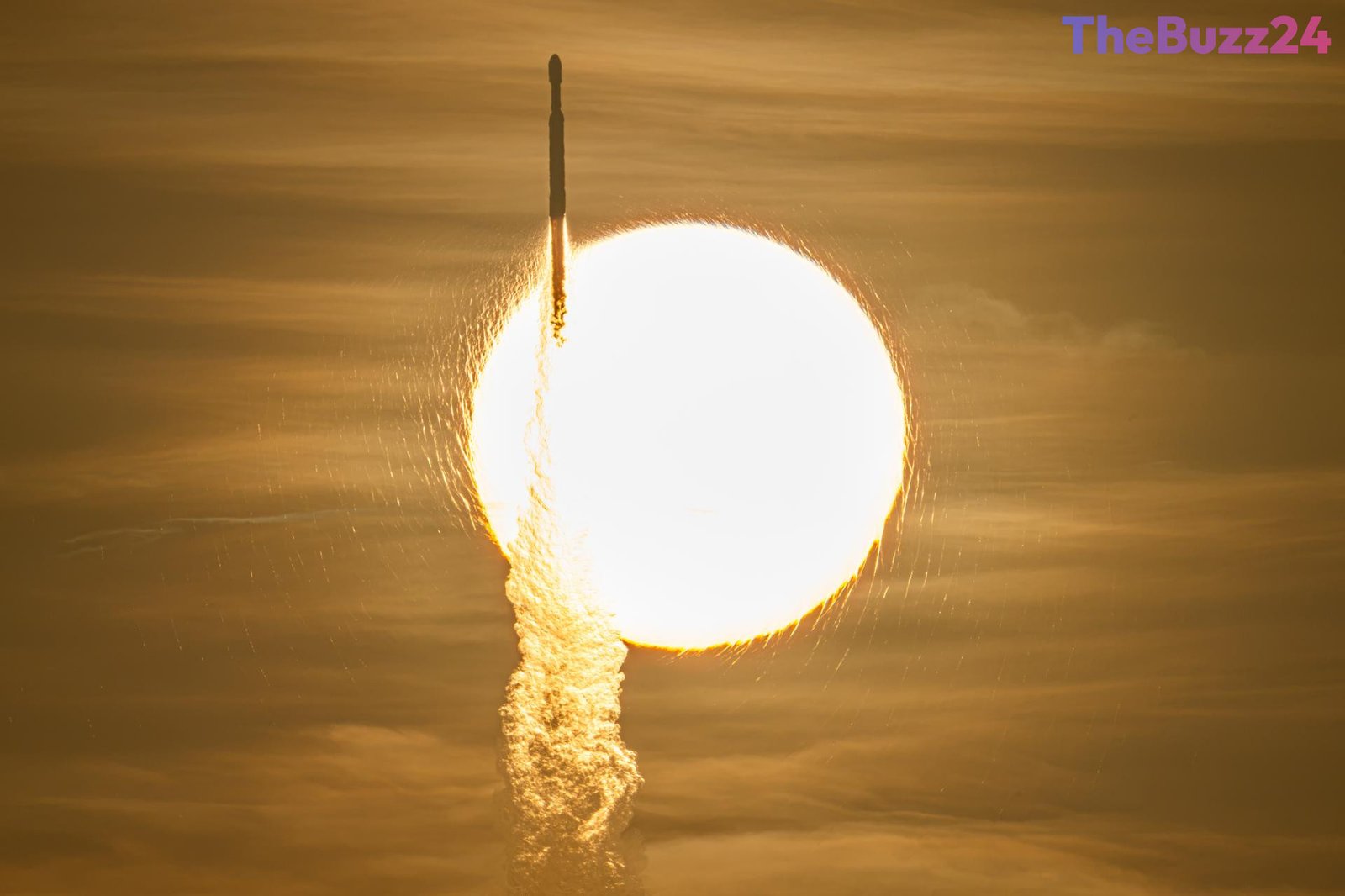
On August 30, 2026, a SpaceX Falcon Heavy rocket successfully lifted off from Launch Complex 39A at NASA’s Kennedy Space Center in Florida, carrying the Nancy Grace Roman Space Telescope into orbit. The state-of-the-art observatory has embarked on a three-month, million-mile journey toward its final destination at the second Sun-Earth Lagrange point (L2). Ground controllers at the Goddard Space Flight Center in Maryland successfully established telemetry contact shortly after launch, confirming that the spacecraft’s solar arrays and initial sunshades deployed flawlessly.
Designed to explore the deepest mysteries of the cosmos, the Roman Space Telescope combines a massive field of view with highly sensitive infrared imaging. This allows it to scan the skies up to a thousand times faster than the legacy Hubble Space Telescope. Its primary scientific objectives include mapping the distribution of dark matter, investigating the accelerating expansion of the universe driven by dark energy, and cataloging exoplanets. The observatory features a 300-megapixel Wide Field Instrument and a cutting-edge Coronagraph Instrument, the latter of which will test technologies crucial for future missions aiming to photograph Earth-like worlds.
The mission represents a major milestone for space exploration, having been delivered ahead of schedule and within its projected budget. This achievement was made possible through a collaborative effort involving international space agencies, including ESA and JAXA, alongside key industrial partners like BAE Systems and L3Harris Technologies. Once fully operational in early 2027, the telescope is expected to transmit an unprecedented 1.4 terabytes of data daily. To process this massive influx of information, scientists plan to leverage artificial intelligence, machine learning, and citizen science initiatives to accelerate discoveries.
Key Takeaways
- The Nancy Grace Roman Space Telescope successfully launched aboard a SpaceX Falcon Heavy rocket, heading to the L2 Lagrange point one million miles from Earth.
- Equipped with a 300-megapixel infrared camera, the telescope can survey the cosmos 1,000 times faster than the Hubble Space Telescope.
- The mission will generate 1.4 terabytes of data daily, utilizing artificial intelligence and machine learning to help astronomers study dark energy, dark matter, and exoplanets.
Editor’s Analysis & Impact
The successful launch of the Nancy Grace Roman Space Telescope marks a pivotal shift in observational astronomy, transitioning from targeted deep-field views to massive, high-speed cosmic surveys. By delivering the project ahead of schedule and on budget, NASA and its commercial partner SpaceX have demonstrated that complex, flagship-class space missions can be executed with high efficiency. The sheer volume of data Roman will generate—1.4 terabytes daily—will push the boundaries of data science, necessitating advanced AI and machine learning pipelines to process the imagery. Furthermore, the technology demonstration of its Coronagraph Instrument will lay the groundwork for future direct-imaging missions targeting habitable exoplanets. Ultimately, Roman’s broad-survey capabilities will complement the targeted observations of the James Webb Space Telescope, providing a comprehensive, multi-layered atlas of our universe.
Frequently Asked Questions
Q: What is the primary goal of the Nancy Grace Roman Space Telescope?
A: The telescope is designed to study dark energy, dark matter, cosmic structure, and to discover and characterize exoplanets far beyond our solar system.
Q: How does the Roman Space Telescope compare to the Hubble Space Telescope?
A: While maintaining similar image resolution to Hubble, the Roman Space Telescope features a field of view that is 100 times larger, allowing it to map the sky up to 1,000 times faster.
Q: When will the first images from the telescope be released?
A: Following a three-month journey and a comprehensive commissioning and calibration period, the first scientific images are expected to be released in early 2027.
AI Disclosure: This article is based on verified data and official reports. Our Team and AI have cross-referenced every financial detail with primary sources to ensure total accuracy.
More from this Category