NASA Expands Deep Space Network with Completion of Advanced DSS-23 Antenna at Goldstone
NASA has officially expanded its deep space communication capabilities with the completion of Deep Space Station 23 (DSS-23), a state-of-the-art 34-meter (114-foot) beam-waveguide antenna. Located at the Goldstone Deep Space Communications Complex near Barstow, California, the newly minted antenna was inaugurated during a ceremonial ribbon-cutting event attended by leadership, personnel, and dignitaries. This addition marks a significant milestone in modernizing the infrastructure required to communicate with distant spacecraft exploring the solar system and beyond.
The DSS-23 antenna is the latest installation under the Deep Space Network’s (DSN) Aperture Enhancement Project. Initiated in 2009, this long-term modernization initiative aims to upgrade and expand the network’s global capacity by constructing six new 34-meter multifrequency beam-waveguide antennas. These highly versatile dishes are designed to support multiple space missions simultaneously, operating across various radio frequencies to ensure seamless data transmission, tracking, and command capabilities.
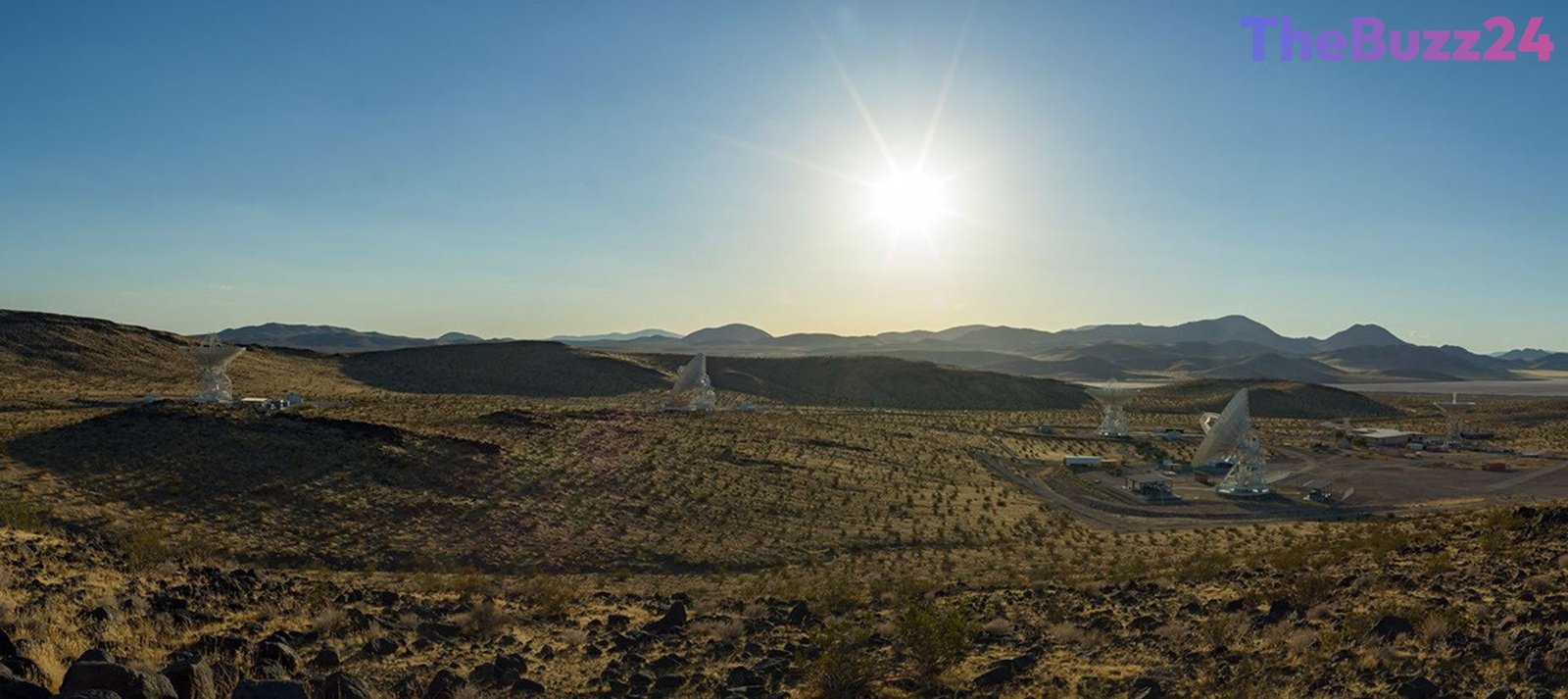
In a stunning panoramic view of the Goldstone complex, DSS-23 stands alongside several other active 34-meter antennas, including DSS-24, DSS-25, and DSS-26. The site also features a piece of spaceflight history: the retired 26-meter (85-foot) “Apollo Antenna.” Originally built in 1967 as part of the Manned Space Flight Network, this historic dish earned its nickname by providing critical tracking support during the historic Apollo lunar missions, bridging the gap between early space exploration and the cutting-edge technology of today.
The Deep Space Network is a critical lifeline for interplanetary exploration, enabling scientists to receive invaluable scientific data and send commands to spacecraft billions of miles away. The network is managed by the Jet Propulsion Laboratory (JPL) in Southern California on behalf of NASA’s Space Communications and Navigation (SCaN) Program. As humanity prepares for more ambitious missions to the Moon, Mars, and deep space, the enhanced capabilities at Goldstone will play a pivotal role in securing the future of cosmic discovery.
Key Takeaways
- NASA has completed the construction of Deep Space Station 23 (DSS-23), a new 34-meter beam-waveguide antenna at the Goldstone complex in California.
- The project is part of the DSN's Aperture Enhancement Project, a modernization effort launched in 2009 to add six advanced multifrequency antennas to the network.
- The Goldstone complex blends cutting-edge modern technology with space history, housing both the new DSS-23 and the retired 1967 'Apollo Antenna' used during the lunar landing era.
Editor’s Analysis & Impact
The completion of DSS-23 highlights the growing demand for robust space communications infrastructure as both government agencies and private aerospace companies ramp up deep space exploration. With ambitious programs like Artemis aiming for sustained lunar presence and eventual crewed missions to Mars, the volume of data transmitted back to Earth is set to grow exponentially. Upgrading the Deep Space Network is not just a technical necessity; it is a strategic imperative. By transitioning to versatile, multifrequency beam-waveguide antennas, NASA is mitigating the risk of communication bottlenecks. This expansion ensures that future high-bandwidth scientific data, including high-definition imagery and complex telemetry, can be transmitted reliably. Furthermore, this infrastructure will likely support international partnerships and commercial space ventures, reinforcing the global space economy’s foundational communication pipeline.
Frequently Asked Questions
Q: What is the primary purpose of NASA's Deep Space Network (DSN)?
A: The Deep Space Network is a global network of massive radio antennas that allows scientists to track, send commands to, and receive scientific data from robotic and crewed spacecraft exploring deep space.
Q: What makes the new DSS-23 antenna different from older models?
A: DSS-23 is a 34-meter multifrequency beam-waveguide antenna. This design is highly versatile, allowing it to support multiple missions operating on different radio frequencies, thereby increasing the overall efficiency and capacity of the network.
Q: Where is the Goldstone complex located, and who manages it?
A: The Goldstone complex is located near Barstow, California. It is managed by NASA's Jet Propulsion Laboratory (JPL) in Southern California under the agency's Space Communications and Navigation (SCaN) Program.
AI Disclosure: This article is based on verified data and official reports. Our Team and AI have cross-referenced every financial detail with primary sources to ensure total accuracy.
More from this Category