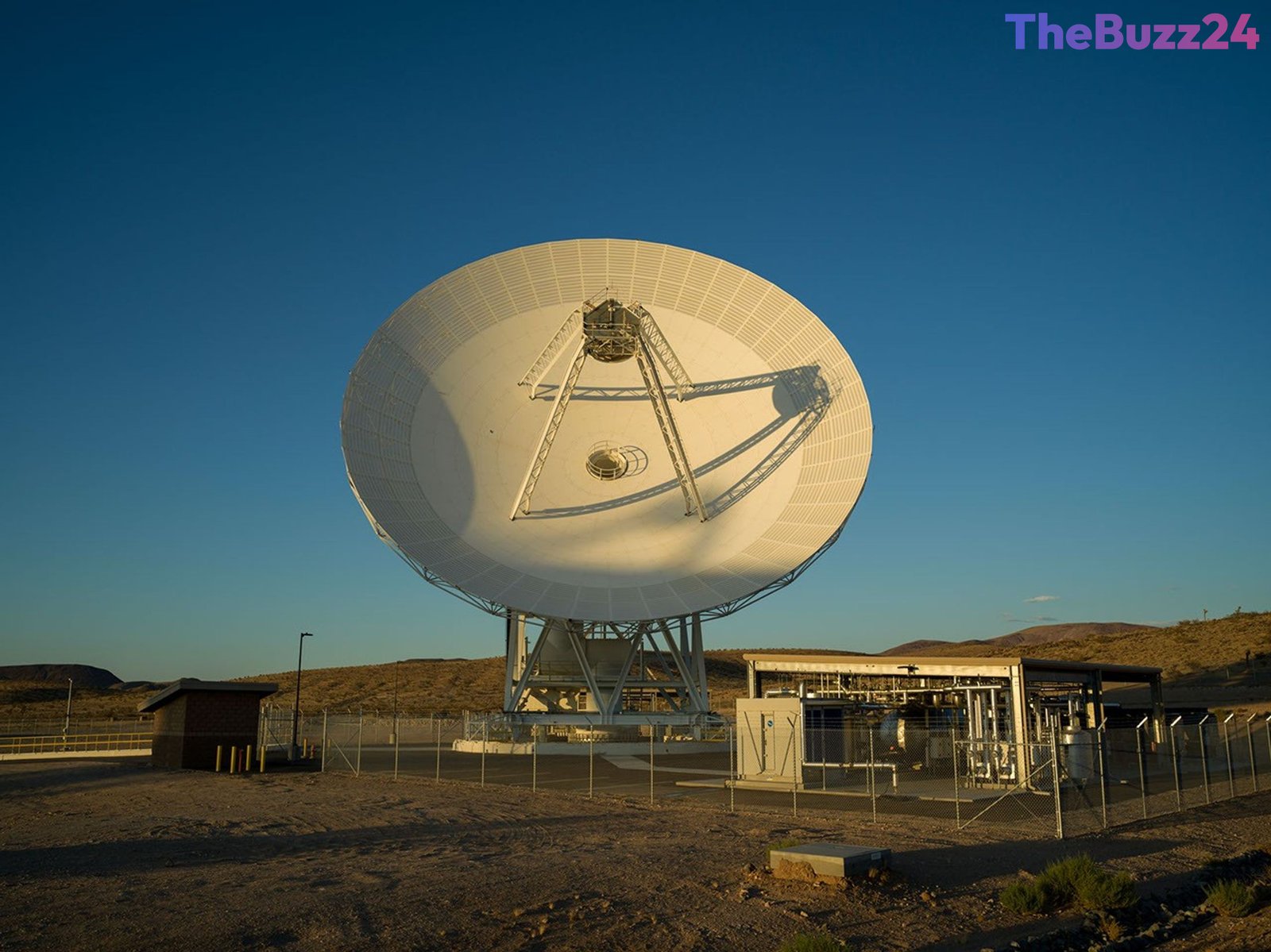
NASA Expands Deep Space Network with New Goldstone Antenna
NASA has officially brought its newest deep space communications antenna online at the Goldstone complex near Barstow, California. Designated as Deep Space Station 23 (DSS-23), the 34-meter multifrequency beam-waveguide antenna marks a major milestone in upgrading the agency’s communication capabilities for upcoming interplanetary missions.
A formal ribbon-cutting ceremony took place on August 25, 2026, bringing together leadership, personnel, and dignitaries to celebrate the completion of the structure. The addition of DSS-23 is a crucial step in the ongoing Deep Space Network Aperture Enhancement Project, a multi-year initiative launched in 2009 to expand network capacity through the construction of six new 34-meter antennas.
The versatile design of the new dish allows it to operate across various radio frequencies, supporting a wide array of spacecraft simultaneously. Managed by the Jet Propulsion Laboratory for NASA’s Space Communications and Navigation Program, the Deep Space Network remains the vital backbone for tracking, commanding, and downloading scientific data from distant space exploration missions.
Key Takeaways
- NASA has officially activated the new Deep Space Station 23 (DSS-23) antenna at the Goldstone complex in California.
- The 34-meter multifrequency beam-waveguide antenna is part of the long-running Aperture Enhancement Project initiated in 2009.
- The upgraded infrastructure significantly boosts NASA's capacity to track, command, and receive data from distant spacecraft.
Editor’s Analysis & Impact
The activation of Deep Space Station 23 represents a critical infrastructural upgrade as humanity enters a new era of deep space exploration. With an increasing number of lunar, Martian, and deep space missions planned for the coming decades, existing communication networks face unprecedented strain. Expanding the Deep Space Network not only mitigates the risk of bandwidth bottlenecks but also ensures higher data return rates for complex scientific instruments. As private spaceflight and international lunar ambitions accelerate, robust deep space communication assets will be the linchpin of mission success, dictating how much scientific insight and telemetry data can be reliably transmitted back to Earth.
Frequently Asked Questions
Q: What is the primary function of Deep Space Station 23?
A: DSS-23 is designed to track, send commands to, and receive scientific data from spacecraft operating far out in deep space.
Q: Where is the new antenna located?
A: The antenna is located at the Deep Space Network's Goldstone complex near Barstow, California.
Q: What project is the new antenna a part of?
A: DSS-23 is part of the Deep Space Network's Aperture Enhancement Project, which aims to add six new 34-meter multifrequency beam-waveguide antennas to the network.
AI Disclosure: This article is based on verified data and official reports. Our Team and AI have cross-referenced every financial detail with primary sources to ensure total accuracy.
More from this Category