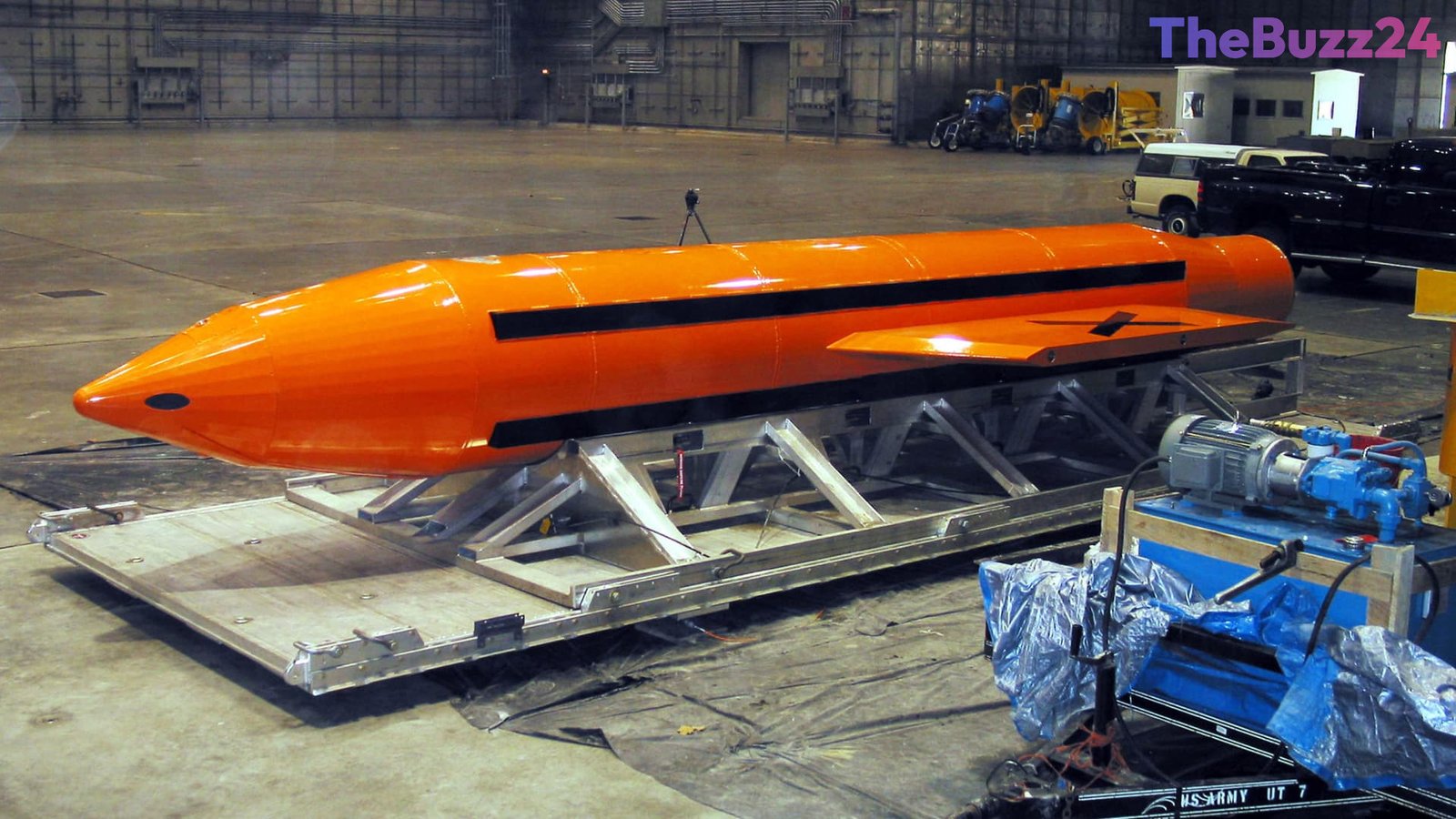
US Considers Deployment of Massive Ordnance Air Blast Bomb Amid Rising Middle East Tensions
Defense planners in the United States are actively evaluating the potential deployment of the GBU-43/B Massive Ordnance Air Blast, widely known as the ‘mother of all bombs,’ should military engagements inside Iran resume. The 21,600-pound conventional weapon, engineered to devastate extensive surface areas, remains an option under review as regional friction intensifies following maritime disruptions in the Strait of Hormuz and escalating conflict involving Iran-backed factions in Saudi Arabia.
While the administration previously indicated a temporary pause on military offensives ahead of the upcoming midterm elections, mounting geopolitical pressures and soaring domestic energy costs have kept the strategic spotlight firmly on the Middle East. Intelligence indicates that Tehran is actively fortifying its critical nuclear and energy infrastructure in anticipation of potential renewed strikes. Meanwhile, Iranian leadership has adopted a dual-track strategy combining defensive military readiness with diplomatic maneuvering.
Iranian Parliament Speaker Mohammad Bagher Ghalibaf recently emphasized that Tehran intends to leverage both military capabilities and negotiations to achieve its core objectives. Among these demands are the complete removal of regional U.S. military forces, the termination of economic sanctions, and the lifting of ongoing naval blockades. As both nations posture for potential escalation, the risk of a broader regional conflict continues to loom large over international markets and global energy supplies.
Key Takeaways
- The U.S. military has drafted potential strike options involving the GBU-43/B Massive Ordnance Air Blast bomb against targets in Iran.
- Tensions have sharply escalated following attacks in the Strait of Hormuz and Saudi Arabia, alongside domestic pressure on the White House.
- Iran has signaled a strategy combining defensive military posture and strategic negotiations to push for the removal of sanctions and U.S. forces.
Editor’s Analysis & Impact
The potential use of the GBU-43/B Massive Ordnance Air Blast bomb marks a significant escalation in strategic posture, signaling to international markets that a return to active military engagement remains a distinct possibility. Beyond the immediate geopolitical risks, the friction in vital trade corridors like the Strait of Hormuz directly threatens global energy supplies, stoking inflation and heightening volatility across commodity markets. As energy prices respond dynamically to these developments, domestic political pressures within the U.S. create a narrow window for policy decisions ahead of upcoming elections. Looking forward, the interplay between hardline military signaling and backchannel negotiations will likely dictate whether the region descends into prolonged conflict or reaches a fragile diplomatic stalemate, with profound implications for global trade, oil futures, and international security frameworks.
Frequently Asked Questions
Q: What is the GBU-43/B Massive Ordnance Air Blast?
A: Often referred to as the 'mother of all bombs,' the GBU-43/B is a massive, 21,600-pound conventional air-burst weapon designed to target surface structures and subterranean facilities over a wide area.
Q: What are Iran's primary demands amid the current tensions?
A: Iranian officials have demanded that Washington lift economic sanctions, end naval blockades, and withdraw U.S. military forces from the region.
Q: How are regional tensions affecting global markets?
A: Ongoing disruptions in key shipping lanes like the Strait of Hormuz have contributed to soaring energy prices and broader cost pressures felt by consumers globally.
AI Disclosure: This article is based on verified data and official reports. Our Team and AI have cross-referenced every financial detail with primary sources to ensure total accuracy.
More from this Category