Greenland’s Resilient Ice Island Defies Expectations After Major Calving Event
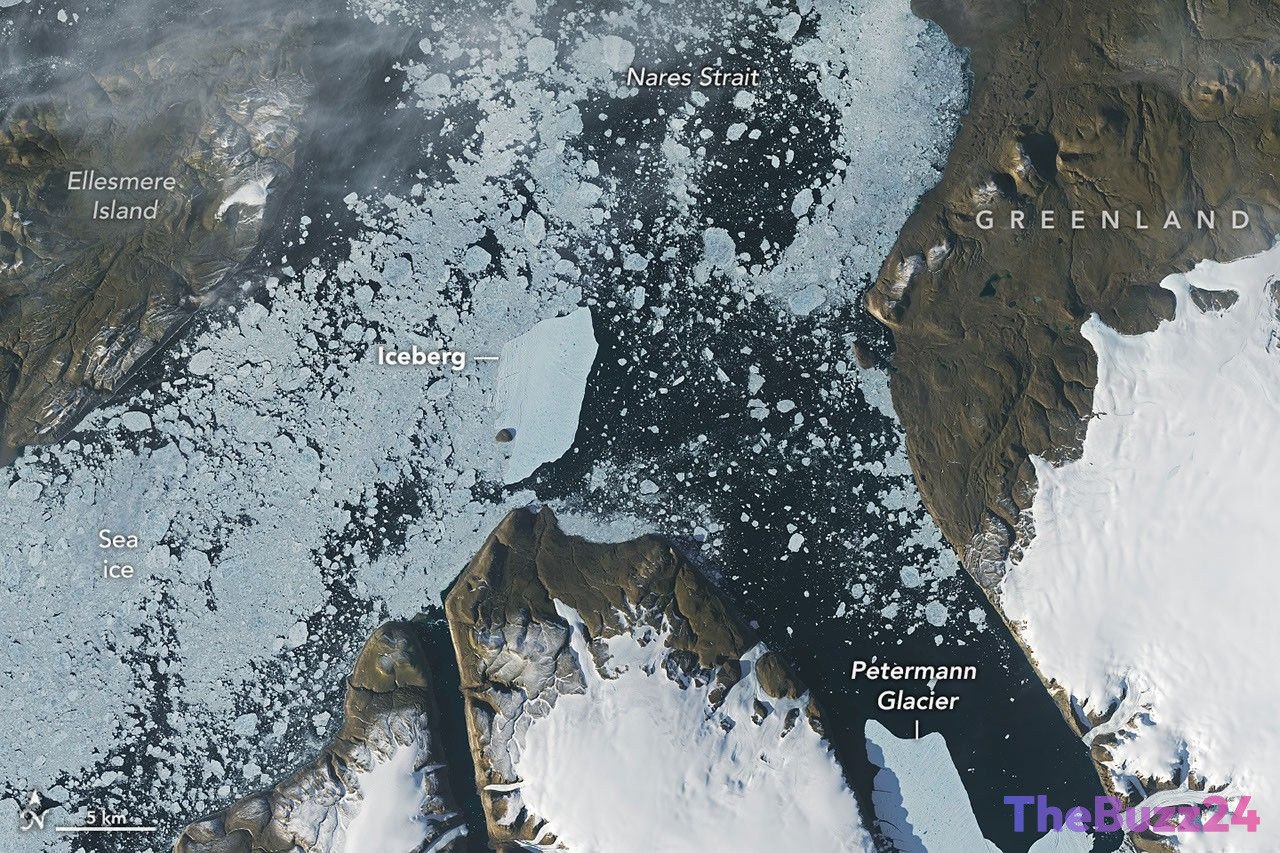
A colossal iceberg, roughly the size of St. Thomas in the U.S. Virgin Islands, recently calved from Greenland’s Petermann Glacier, marking the largest such event in the Arctic since 2020. This significant detachment occurred in August 2026, drawing the attention of glaciologists worldwide who closely monitor the region for signs of glacial instability and its broader implications for global sea levels.
The massive tabular iceberg, initially measuring just over 76 square kilometers (29 square miles), was first identified on August 4 by Adam Garbo, a doctoral student in glaciology at the University of Ottawa, utilizing imagery from the Sentinel-1 mission. Petermann Glacier is one of Greenland’s largest marine-terminating glaciers, acting as a crucial gatekeeper for ice flowing from the vast ice sheet into the ocean. While iceberg calving is a natural part of a glacier’s life cycle, the scale and frequency of these events are vital indicators for scientists studying climate change. Researchers noted that this particular calving followed an unexpected fracture pattern, producing a slightly smaller ice island than initially anticipated, though two other large rifts remain, poised to potentially release more substantial ice masses in the future.
Following its separation, the ice island embarked on a journey down Petermann Fjord towards Nares Strait, drifting an average of three kilometers per day. Glaciologist Mauri Pelto of Nichols College tracked its progress using satellite imagery from Landsat 9. During its transit, the berg encountered Joe Island (Joe Ø), a small rocky outcrop situated at the fjord’s mouth, notorious for causing icebergs to fragment. Despite the fragility of Petermann bergs compared to those from other glaciers, this ice island remarkably survived the collision without breaking apart, a development that surprised observing scientists.
The resilient ice island has since pivoted away from Joe Island and is continuing its southwest trajectory through Nares Strait. As it progresses, the combined forces of tides, winds, currents, and melting are expected to gradually weaken and fracture it into smaller pieces. Such ice islands and their fragments are known to travel considerable distances, posing potential hazards to marine activities and infrastructure, while also introducing significant amounts of freshwater into the ocean as they melt.
Key Takeaways
- A massive iceberg, over 76 square kilometers, calved from Greenland's Petermann Glacier in August 2026, marking the largest Arctic calving event since 2020.
- The ice island surprisingly withstood a collision with Joe Island, a rocky outcrop known for breaking up icebergs, as it drifted through Nares Strait.
- Scientists are closely monitoring Petermann Glacier due to its critical role in regulating ice flow from the Greenland ice sheet and its implications for global sea level rise.
Editor’s Analysis & Impact
The calving of such a significant ice island from Petermann Glacier underscores the dynamic and evolving nature of the Arctic’s ice sheets. While a natural process, the scale and monitoring of these events provide critical data for understanding climate change’s impact on polar regions. The unexpected survival of this iceberg after colliding with Joe Island highlights the complex and sometimes unpredictable behavior of these massive ice formations. In the long term, continued large-scale calving from glaciers like Petermann contributes to global sea level rise and can alter ocean currents and ecosystems by introducing vast amounts of freshwater. This event reinforces the urgency for ongoing research into glacial stability and its broader environmental implications.
Frequently Asked Questions
Q: What is an "ice island"?
A: An ice island is a large, tabular iceberg, typically formed when a significant piece of ice breaks off from an ice shelf or glacier. They are often flatter and more expansive than typical icebergs, resembling a floating island.
Q: Why is Petermann Glacier important to monitor?
A: Petermann Glacier is one of Greenland's largest marine-terminating glaciers, meaning it flows directly into the ocean. Its stability is crucial because it acts as a gatekeeper for a substantial portion of the Greenland ice sheet. Significant ice loss from Petermann Glacier has direct implications for global sea level rise.
Q: What are the potential hazards posed by large icebergs or ice islands?
A: Large icebergs and ice islands can pose significant hazards to marine navigation, shipping lanes, and offshore infrastructure like oil rigs or communication cables. As they melt, they also introduce large volumes of freshwater into the ocean, which can influence ocean currents and local marine ecosystems.
AI Disclosure: This article is based on verified data and official reports. Our Team and AI have cross-referenced every financial detail with primary sources to ensure total accuracy.
More from this Category