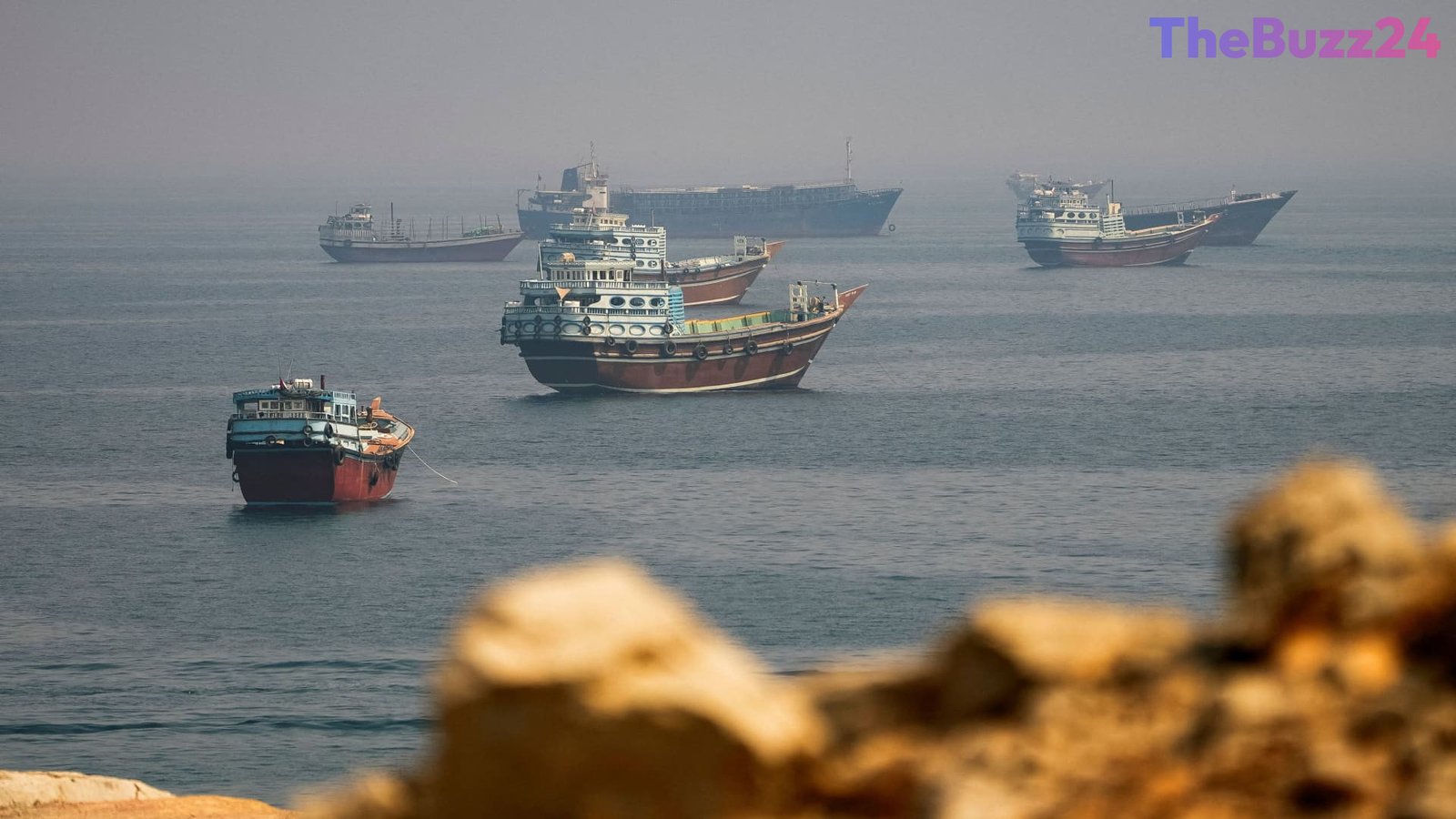
Strait of Hormuz Clashes Ignite Oil Price Surge as U.S. and Iran Trade Direct Blows
Tensions in the Middle East have escalated rapidly following a series of direct military exchanges between the United States and Iran, sending shockwaves through global energy markets. On Monday, a commercial tanker transiting eastbound through the critical Strait of Hormuz was struck by three unidentified projectiles near the Omani coast. Simultaneously, Iran’s Islamic Revolutionary Guard Corps reported the interception of a U.S. MQ-9 drone over the eastern portion of the strait. These incidents have reignited fears of supply disruptions in one of the world’s most vital maritime choke points.
The latest flare-up began over the weekend when American forces targeted two Iranian rocket launchers on Larak Island, a strategic outpost used by Tehran to monitor and control vessel traffic. U.S. officials stated the pre-emptive strike, which reportedly killed three, was executed to prevent Iran from deploying sea mines into the shipping lanes. In retaliation, Iranian forces launched strikes against two American military bases in Jordan on Monday. This back-and-forth represents the first direct exchange of military blows between the two nations in over a month, prompting President Donald Trump to warn of severe consequences and assert that the U.S. is prepared to “hit them hard” in response to further aggression.
Despite the aggressive rhetoric, diplomatic avenues remain tentatively open. Speaking at the Shanghai Cooperation Organisation Summit, Iranian President Masoud Pezeshkian indicated that Tehran would immediately return to its commitments under the June interim agreement if Washington agreed to do the same. However, the U.S. administration continues to ramp up economic pressure through stringent secondary sanctions designed to choke off Iran’s oil revenues. Treasury Secretary Scott Bessent noted that these economic measures are severely impacting Iran’s financial systems, suggesting that the recent military actions are a kinetic reaction to mounting economic distress.
Global markets reacted swiftly to the heightened geopolitical risks. Brent crude futures climbed 1.6% to reach $91.90 a barrel, while U.S. West Texas Intermediate (WTI) futures rose 2% to settle at $87.48 per barrel. Market analysts suggest that while neither Washington nor Tehran appears to actively seek a full-scale war, the situation remains highly volatile. The U.S. strategy appears focused on enforcing maritime blockades and degrading Iran’s capability to disrupt shipping, but the ongoing conflict, now in its seventh month, continues to pose a significant threat to global trade stability.
Key Takeaways
- Direct military strikes between the U.S. and Iran, including a strike on Larak Island and retaliatory attacks on U.S. bases in Jordan, have broken a month-long lull in hostilities.
- Global oil benchmarks Brent crude and WTI surged by up to 2% following a projectile attack on a tanker and the downing of a U.S. drone in the Strait of Hormuz.
- Iranian President Pezeshkian offered a return to the June interim deal if the U.S. complies, even as Washington intensifies economic pressure through secondary sanctions.
Editor’s Analysis & Impact
The sudden escalation in the Strait of Hormuz underscores the fragile state of global energy security. By targeting Larak Island, the U.S. has signaled a zero-tolerance policy toward maritime mining threats, effectively enforcing a blockade to protect commercial shipping. However, this tactical assertiveness carries significant risks. While the U.S. aims to contain the conflict by targeting specific military assets rather than broader infrastructure, Iran’s retaliatory strikes in Jordan demonstrate its willingness to push back despite severe economic strain from secondary sanctions. For energy markets, the premium on crude oil will likely remain elevated as long as the threat of supply disruptions persists in the Hormuz choke point. Investors should brace for continued volatility, as the Trump administration’s unpredictable foreign policy and Tehran’s economic desperation create a highly volatile environment where miscalculations could easily trigger a broader regional conflict.
Frequently Asked Questions
Q: Why is the Strait of Hormuz so important to the global economy?
A: The Strait of Hormuz is the world's most critical oil transit choke point, linking Middle East petroleum producers with major markets worldwide. Approximately a fifth of the world's liquid petroleum consumption passes through this narrow waterway daily.
Q: What triggered the latest round of military strikes between the U.S. and Iran?
A: Hostilities resumed after U.S. forces struck Iranian rocket launchers on Larak Island to prevent the deployment of sea mines. Iran retaliated by targeting two U.S. military bases in Jordan, marking their first direct military exchange in over a month.
Q: What is the status of diplomatic relations between the two nations?
A: While military tensions are high, Iranian President Masoud Pezeshkian has offered to immediately return to the terms of a June interim agreement if the U.S. reciprocates. However, the U.S. continues to apply heavy economic pressure through secondary sanctions.
AI Disclosure: This article is based on verified data and official reports. Our Team and AI have cross-referenced every financial detail with primary sources to ensure total accuracy.
More from this Category