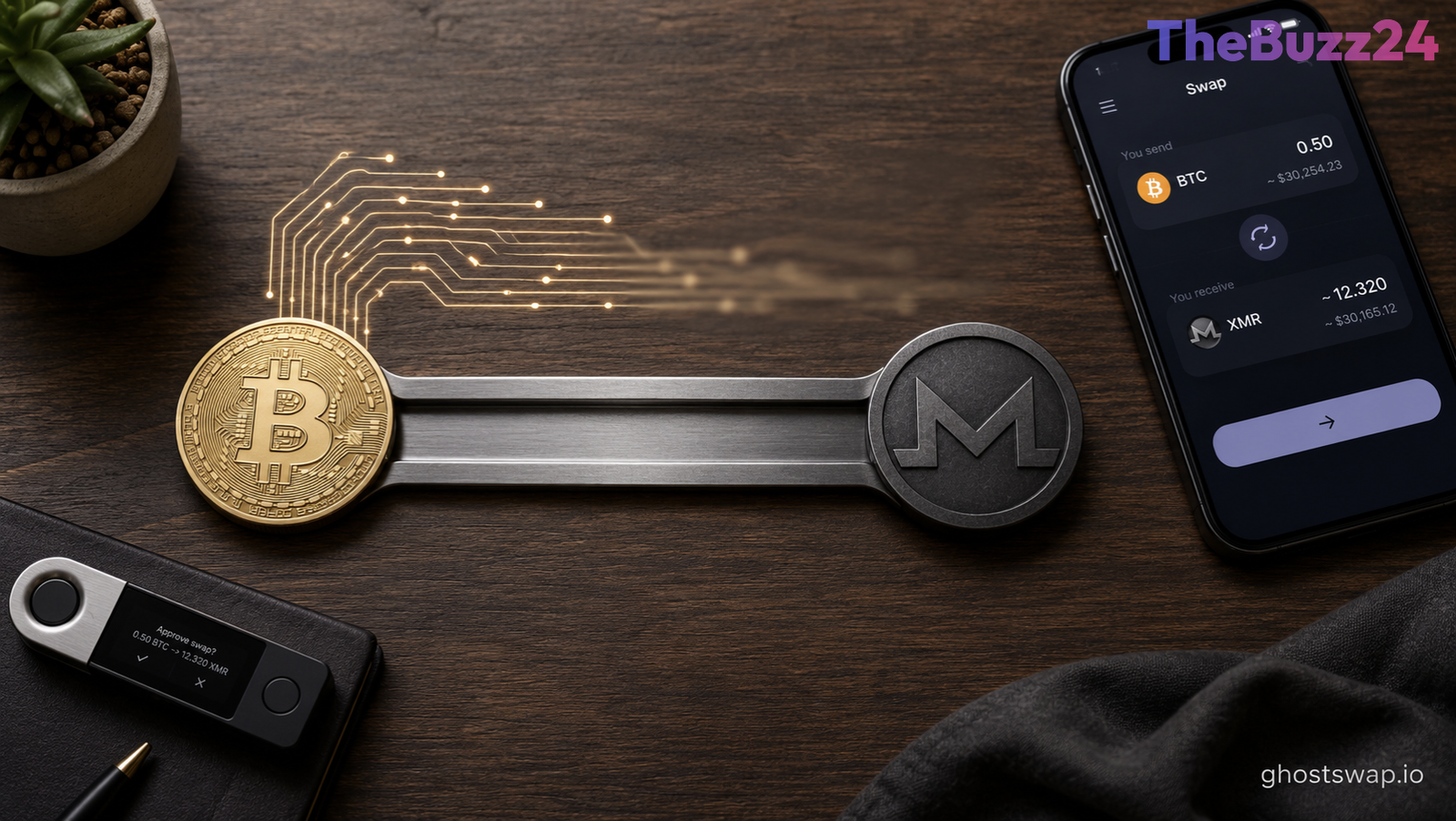
Navigating the Shift: A Comprehensive Guide to Swapping Bitcoin for Monero
Bitcoin operates on a transparent, public ledger where every transaction, address, and balance history can be traced. While this transparency is foundational to Bitcoin’s decentralized consensus, it leaves users’ financial histories exposed to public scrutiny. In contrast, Monero is designed specifically for privacy, utilizing advanced cryptographic techniques like ring signatures, stealth addresses, and confidential transactions to obscure the sender, receiver, and transaction amount by default. Consequently, swapping Bitcoin for Monero has become a common practice for users looking to transition from a public asset to a highly private one.
When executing a cryptocurrency swap, users must choose between custodial and non-custodial pathways. Custodial exchanges require users to deposit their funds, create accounts, and undergo identity verification (KYC) processes, meaning the exchange holds custody of the assets during the trade. However, many traditional custodial platforms have delisted Monero due to regulatory pressures. On the other hand, non-custodial swap services, such as GhostSwap, allow users to execute trades directly without creating an account or relinquishing control of their private keys. In a non-custodial setup, Bitcoin is sent to a temporary deposit address, and the equivalent Monero is delivered directly to the user’s specified wallet.
A typical non-custodial swap is straightforward and generally takes under ten minutes once the initial deposit is confirmed. Users select their trading pair, input their destination Monero address, and provide a Bitcoin refund address in case the transaction fails. They must also choose between a floating rate, which settles at the current market price, or a fixed rate, which locks in the exchange rate for a small premium—a choice highly recommended for larger transactions. It is crucial to distinguish between service fees and network transaction fees, as high network congestion on the Bitcoin blockchain can sometimes make smaller swaps economically impractical.
While non-custodial swaps offer a streamlined and private experience, users must remain vigilant. Because blockchain transactions are irreversible, double-checking the long Monero address is essential. Additionally, setting a refund address ensures that funds are not lost if an issue arises during the swap. Finally, users should be aware of compliance protocols; even non-custodial platforms route transactions through liquidity providers that screen for illicitly linked assets. While the vast majority of swaps go through seamlessly without verification, flagged deposits may be held for compliance reviews.
Key Takeaways
- Bitcoin's public ledger exposes transaction histories, whereas Monero uses advanced cryptography to ensure default privacy for senders, receivers, and transaction amounts.
- Non-custodial swaps allow users to exchange assets directly without creating accounts or undergoing identity verification, though liquidity providers still screen for illicitly flagged funds.
- Successful swaps require careful attention to network fees, accurate address entry, and the inclusion of a refund address to prevent permanent loss of funds.
Editor’s Analysis & Impact
The ongoing demand for Bitcoin-to-Monero swaps highlights a growing tension within the cryptocurrency ecosystem between public transparency and individual financial privacy. As global regulatory bodies tighten KYC (Know Your Customer) and AML (Anti-Money Laundering) compliance, traditional custodial exchanges are increasingly delisting privacy-focused assets like Monero. This regulatory squeeze has driven the adoption of non-custodial swap protocols, which operate at the intersection of decentralized finance and compliance by utilizing automated liquidity pools. Looking ahead, the survival of privacy coins will heavily depend on the robustness of these non-custodial networks. While regulators will likely continue targeting privacy-centric gateways, the technological demand for financial confidentiality suggests that private swap mechanisms will remain a vital, albeit heavily scrutinized, pillar of the broader crypto economy.
Frequently Asked Questions
Q: What is the main difference between Bitcoin and Monero regarding privacy?
A: Bitcoin operates on a completely transparent public ledger where anyone can trace the history and balances of any address. Monero, however, uses privacy technologies like ring signatures and stealth addresses to hide the sender, receiver, and transaction amount by default.
Q: Why is a refund address important during a non-custodial swap?
A: Because blockchain transactions are irreversible, if a swap fails to execute due to network issues or rate fluctuations, having a designated refund address ensures your original Bitcoin is automatically returned to you without needing manual customer support intervention.
Q: Can non-custodial swaps be blocked or flagged?
A: Yes. Although non-custodial swaps do not require user accounts, they route transactions through licensed liquidity providers. If the incoming Bitcoin is flagged as being connected to illicit activity, the transaction may be held for compliance review.
AI Disclosure: This article is based on verified data and official reports. Our Team and AI have cross-referenced every financial detail with primary sources to ensure total accuracy.
More from this Category