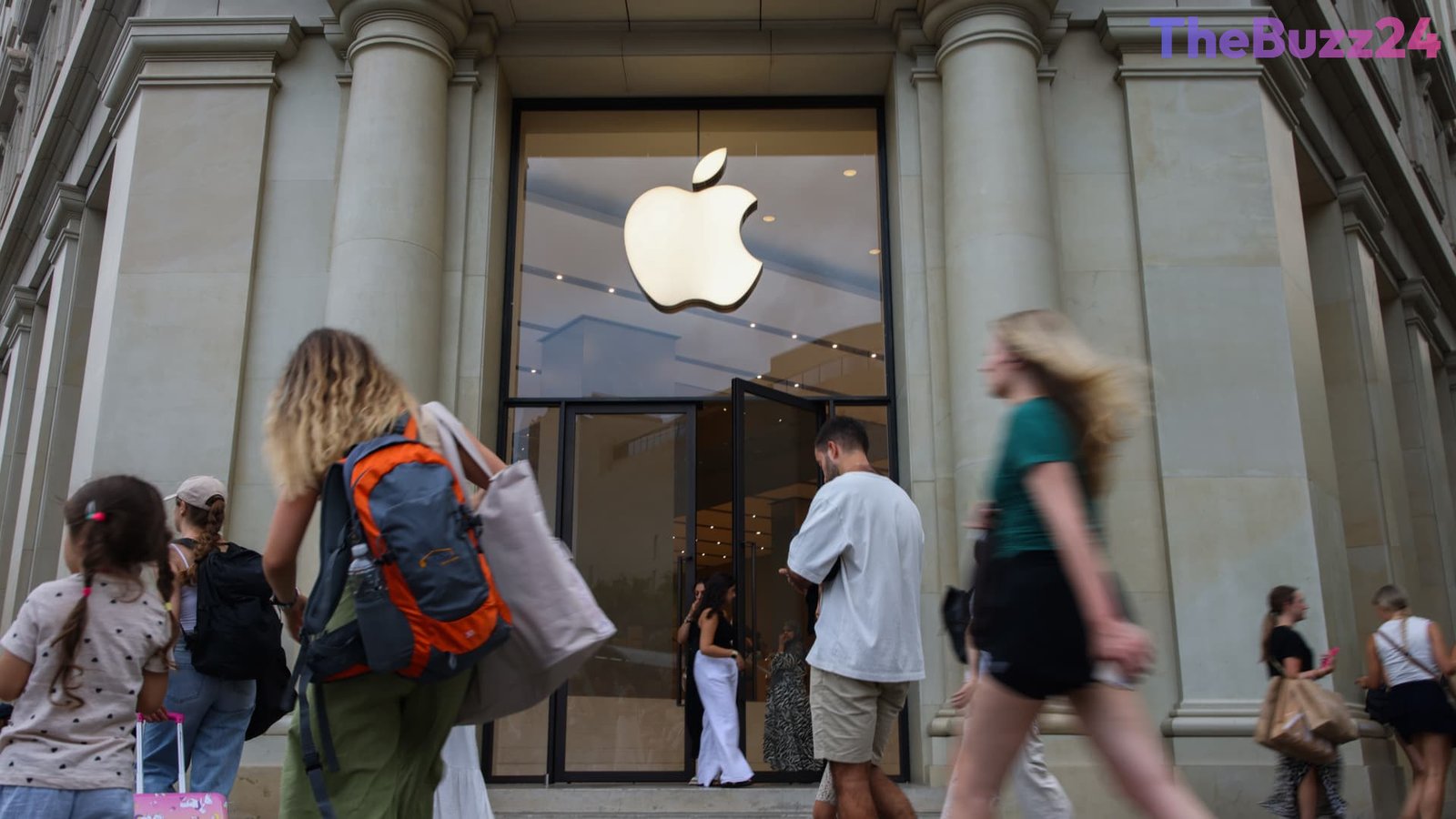
Apple Emerges as the Unlikely Safe Haven Amid Tech Market Volatility
Apple has recently decoupled from the broader technology sector, establishing itself as a defensive asset for investors navigating a period of significant market uncertainty. While concerns regarding the sustainability of the artificial intelligence boom and potential shifts in global interest rates have triggered volatility across the tech landscape, Apple’s stock has demonstrated remarkable resilience, consistently outperforming its peers.
Data indicates that the 30-day correlation between Apple and the Nasdaq-100 Index has reached historic lows, dipping into negative territory. This inverse relationship is the most pronounced it has been in two decades. While the Nasdaq-100 has faced pressure from broader sell-offs, Apple has maintained a steady upward trajectory, effectively acting as a hedge for portfolios heavily exposed to more speculative tech stocks. This shift marks a significant departure from earlier in the year, when the company lagged behind the index as capital flowed aggressively into AI-focused disruptors.
Market analysts suggest that Apple’s current strength stems from its perceived lower risk profile regarding the AI trade. Because the company was not as heavily reliant on the initial speculative surge of AI-driven valuations, it has avoided the sharp corrections currently impacting other major technology firms. This stability has attracted institutional and retail investors alike, who are increasingly viewing the iPhone maker as a reliable anchor during turbulent trading sessions.
Options market activity further underscores this bullish sentiment. Recent trading sessions have seen a significant imbalance in favor of call options, suggesting that traders expect Apple’s relative strength to persist. With trading volumes for Apple options consistently doubling their 30-day averages, the market is signaling a strong conviction in the company’s ability to maintain its current momentum despite broader macroeconomic headwinds.
Key Takeaways
- Apple has reached a historic level of inverse correlation with the Nasdaq-100, acting as a defensive hedge during tech sector volatility.
- The company has outperformed the Nasdaq-100 over the last six months, reversing a trend of underperformance seen earlier in the year.
- Options market data shows a strong bullish bias, with call option volume significantly outpacing put options, indicating sustained investor confidence.
Editor’s Analysis & Impact
Apple’s transition into a ‘safety trade’ represents a fundamental shift in how the market perceives the company’s role within the tech ecosystem. Historically, Apple was viewed as a growth engine; however, its current status as a hedge against AI-related volatility suggests that investors are prioritizing balance sheet strength and cash flow stability over speculative growth. This decoupling is likely to persist as long as the broader AI sector faces scrutiny over monetization and valuation sustainability. If Apple continues to maintain this inverse correlation, it could fundamentally change its valuation multiple, potentially attracting more conservative capital that typically avoids high-beta tech stocks. The long-term implication is a more stable, albeit potentially slower-growing, stock profile that serves as a cornerstone for institutional portfolios during periods of macroeconomic instability.
Frequently Asked Questions
Q: Why is Apple performing differently than other tech stocks?
A: Apple is being treated as a 'safe haven' because it was not as heavily exposed to the speculative AI-driven valuation surge that has recently faced market corrections.
Q: What does an inverse correlation to the Nasdaq mean for investors?
A: An inverse correlation means that when the broader tech index (Nasdaq-100) falls, Apple’s stock price tends to remain stable or rise, providing a protective buffer for investors' portfolios.
AI Disclosure: This article is based on verified data and official reports. Our Team and AI have cross-referenced every financial detail with primary sources to ensure total accuracy.
More from this Category