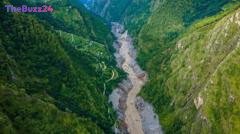
Nepal’s Floods: A Complex Warning for India Beyond Simple Water Flow
Flooding events originating in Nepal present a complex and multifaceted risk to India, extending far beyond the straightforward notion of water flowing downstream. Experts emphasize that while rivers originating in the Himalayas and flowing into India are a shared resource, the severity of floods in India is determined by a confluence of factors on both sides of the border. The nature of the flood itself—whether it carries substantial debris or is primarily water—and the conditions within India, such as rainfall, river levels, embankment integrity, and drainage systems, play a critical role in determining the ultimate impact.
Nepal, with its vast network of over 6,000 rivers and streams, predominantly drains south into India and the Ganges basin. Major river systems like the Kosi, Gandaki, and Karnali, along with numerous smaller tributaries, are significant transboundary waterways. While the peak flow reaching the Indian border is largely influenced by rainfall in Nepal, particularly in the Siwalik and Terai regions, the subsequent disaster potential is significantly shaped by India’s own preparedness and infrastructure. States like Bihar and eastern Uttar Pradesh are particularly vulnerable, with a substantial portion of their flood-prone areas directly impacted by rivers originating in Nepal.
The devastating 2008 Kosi river disaster serves as a stark illustration of this complex dynamic. The catastrophe, which claimed hundreds of lives in Bihar, was not caused by an unprecedented volume of water but by the failure of an aging and inadequately maintained embankment. This event underscored that structural integrity and maintenance on the Indian side are as crucial as hydrological conditions in Nepal. Furthermore, the increasing frequency of extreme weather events, exacerbated by climate change, is leading to more intense rainfall, glacial lake outbursts, and debris-laden floods, posing a growing and evolving threat to both nations.
Misconceptions persist, such as the idea that Nepal ‘releases’ water to cause floods in India. In reality, Nepal lacks the large-scale reservoir capacity for such actions. The water flow is overwhelmingly a natural consequence of rainfall. However, the critical truth is that Nepal’s hydrology is vital to India, contributing significantly to the Ganges’ flow. The challenge lies in moving beyond simplistic cause-and-effect narratives to a comprehensive understanding of shared vulnerability and the need for enhanced cooperation in data sharing, early warning systems, and infrastructure maintenance to mitigate risks effectively.
Key Takeaways
- Flood severity in India from Nepal's rivers depends on a combination of Nepalese rainfall and Indian infrastructure, including embankments and drainage.
- The 2008 Kosi river disaster highlights that embankment failure, rather than exceptional water volume, can cause catastrophic flooding.
- Climate change is intensifying extreme weather events in the Himalayas, leading to more frequent and severe debris-laden floods that pose a growing risk to both India and Nepal.
Editor’s Analysis & Impact
This analysis underscores the intricate relationship between Nepal’s hydrological events and India’s flood vulnerability. The article effectively debunks the simplistic view of water flow, emphasizing the critical role of India’s own infrastructure and preparedness. The increasing impact of climate change on the Himalayan region, leading to more volatile and debris-rich floods, presents a significant future challenge. This necessitates a paradigm shift towards integrated disaster risk management, enhanced transboundary cooperation on data sharing, early warning systems, and joint infrastructure maintenance strategies. The long-term implications point towards a growing need for climate adaptation measures and resilient infrastructure development in flood-prone areas of both nations.
Frequently Asked Questions
Q: Does Nepal intentionally release water to cause floods in India?
A: No, this is a common misconception. Nepal has very limited reservoir capacity and does not have the means to 'release' water to intentionally cause floods. The floodwaters are primarily a natural consequence of heavy rainfall in the upstream regions.
Q: Which Indian states are most affected by floods originating in Nepal?
A: Bihar is the most flood-prone state in India, with a significant portion of its northern region affected by rivers from Nepal. Eastern Uttar Pradesh is also vulnerable, particularly along the Ghaghara, Rapti, and Gandak rivers.
Q: How does climate change impact flooding from Nepal into India?
A: Climate change is intensifying extreme rainfall events, leading to more rapid snowmelt and glacial lake outbursts. This results in faster, more powerful, and debris-laden floods, which are harder to predict and more destructive than conventional water floods.
AI Disclosure: This article is based on verified data and official reports. Our Team and AI have cross-referenced every financial detail with primary sources to ensure total accuracy.
More from this Category