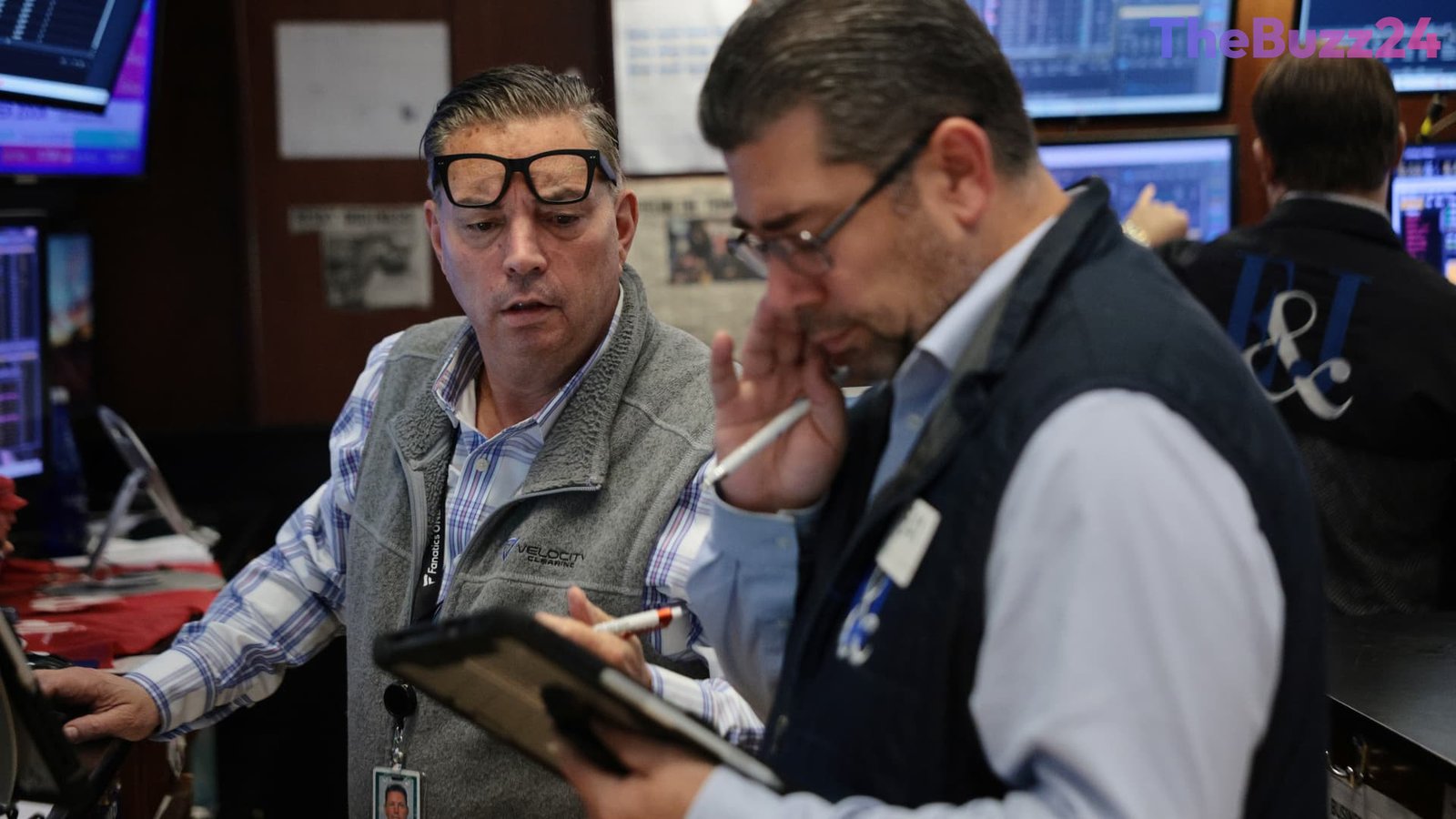
Market Sell-Off Intensifies as Robust Jobs Data Fuels Rate Hike Anxiety
The Dow Jones Industrial Average retreated on Friday, shedding over 260 points as a surprisingly strong August jobs report reignited concerns that the Federal Reserve may adopt a more aggressive stance on interest rates. The 30-stock index closed down 0.51% at 53,414.25, while the S&P 500 and Nasdaq Composite also posted losses of 0.38% and 0.29%, respectively. The labor market data revealed 162,000 new nonfarm payrolls, significantly outpacing the 53,000 jobs economists had projected, while the unemployment rate remained steady at 4.1%.
This unexpected surge in hiring has shifted market sentiment, with fed funds futures now pricing in a 58% probability of a rate hike at the upcoming September meeting. Treasury yields climbed in response to the data, with the 2-year yield reaching its highest level since early 2025. Analysts noted that the labor market’s resilience, while generally a positive economic indicator, has become a source of volatility for investors who fear that continued strength will force the central bank to maintain or increase borrowing costs to combat persistent inflation.
Corporate performance also weighed on the broader market, with notable declines in the retail and technology sectors. Lululemon shares plummeted 20% following a disappointing earnings outlook, while Tesla saw a decline of over 6% following its recent product launch. Conversely, some sectors showed resilience; the small-cap Russell 2000 index managed to outperform the broader market, and software firm DocuSign saw gains after reporting better-than-expected quarterly results. Meanwhile, global energy concerns persist, with diesel prices hitting record highs amid ongoing geopolitical tensions in Ukraine and the Middle East.
Key Takeaways
- The U.S. economy added 162,000 jobs in August, far exceeding the 53,000 expected by economists.
- Market participants are increasingly pricing in a potential interest rate hike for September due to the labor market's unexpected strength.
- Major indices finished lower as investors reacted to the jobs report and disappointing guidance from major companies like Lululemon.
Editor’s Analysis & Impact
The market’s reaction to the August jobs report underscores a ‘bad news is good news’ paradox that has defined the current economic cycle. Investors are caught in a tug-of-war between fundamental economic health and the restrictive monetary policy required to curb inflation. The sharp pivot in rate hike expectations suggests that the market is highly sensitive to any data that deviates from the ‘soft landing’ narrative. Looking ahead, the Federal Reserve faces a delicate balancing act: if the labor market remains too hot, the central bank may be forced to keep rates elevated for longer, potentially stifling growth. Conversely, if they pause too soon, they risk a resurgence in inflation. This volatility is likely to persist until there is clearer evidence of cooling in both the labor market and consumer price indices.
Frequently Asked Questions
Q: Why did the stock market fall after a strong jobs report?
A: While a strong jobs report is typically positive for the economy, investors currently fear that it will encourage the Federal Reserve to raise interest rates to prevent the economy from overheating and to keep inflation in check.
Q: What is the current market expectation for Federal Reserve interest rate policy?
A: Following the August jobs data, market participants have increased their expectations for a rate hike, with fed funds futures now indicating a 58% probability of an increase at the next policy meeting.
AI Disclosure: This article is based on verified data and official reports. Our Team and AI have cross-referenced every financial detail with primary sources to ensure total accuracy.
More from this Category