Behind the Screen: How an Anonymous Confession Project is Exposing Our Secret AI Lives
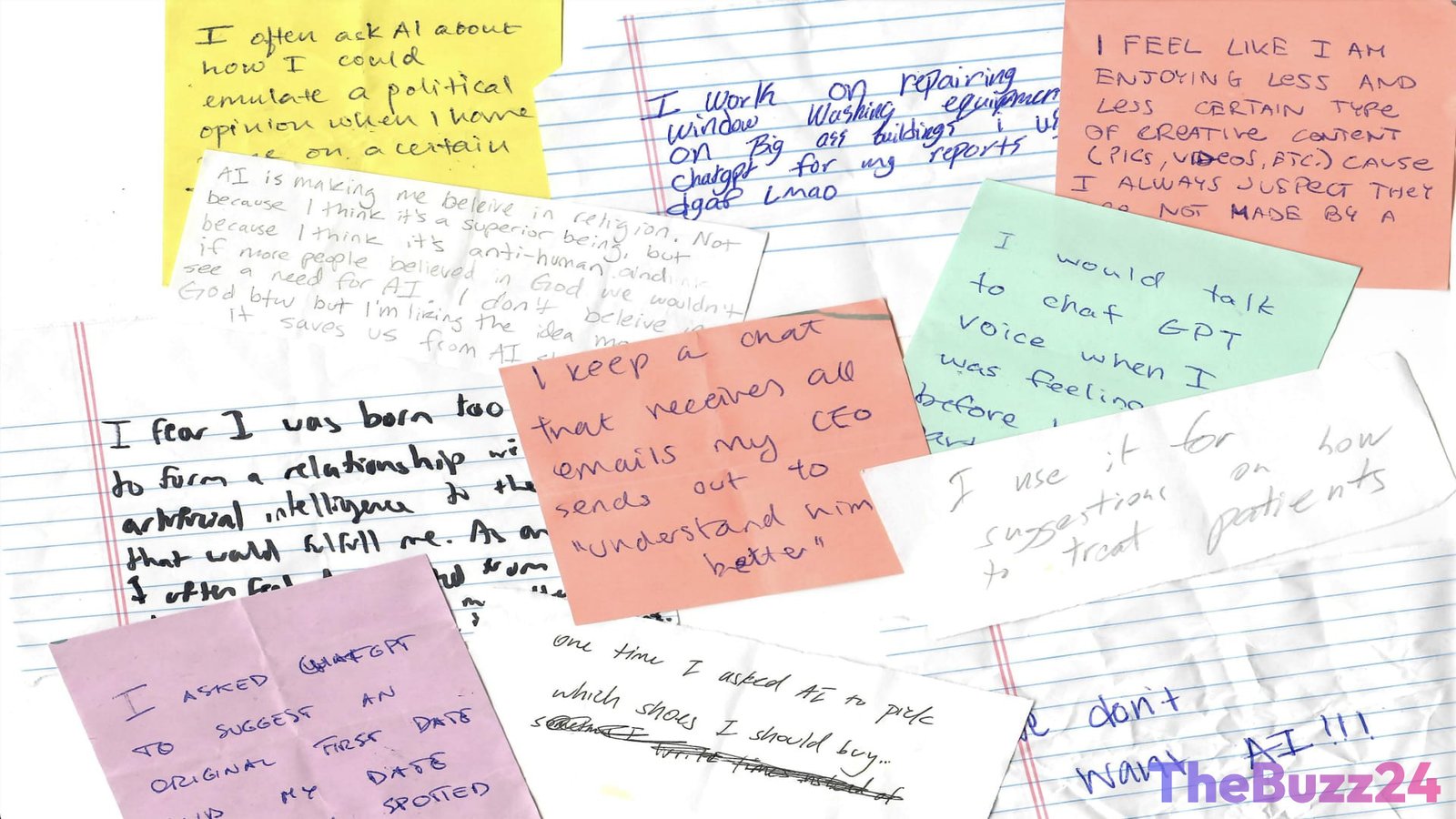
In the heart of San Francisco, artist Olivia Tai set up a makeshift cardboard booth with a simple, handwritten prompt: “Confessions Box: Tell Me Your AI Secret.” What began as a curious experiment in Mission Dolores Park quickly evolved into a profound exploration of human vulnerability in the digital age. Expecting mundane admissions about drafting work emails, Tai was instead stunned by deeply personal revelations, including one from a passerby who admitted to cloning their ex-partner’s voice to find emotional closure after a breakup.
This striking interaction sparked “What We Tell AI,” a participatory art project that has now traveled to more than 20 locations across the United States, including New York City and Denver. To date, the project has gathered over 350 handwritten, anonymous notes. The confessions paint a complex picture of modern life: while some individuals proudly share how they use artificial intelligence to navigate social anxieties or draft dating messages, others express deep shame. Admissions range from students feeling they do not deserve their degrees due to heavy AI assistance, to individuals confessing they talk to chatbots far more than to the actual people in their lives.
This grassroots project mirrors a broader societal shift. Data indicates that approximately half of American adults now interact with AI chatbots like OpenAI’s ChatGPT, Google’s Gemini, or Microsoft’s Copilot, with a quarter of the population using them on a daily basis. Increasingly, these tools are not just being used for productivity, but as emotional sounding boards. Roughly 27% of users engage with chatbots to discuss personal, social, or emotional issues, often sharing intimate thoughts they would never disclose to another human being.
Tai warns that this reliance on large language models could lead to a gradual weakening of our real-world social networks. When individuals direct their deepest fears, hopes, and conflicts toward data centers rather than friends, family, or neighbors, human relationships inevitably suffer. By bringing these secret interactions into the public eye, Tai hopes to strip away the stigma surrounding AI usage, encouraging open and honest conversations about how technology is reshaping human connection and what that means for the future of society.
Key Takeaways
- Artist Olivia Tai has collected over 350 anonymous handwritten confessions detailing how people secretly use artificial intelligence in their personal and professional lives.
- Confessions range from using AI to clone an ex's voice for emotional closure to substituting human companionship with chatbot interactions.
- The project highlights a growing societal shift where individuals increasingly turn to large language models for emotional support, raising concerns about the erosion of real-world social networks.
Editor’s Analysis & Impact
Olivia Tai’s “What We Tell AI” project exposes a profound psychological shift in how humanity interacts with technology. As large language models (LLMs) become highly sophisticated conversational partners, they are transitioning from productivity tools to emotional proxies. This shift presents a massive opportunity for developers of companion AI, but it also signals a looming public health crisis regarding loneliness and social fragmentation. For businesses, the widespread, often secretive integration of AI into daily tasks—from writing emails to completing schoolwork—reveals a gap between corporate/academic expectations and actual human behavior. Moving forward, developers and policymakers must address the ethical implications of emotional AI. If users are sharing their most intimate vulnerabilities with proprietary algorithms, data privacy and psychological dependency will become the primary battlegrounds of the next tech era.
Frequently Asked Questions
Q: What is the 'What We Tell AI' project?
A: It is a participatory art project created by San Francisco-based artist Olivia Tai that collects anonymous, handwritten confessions from people about how they use artificial intelligence in their daily lives.
Q: What are some of the most common secrets shared in the project?
A: Many confessions involve relationships and dating, such as using AI to write dating profile messages, cloning an ex's voice for closure, or turning to chatbots for companionship to cope with loneliness. Other secrets involve using AI to complete schoolwork or job tasks.
Q: Why are people turning to AI for emotional support?
A: AI chatbots offer a judgment-free, instantly accessible space for people to express their thoughts. Studies show that a significant portion of users discuss personal or emotional topics with AI, with some admitting they share things with chatbots that they would never tell another human.
AI Disclosure: This article is based on verified data and official reports. Our Team and AI have cross-referenced every financial detail with primary sources to ensure total accuracy.
More from this Category