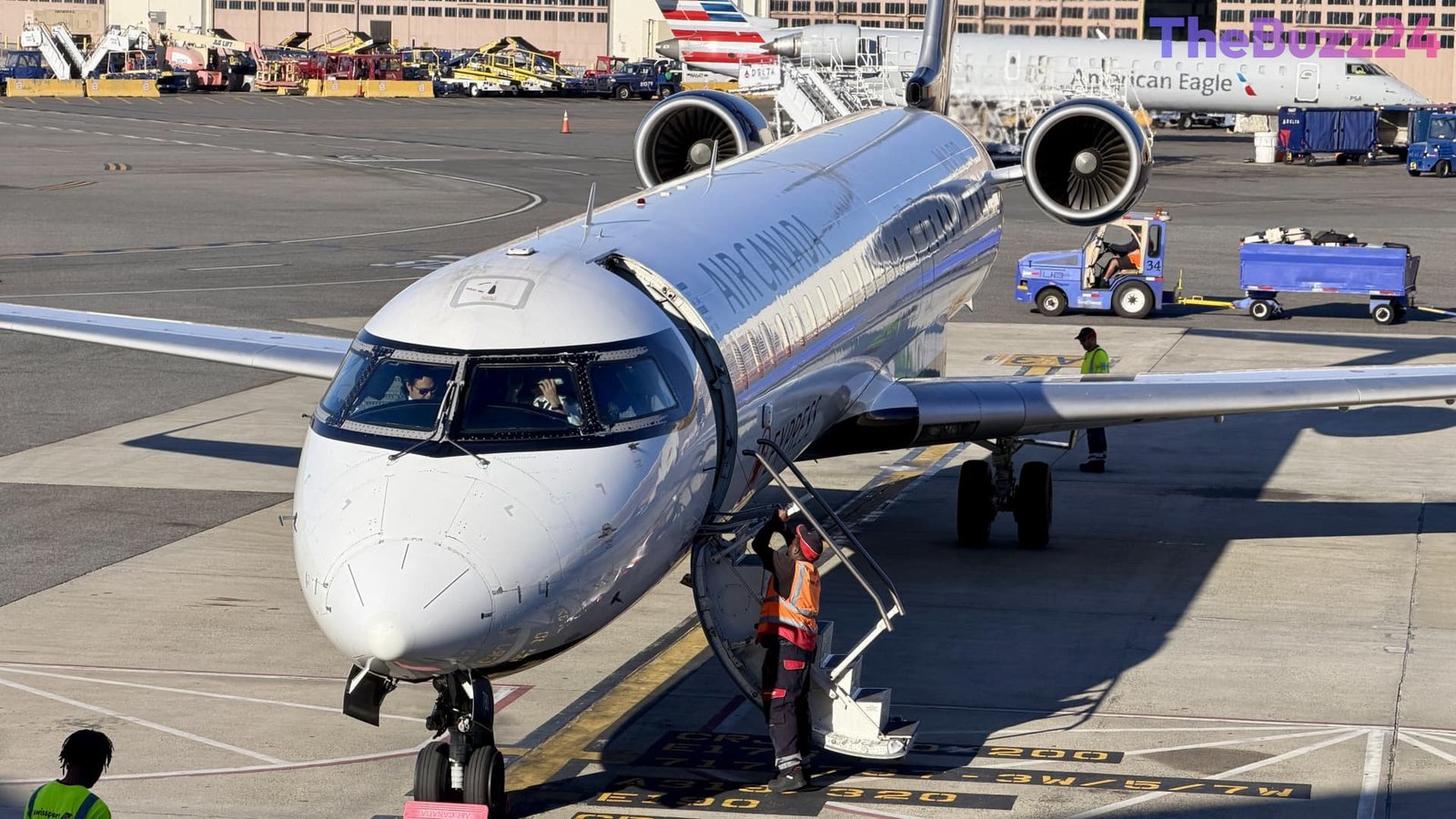
Trump Demands Bombardier Shift Production to U.S. Amid Escalating Trade Tensions
Former President Donald Trump has issued a stern ultimatum to Canadian aerospace manufacturer Bombardier, declaring that the company will be barred from selling its products within the United States unless it establishes domestic manufacturing operations. The demand marks a significant escalation in the ongoing trade friction between the two North American neighbors, as both sides move toward more aggressive economic measures.
In a public statement, Trump emphasized that the U.S. market should no longer be treated as a source of easy revenue for foreign firms without reciprocal investment. The directive comes at a volatile time for international trade relations, as Canada prepares to implement approximately $20 billion in retaliatory tariffs on a wide array of American goods. These measures are intended to counter recent U.S. import taxes imposed on Canadian exports, including cement, wine, and sporting equipment.
The diplomatic standoff has intensified following the collapse of recent trade negotiations. While U.S. officials have accused the Canadian government of abandoning a nearly finalized agreement for political leverage, Canadian leadership has signaled a willingness to resume discussions only once the U.S. demonstrates a renewed commitment to the process. As of now, Bombardier has not issued a formal response regarding the potential impact of these demands on its North American business model.
Key Takeaways
- Donald Trump has demanded that Bombardier move manufacturing to the U.S. to maintain access to the American market.
- The ultimatum coincides with Canada's plan to impose $20 billion in retaliatory tariffs on U.S. goods.
- Trade relations remain strained following the breakdown of recent negotiations between U.S. and Canadian officials.
Editor’s Analysis & Impact
The demand for Bombardier to localize production represents a broader protectionist shift in U.S. trade policy, prioritizing domestic manufacturing over traditional cross-border supply chains. By leveraging market access as a bargaining chip, the U.S. is signaling a departure from standard trade norms, which could force multinational corporations to reconsider their global footprint. The immediate impact is a heightened risk of a protracted trade war that could disrupt aerospace supply chains and increase costs for consumers and businesses alike. Looking ahead, if such demands become a standard requirement for foreign entities, it may lead to a significant restructuring of North American industrial policy. The long-term implication is a more fragmented trade environment where geopolitical leverage dictates corporate strategy, potentially chilling foreign investment and complicating the operations of companies that rely on integrated North American markets.
Frequently Asked Questions
Q: Why is the U.S. demanding that Bombardier build products domestically?
A: The demand is part of a broader effort to reduce trade deficits and ensure that foreign companies selling in the U.S. contribute to the domestic economy through local manufacturing.
Q: What is the current status of trade talks between the U.S. and Canada?
A: Trade talks are currently stalled, with both sides blaming the other for the breakdown of negotiations, leading to the implementation of retaliatory tariffs.
AI Disclosure: This article is based on verified data and official reports. Our Team and AI have cross-referenced every financial detail with primary sources to ensure total accuracy.
More from this Category