The High Stakes Battle for Battery Independence: Can the U.S. Break Free from China’s Supply Chain Grip?
Efforts are underway within the United States to secure a domestic battery supply chain and reduce heavy reliance on China, which currently commands a stronghold over the global industry. Through targeted financial grants, the Department of Energy is channeling capital into innovative domestic enterprises aiming to disrupt traditional mineral extraction, refining, and manufacturing processes. However, industry insiders and economic analysts note that current federal funding represents only a fraction of the capital actually required to meaningfully loosen China’s dominance over the critical minerals market.
China’s command over the battery ecosystem spans from raw material extraction to final assembly, with a particularly powerful chokehold on mineral refining and processing. While nations like the U.S. excel in pioneering technological innovation, scaling these concepts to mass-produce millions of reliable components remains a massive hurdle. American companies receiving recent federal backing are focusing heavily on bypassing these overseas processing bottlenecks. For instance, firms are developing alternative anode components from domestically sourced silicon instead of graphite, and deploying novel methods to extract battery-grade lithium directly from saltwater brines, effectively circumventing traditional hard-rock mining and refining phases.
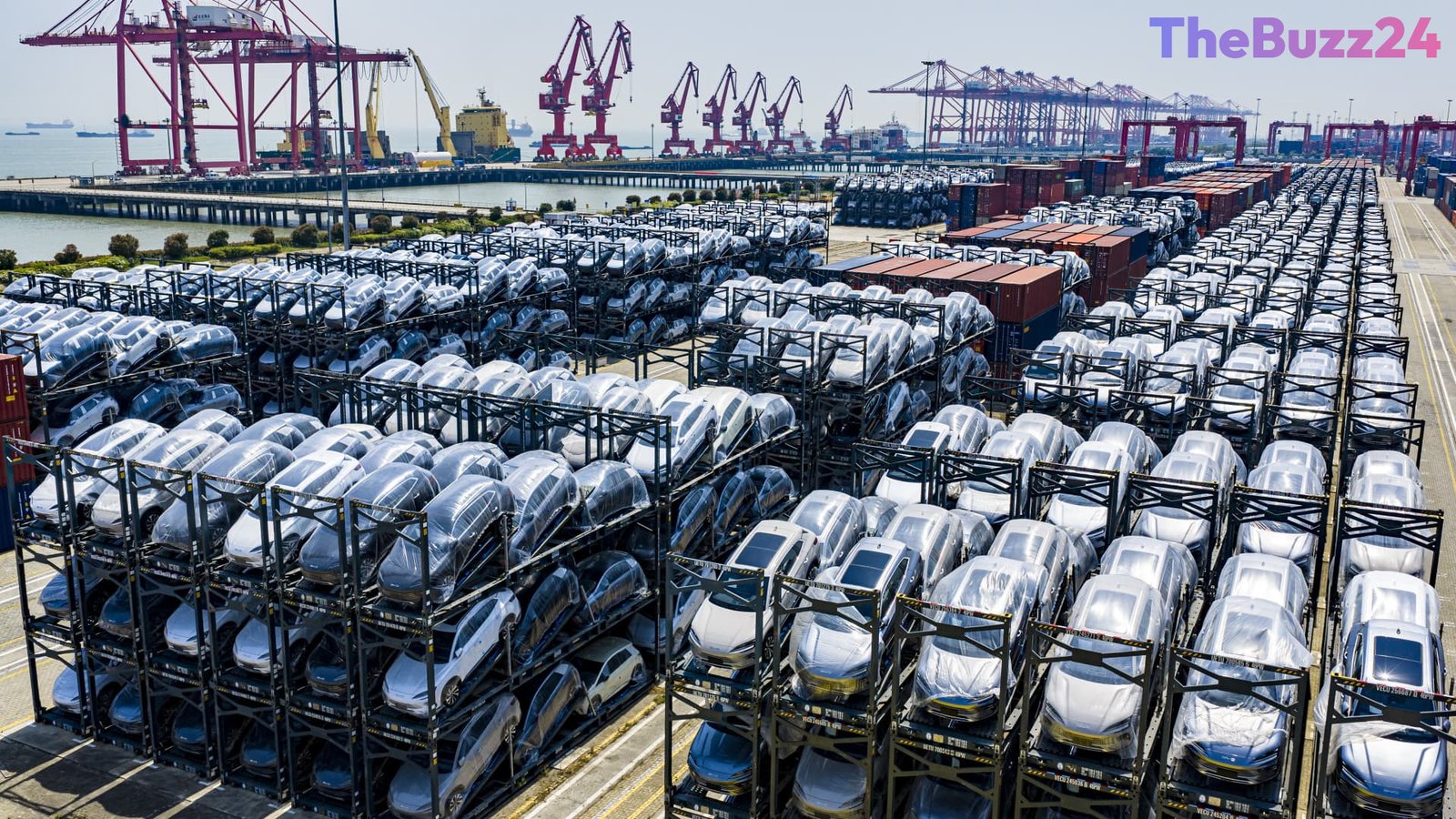
Despite these incremental steps forward, broader policy shifts and shifting federal incentives in the U.S. have created headwinds for domestic electric vehicle and battery manufacturing development. The cancellation of numerous planned clean-tech projects starkly contrasts with China’s aggressive domestic scaling and booming export markets for new energy vehicles. Experts emphasize that achieving true competitiveness requires massive capital investments and years of sustained industrial execution, raising questions about whether the U.S. can successfully close the gap before global market dynamics cement China’s permanent advantage.
Key Takeaways
- The U.S. Department of Energy is awarding grants to domestic firms to target critical vulnerabilities in the battery supply chain dominated by China.
- Chinese dominance stems largely from its massive capacity for mineral refining and processing, controlling the vast majority of global anode and cathode materials.
- Despite targeted grants for innovation, the U.S. faces significant scaling hurdles and recent cancellations of major clean-tech projects compared to China's rapid market expansion.
Editor’s Analysis & Impact
The strategic competition over battery technology and critical minerals represents one of the defining geopolitical and economic challenges of the decade. China’s deeply entrenched supply chain, built over decades with massive state backing, gives it a nearly insurmountable advantage in both cost efficiency and production scale. While U.S. initiatives to fund domestic startups focusing on alternative extraction and processing methods are a necessary step, the fragmented nature of Western industrial policy and shifting political priorities threaten long-term competitiveness. For global automakers and energy storage providers, navigating this widening technological and supply chain divergence will require diversifying sourcing strategies and heavily investing in next-generation manufacturing capabilities to avoid severe operational vulnerabilities.
Frequently Asked Questions
Q: Why is China so dominant in the global battery industry?
A: China controls a vast majority of the global battery supply chain, not just through raw mineral extraction, but more importantly through advanced refining, processing, and manufacturing capabilities built over decades.
Q: How are U.S. companies attempting to bypass Chinese processing dominance?
A: American companies are developing innovative technologies, such as extracting lithium directly from saltwater brines to skip traditional refining steps and utilizing domestically sourced silicon for battery anodes instead of imported graphite.
Q: What challenges do U.S. battery firms face in competing globally?
A: While U.S. firms produce strong technological innovation, they struggle with the massive capital, time, and scale required to mass-produce battery components reliably at the millions-of-units level achieved by competitors in China.
AI Disclosure: This article is based on verified data and official reports. Our Team and AI have cross-referenced every financial detail with primary sources to ensure total accuracy.
More from this Category