Tung Chee-hwa, Hong Kong’s First Post-Colonial Leader, Dies at 89
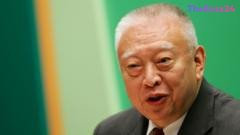
Tung Chee-hwa, the shipping magnate who became the first Chief Executive of Hong Kong following the 1997 handover from British to Chinese rule, has passed away at the age of 89. His death marks the end of a significant chapter in the city’s history, as he served as the primary bridge between the colonial era and the transition to Chinese sovereignty.
Born in Shanghai in 1937, Tung’s path to leadership was unconventional. After earning a mechanical engineering degree in the UK and spending nearly a decade at General Electric in the United States, he returned to Hong Kong to manage his family’s shipping conglomerate, Orient Overseas. His political ascent began in 1992 when he joined the executive council under the final British governor, Chris Patten. By 1997, he was widely viewed as Beijing’s preferred candidate to lead the newly established Special Administrative Region.
Tung’s tenure was defined by immense turbulence, including the Asian Financial Crisis, the 2003 SARS outbreak, and significant public unrest. His administration faced intense scrutiny, particularly during the 2003 protests against proposed national security legislation, which ultimately led to the bill’s withdrawal. Citing health concerns, Tung resigned from his post in March 2005, though his legacy remains a subject of intense debate regarding the city’s political trajectory and its relationship with the mainland.
In his final years, Tung remained a figure of interest in regional politics, making his last major public appearance in 2021. He is survived by his wife and three children. His office released a statement honoring his commitment to his country, describing him as a man of integrity whose influence shaped the early years of Hong Kong’s post-colonial identity.
Key Takeaways
- Tung Chee-hwa served as Hong Kong's first Chief Executive after the 1997 handover from British rule.
- His administration faced major crises, including the Asian Financial Crisis and the 2003 SARS outbreak.
- Tung resigned in 2005 following massive public protests against proposed national security legislation.
Editor’s Analysis & Impact
The passing of Tung Chee-hwa serves as a poignant reminder of the complex transition Hong Kong underwent at the turn of the millennium. As the first leader of the Special Administrative Region, Tung occupied a precarious position, tasked with balancing the expectations of Beijing with the democratic aspirations of a city accustomed to British governance. His tenure set the precedent for the ‘One Country, Two Systems’ framework, which continues to be a focal point of global geopolitical tension today. The challenges he faced—ranging from economic instability to public health crises and civil unrest—foreshadowed the deeper political shifts that would eventually lead to the implementation of the 2020 national security law. His legacy is inextricably linked to the evolution of Hong Kong’s autonomy and its integration into the broader Chinese political landscape.
Frequently Asked Questions
Q: What was Tung Chee-hwa's professional background before entering politics?
A: Before his political career, Tung was a successful businessman who managed his family's shipping conglomerate, Orient Overseas, and worked for General Electric in the United States.
Q: Why did Tung Chee-hwa resign in 2005?
A: Tung officially resigned citing declining health, though his departure followed a period of significant political pressure and public protests against his administration's policies.
AI Disclosure: This article is based on verified data and official reports. Our Team and AI have cross-referenced every financial detail with primary sources to ensure total accuracy.
More from this Category