BRICS Nations Forge Deeper Economic Ties Amidst Shifting Global Power Dynamics
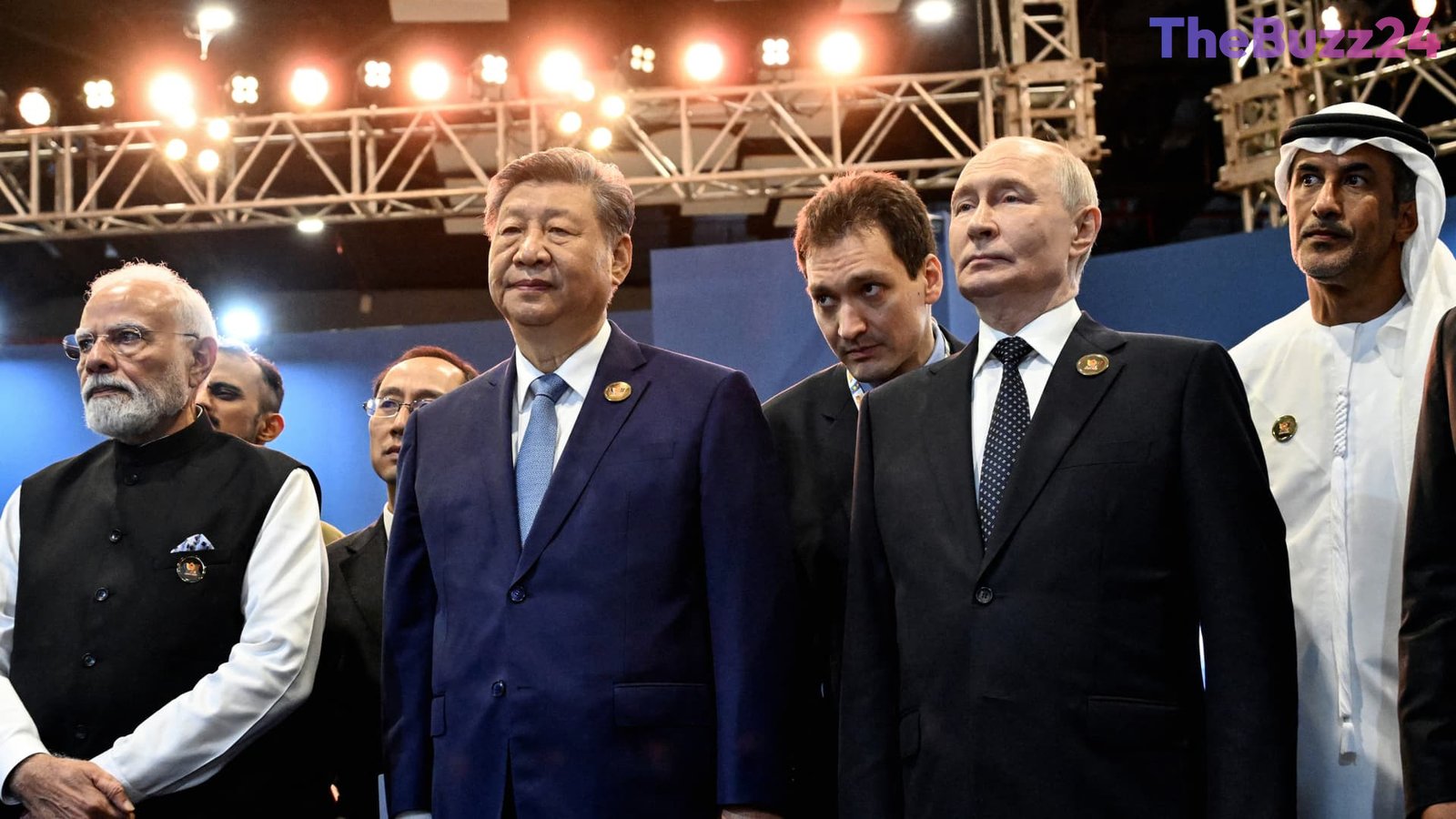
Leaders from the BRICS bloc, including Chinese President Xi Jinping, Russian President Vladimir Putin, Indian Prime Minister Narendra Modi, and Iranian President Masoud Pezeshkian, are convening in New Delhi. This high-level summit unfolds against a backdrop of escalating geopolitical complexities, marked by significant U.S. tariffs, sanctions, and ongoing conflicts, notably between the U.S./Israel and Iran, and the war in Ukraine. The gathering underscores the BRICS group’s collective ambition to exert greater influence within a global system traditionally dominated by the United States and other Western powers.
The increasing economic pressures from Washington, including tariffs and sanctions, are a primary catalyst driving BRICS members to diversify their trade and payment relationships. India, for instance, continues to pursue a policy of strategic autonomy, maintaining robust ties with Russia and Iran while simultaneously working to improve relations with China and deepen cooperation with the United States. Recent strains in its relationship with the U.S. have prompted New Delhi to further invest in its other international partnerships. For Russia, Western sanctions imposed over the conflict in Ukraine have made non-European and non-U.S. partners, such as China and India (a major buyer of Russian oil), increasingly vital. The summit provides Moscow an opportunity to demonstrate the resilience of its global economic connections.
Discussions at the summit are focusing on practical economic alternatives, including increasing trade in local currencies and developing new cross-border payment mechanisms. While Russia has significantly expanded its trade outside the dollar system, India has advocated for the use of national currencies and digital payments to reduce the costs of international trade, rather than pursuing an outright de-dollarization agenda. Despite past warnings from figures like former U.S. President Donald Trump regarding efforts to undermine the dollar, BRICS members hold differing views on the extent to which they should reduce their dependence on the U.S. currency, which remains dominant in global reserves and transactions.
The BRICS group has expanded beyond its original five members to include countries like Iran, Egypt, Ethiopia, the United Arab Emirates, and Indonesia, thereby increasing its economic and geopolitical weight. However, this expansion also introduces challenges to achieving consensus, leading some observers to describe the bloc as a “dysfunctional family” due to divergent security interests among members, such as Iran and the UAE. Ultimately, BRICS is largely viewed as a pragmatic forum focused on development, trade, and reforming global institutions, rather than an ideological bloc explicitly opposing the United States. Many members, including the UAE, continue to maintain important ties with Washington while actively diversifying their economic relationships globally.
Key Takeaways
- BRICS leaders are meeting to discuss economic diversification and cooperation amidst U.S. tariffs, sanctions, and global conflicts.
- Member nations like India and Russia are driven by strategic autonomy and a need to buffer against Western economic pressures, leading to increased exploration of trade in local currencies.
- Despite internal divisions and differing visions, BRICS aims to increase its influence in global systems, focusing on development, trade, and institutional reform rather than forming an explicit anti-Western bloc.
Editor’s Analysis & Impact
The BRICS summit highlights a significant trend towards a more multipolar global economic landscape. The increased focus on de-dollarization and alternative payment systems, while not an immediate threat to the U.S. dollar’s dominance, signals a gradual shift that could impact global financial markets and international trade over the long term. Industries involved in cross-border commerce, particularly those in emerging economies, will increasingly explore non-dollar denominated transactions and new payment infrastructures. This movement challenges the existing global economic order, potentially leading to new trade blocs and geopolitical alignments. It underscores the growing desire among emerging economies for greater autonomy and influence, forcing a re-evaluation of international economic governance and the future of global trade dynamics.
Frequently Asked Questions
Q: What is BRICS?
A: BRICS is an acronym for a grouping of major emerging economies: Brazil, Russia, India, China, and South Africa. It has recently expanded to include other nations like Iran, Egypt, Ethiopia, and the UAE, aiming to increase their influence in the global system.
Q: Why are BRICS nations seeking to diversify trade and payment relationships?
A: Member nations are increasingly seeking to diversify their trade and payment relationships due to factors such as U.S. tariffs, sanctions, and broader geopolitical tensions. This push aims to reduce reliance on the U.S. dollar and Western-dominated financial systems, providing a buffer against economic pressures.
Q: Is BRICS forming an anti-U.S. alliance?
A: While BRICS members seek to promote a non-Western worldview and greater autonomy, the group is generally seen as a 'pragmatic club for limited purposes' focused on development, trade, and reforming global institutions, rather than an explicit anti-U.S. ideological bloc. Many members also maintain significant ties with Western nations.
AI Disclosure: This article is based on verified data and official reports. Our Team and AI have cross-referenced every financial detail with primary sources to ensure total accuracy.
More from this Category