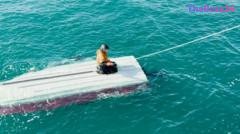
Teen Survivor Found After Days Adrift in Bering Sea Tragedy
A 15-year-old boy has been rescued from the frigid waters of the Bering Sea after surviving for two days atop his capsized fishing vessel. Derek Parker Aghnaanga was discovered by a search crew on Monday morning, clinging to the hull of the 18-foot skiff that had overturned during a fishing trip off the coast of St. Lawrence Island, Alaska.
The teenager had set out with his older brother and a cousin on Friday, September 4, with plans to return to their home village of Savoonga by Sunday afternoon. When the group failed to arrive as scheduled, an extensive search operation was initiated. While the rescue mission successfully located Aghnaanga, the incident resulted in the tragic loss of his two relatives, whose bodies were recovered by the same vessel that saved the teen.
Rescuers reported that Aghnaanga was suffering from hypothermia upon his discovery, having endured water temperatures near 50 degrees Fahrenheit without food or water. The captain of the vessel that performed the rescue described the boy as remarkably resilient, noting that he had remained on the overturned boat throughout the ordeal. The teen is now recovering at home with his family.
Family members have shared that the young men were engaged in a traditional practice of fishing to provide food for their community in Savoonga. The survival of the teenager has been described by his mother as a testament to his strength and faith, as he reportedly spent his time adrift praying while waiting for help to arrive.
Key Takeaways
- A 15-year-old boy survived two days at sea after his fishing boat capsized in the Bering Sea.
- The teen's older brother and cousin tragically perished in the incident.
- The rescue was made possible by a coordinated search effort that located the survivor clinging to the hull of the overturned skiff.
Editor’s Analysis & Impact
This incident highlights the extreme environmental challenges inherent in Arctic maritime activities, where sudden weather shifts can turn routine subsistence fishing into life-threatening emergencies. The survival of the teenager serves as a stark reminder of the importance of robust search and rescue infrastructure in remote regions like the Bering Sea. From an industry perspective, this tragedy underscores the ongoing risks faced by small-scale, traditional fishing communities that rely on aging or smaller vessels to support local food security. Future implications likely include renewed calls for enhanced safety equipment requirements and improved communication protocols for small craft operating in high-latitude waters. The resilience shown by the survivor also brings attention to the cultural significance of subsistence hunting and fishing, which remains a vital, albeit dangerous, pillar of life for indigenous communities in Alaska.
Frequently Asked Questions
Q: How long was the teenager adrift before being rescued?
A: The teenager spent approximately two days adrift on the hull of his capsized boat before being located by a rescue vessel.
Q: What was the purpose of the fishing trip?
A: The group was fishing to provide food for their community in Savoonga, a tradition passed down through generations of Siberian Yupik people.
AI Disclosure: This article is based on verified data and official reports. Our Team and AI have cross-referenced every financial detail with primary sources to ensure total accuracy.
More from this Category