Spectacular Auroras Dance Over Iceland’s Volcanic Landscape Amidst High Solar Activity
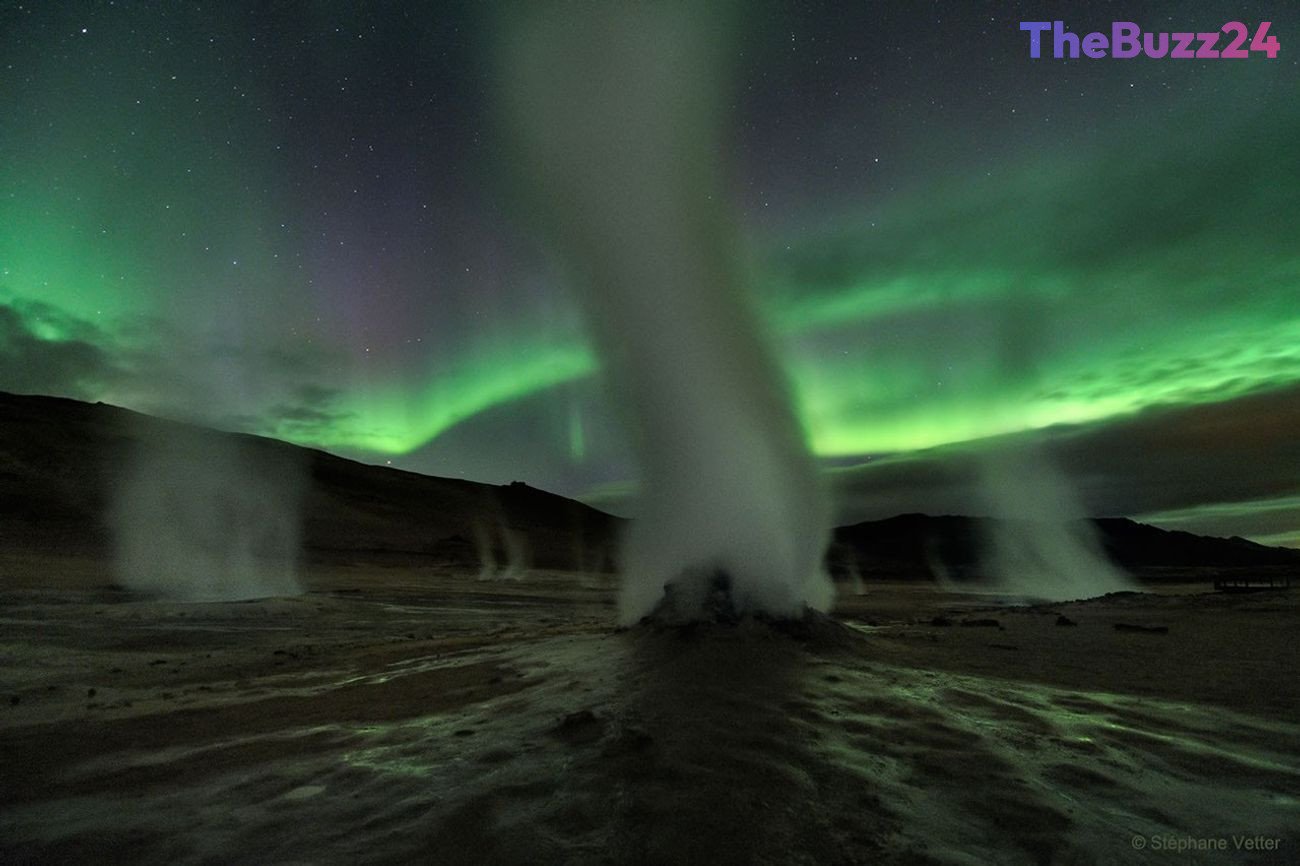
A breathtaking celestial display recently illuminated the night sky over Hverir, a geothermally active region nestled within northeastern Iceland’s dramatic volcanic landscape. The scene captured a rare confluence of Earth’s raw geological power and the ethereal beauty of the cosmos, as ghostly towers of steam and gas vented from local fumaroles danced against the vibrant, greenish hues of the Northern Lights. This striking image offers a vivid testament to our planet’s dynamic natural phenomena.
The spectacular auroral displays are a direct consequence of geomagnetic storms, which are triggered by heightened solar activity. These storms unleash energetic particles that become trapped within Earth’s magnetic field. As these particles penetrate the planet’s upper atmosphere at high latitudes, they excite atmospheric gases, causing them to emit light and create the mesmerizing curtains of color known as the aurora borealis.
Scientists note that auroral activity on Earth remains in a heightened state. The Sun is currently in the early phases of its decline from the peak of its solar activity cycle, meaning that powerful solar events capable of generating these stunning light shows are still frequent. This ongoing period of solar intensity promises continued opportunities for observers in polar regions to witness these magnificent natural spectacles.
Key Takeaways
- Vibrant auroral displays were recently observed over Hverir, a geothermally active area in northeastern Iceland.
- These Northern Lights are caused by geomagnetic storms, which propel energetic particles from solar activity into Earth's upper atmosphere.
- Auroral activity is expected to remain high as the Sun is still in an active phase of its solar cycle.
Editor’s Analysis & Impact
This stunning visual from Iceland serves as a powerful reminder of the dynamic interplay between our planet and the Sun. While primarily a natural spectacle, the underlying geomagnetic storms have broader implications for space weather, which can impact satellite communications, GPS systems, and even power grids on Earth. For industries like tourism, particularly in high-latitude regions such as Iceland, these vibrant auroral displays are a significant draw, boosting local economies. As the Sun continues its active phase in the current solar cycle, we can anticipate more frequent and intense auroral events, offering continued opportunities for scientific observation and breathtaking natural photography. This ongoing celestial show underscores the importance of monitoring solar activity for both its scientific value and its potential terrestrial effects.
Frequently Asked Questions
Q: What causes the Northern Lights (aurora borealis)?
A: The Northern Lights are caused by energetic particles from the Sun, accelerated by geomagnetic storms, interacting with Earth's upper atmosphere at high latitudes. This interaction excites atmospheric gases, causing them to emit light.
Q: Why is auroral activity currently high?
A: Auroral activity is currently high because the Sun is in an active phase of its solar cycle. This leads to more frequent and intense solar flares and coronal mass ejections, which trigger the geomagnetic storms responsible for the auroras.
Q: Where is Hverir located?
A: Hverir is a geothermally active area situated in northeastern Iceland. It is known for its volcanic landscape, hot springs, and fumaroles, which release steam and gases.
AI Disclosure: This article is based on verified data and official reports. Our Team and AI have cross-referenced every financial detail with primary sources to ensure total accuracy.
More from this Category