Pi Network Surges Past $0.097 Amidst Growing Ecosystem Utility and Developer Tool Enhancements
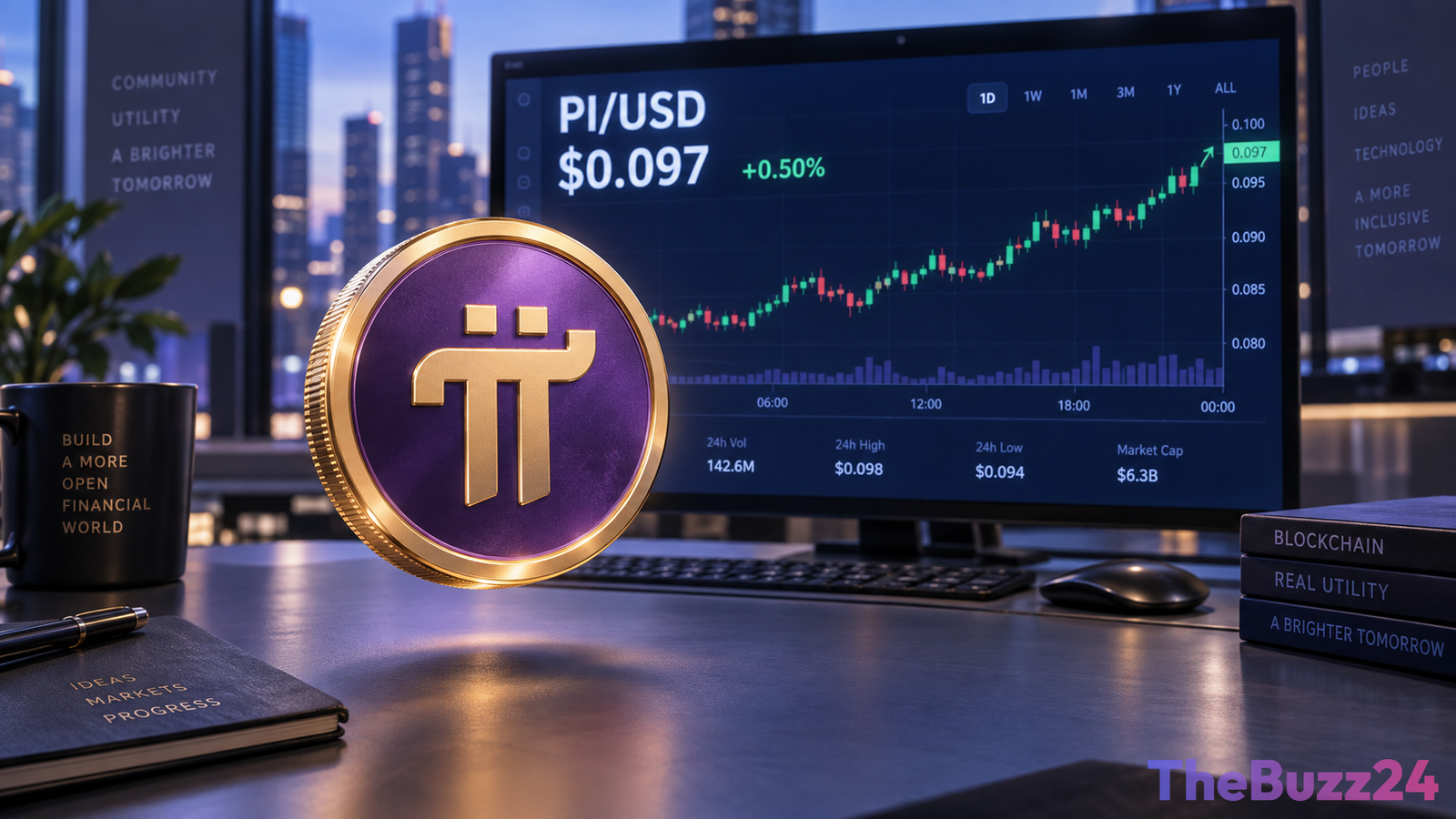
Pi Network’s native token, PI, has demonstrated a notable recovery, trading above the $0.097 mark on Monday. This upward movement follows two consecutive weeks of gains, signaling a potential shift in market sentiment for the cryptocurrency. The recent price action is being attributed, in part, to ongoing developments within the Pi Network’s ecosystem, aimed at enhancing its overall utility and user experience.
The Pi Core Team has been actively working on improving the network’s infrastructure. Recent updates include enhancements to SoloHost and the release of Pi Desktop version 0.6.3. These improvements are designed to streamline the process for users to discover actively utilized applications within the network, boost platform reliability, and provide developers with more robust tools, including AI agents. Such advancements are crucial for fostering greater application activity and expanding the real-world utility of the PI token.
Technically, PI is showing signs of improving momentum. The token is currently trading above its 50-day exponential moving average (EMA), which sits at approximately $0.094. Furthermore, the Relative Strength Index (RSI) is hovering near 60, indicating a strengthening bullish trend without entering overbought territory. The Moving Average Convergence Divergence (MACD) also shows a marginally positive signal, suggesting potential for further short-term price appreciation. However, the broader technical outlook remains cautious, as PI continues to trade below its longer-term 100-day and 200-day EMAs, which are positioned at roughly $0.105 and $0.138, respectively. Overcoming these key resistance levels will be critical for a sustained recovery and a more positive medium- to long-term technical outlook.
Key Takeaways
- Pi Network's token (PI) has surpassed $0.097, extending a recovery trend driven by ecosystem growth.
- Recent updates to SoloHost and Pi Desktop aim to improve app discovery, reliability, and developer tools, potentially increasing network utility.
- While short-term technical indicators show improving bullish momentum, PI faces resistance at longer-term EMAs, suggesting a cautious broader outlook.
Editor’s Analysis & Impact
The recent price recovery of Pi Network’s PI token, coupled with significant ecosystem and developer tool updates, highlights a strategic effort to bolster network utility and user engagement. While short-term technical indicators are encouraging, the token’s ability to break through key long-term resistance levels will be crucial for sustained growth. The success of these developments hinges on translating improved infrastructure into tangible user adoption and increased demand for the PI token. If Pi Network can effectively leverage these enhancements to drive real-world application usage and transactions, it could pave the way for a more robust and lasting recovery, potentially attracting further investment and solidifying its position in the cryptocurrency market.
Frequently Asked Questions
Q: What are the recent updates made to the Pi Network?
A: The Pi Core Team recently released updates for SoloHost and Pi Desktop version 0.6.3. These updates are designed to improve application discovery, enhance platform reliability, and provide better tools for developers building within the Pi Network ecosystem.
Q: What is the current technical outlook for the PI token?
A: The PI token is currently showing improving short-term momentum, trading above its 50-day EMA and with an RSI near 60. However, it remains below its 100-day and 200-day EMAs, indicating that the broader technical outlook is still cautious. Key resistance levels to watch are around $0.105 and $0.138.
Q: How do ecosystem developments affect the PI token's price?
A: Continued development and increased utility within the Pi Network ecosystem are expected to support greater application activity and demand for the PI token. Successful translation of these improvements into sustained user activity and token demand is crucial for a stronger long-term price recovery.
AI Disclosure: This article is based on verified data and official reports. Our Team and AI have cross-referenced every financial detail with primary sources to ensure total accuracy.
More from this Category