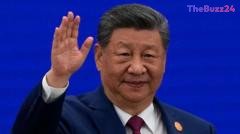
China Rejects ‘Malicious Competition’ in AI, Advocates for Global Cooperation Amidst US Rivalry
China has strongly criticized what it terms “threat narratives” surrounding artificial intelligence governance, cautioning against engagement in confrontation and “malicious competition.” This stance comes as prominent figures in the US tech industry, including Anthropic CEO Dario Amodei, have called for a measured slowdown in AI development, often with an implicit aim to prevent China from gaining a lead in the global AI race. Meanwhile, former US President Donald Trump has emphasized the imperative for the United States to accelerate its technological advancements ahead of China.
Beijing’s foreign ministry spokesperson, Guo Jiakun, recently stated that “narratives of threat, confrontation, and malicious competition serve only to disrupt the process of global AI governance and are not in anyone’s interest.” He urged all nations to collaborate in advancing AI in an open, inclusive, and universally beneficial manner. These comments underscore the significant challenges in forging a consensus between the world’s two leading AI powers. Experts, such as Chang Jun Yan from Singapore’s S Rajaratnam School of International Studies, believe a US-China agreement to regulate AI development is “next to impossible” due to its deep entanglement with national security interests.
Artificial intelligence has become a central battleground in the US-China rivalry, with both economic giants vying for technological supremacy. Despite US export restrictions on critical chips, China’s AI innovation continues to expand, fueled by open-source technologies and robust government backing. While many experts still place the US ahead, Chinese firms are actively working to bridge the gap, seeking substantial investments comparable to those flowing into American AI ventures. Chinese leaders, including Xi Jinping, have also acknowledged the inherent risks of AI, with State Security Minister Chen Yixin stressing the need to “balance development and security” through improved laws, ethical guidelines, and risk prevention to safeguard national interests.
Despite the intense competition, there are signals of a shared understanding regarding frontier AI risks between Washington and Beijing, as noted by Kenton Thibaut of the Atlantic Council. Thibaut suggests China has “technical reasons” to cooperate, enabling its developers to observe model deployment outside China and identify vulnerabilities. China has already taken steps to shape global AI governance, establishing the World AI Cooperation Organisation in July and proposing an open-source AI community at the recent BRICS summit. As calls for AI regulation intensify in the US, with figures like OpenAI’s Sam Altman and Microsoft’s Satya Nadella advocating for controlled development, the upcoming talks between US and Chinese officials, including a potential meeting between US Treasury Secretary Scott Bessent and Chinese Vice-Premier He Lifeng, are expected to include AI on the agenda. The stakes are exceptionally high, with some experts warning that a durable Chinese lead in frontier AI would be viewed not merely as losing a technology race, but as forfeiting a critical component of the next industrial era’s strategic infrastructure.
Key Takeaways
- China rejects the notion of "malicious competition" in AI development, advocating for open, inclusive, and globally beneficial governance.
- Despite calls for a slowdown in AI development from some US tech leaders, the US and China remain locked in a fierce strategic competition for AI dominance.
- Both nations acknowledge the significant risks posed by advanced AI and are exploring avenues for regulation and international cooperation, even amidst their rivalry.
Editor’s Analysis & Impact
The ongoing geopolitical tension surrounding AI development, as highlighted by China’s recent statements, signals a challenging path for global AI governance. This competitive environment is likely to accelerate innovation within both the US and China, potentially leading to divergent technological ecosystems and regulatory frameworks. For global tech companies, this could mean navigating increasingly complex and fragmented markets. The future outlook suggests a continued dual-track approach to AI, where national security interests often outweigh calls for unified international regulation. The broader implications extend beyond technology, influencing global power dynamics and the ethical standards that will govern future AI systems. A lack of coordinated global oversight could exacerbate existing geopolitical rivalries and introduce new, unforeseen risks associated with AI’s rapid advancement.
Frequently Asked Questions
Q: What is China's main concern regarding the global AI discussion?
A: China is primarily concerned about "threat narratives" and "malicious competition" that it believes disrupt global AI governance. It advocates instead for open, inclusive, and beneficial development of AI for all parties.
Q: Why is an agreement between the US and China on AI regulation considered difficult?
A: Experts believe an agreement is challenging because AI development is deeply intertwined with each state's core national security interests. This makes cooperation on slowing down or jointly regulating development highly unlikely, as neither wants to cede a strategic advantage.
Q: What initiatives has China proposed for global AI governance?
A: China has established the World AI Cooperation Organisation in July and, more recently, proposed creating a community for open-source AI at the BRICS summit. These initiatives aim to shape global AI governance according to China's vision.
AI Disclosure: This article is based on verified data and official reports. Our Team and AI have cross-referenced every financial detail with primary sources to ensure total accuracy.
More from this Category