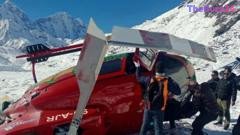
Fatal Collision Near Everest Base Camp Claims Tourist Life, Injures Two
A tragic incident unfolded near Mount Everest’s base camp when two helicopters collided during a landing attempt, resulting in the death of an Indian tourist and injuries to two others. The collision occurred in Pheriche, a village situated approximately 12 kilometers (7 miles) south of the iconic base camp, at an altitude of over 4,000 meters (13,120 feet) above sea level.
The deceased has been identified as Vasanth Kumar Balaramudu, an Indian national. Fishtail Air confirmed that one of its aircraft was involved in the collision, carrying Mr. Balaramudu, another tourist from New Zealand who sustained injuries, and the helicopter’s captain, who was also injured. The injured individuals were subsequently rescued and transported to Kathmandu for medical attention. The second helicopter, operated by Air Dynasty, was reportedly carrying cargo and had only one crew member on board, who emerged from the incident unharmed.
Eyewitness accounts and verified footage suggest the accident occurred around 08:15 local time when the rotor blades of both aircraft clipped each other as they simultaneously attempted to land at the same spot. Officials from Nepal’s Civil Aviation Authority indicated that this simultaneous landing attempt was the likely cause. Despite the challenging high-altitude environment, video evidence showed clear weather conditions with no apparent strong winds at the time of the crash, though one helicopter appeared to be descending more rapidly than the other.
Helicopter transport is crucial in Nepal’s rugged Himalayan terrain, serving both locals and the burgeoning adventure tourism industry. However, operations are frequently complicated by rapidly changing weather and extreme altitudes, making aviation inherently hazardous. The incident took place during the popular autumn climbing season, a busy period for expeditions heading to Mount Everest and Ama Dablam.
Key Takeaways
- An Indian tourist died and two others were injured in a helicopter collision near Mount Everest Base Camp.
- The incident involved aircraft from Fishtail Air and Air Dynasty, reportedly occurring due to both attempting to land at the same spot.
- The crash highlights the inherent hazards of aviation in Nepal's high-altitude, challenging Himalayan environment, despite clear weather conditions at the time.
Editor’s Analysis & Impact
This tragic helicopter collision near Mount Everest Base Camp casts a renewed spotlight on aviation safety protocols in Nepal’s challenging Himalayan region. While helicopter services are vital for tourism and logistics in such rugged terrain, incidents like this can significantly impact traveler confidence and the reputation of local operators. The immediate aftermath will likely involve thorough investigations by aviation authorities, potentially leading to calls for stricter air traffic management, enhanced pilot training, and improved landing infrastructure, especially in high-traffic areas like Pheriche during peak climbing seasons. For the tourism industry, particularly adventure tourism centered around Everest, ensuring perceived and actual safety is paramount to maintaining its appeal and economic viability. This event underscores the critical balance between accessibility and safety in extreme environments.
Frequently Asked Questions
Q: What caused the helicopter collision near Everest?
A: The collision reportedly occurred when two helicopters, one from Fishtail Air and another from Air Dynasty, attempted to land at the same spot simultaneously, causing their rotor blades to clip.
Q: Who were the casualties in the incident?
A: An Indian tourist, Vasanth Kumar Balaramudu, was killed. A New Zealand tourist and the captain of the Fishtail Air helicopter sustained injuries. The crew member of the Air Dynasty helicopter was unharmed.
Q: Why are helicopter operations in the Himalayas considered hazardous?
A: Helicopter operations in the Himalayan region are inherently hazardous due to the challenging high-altitude terrain, rapidly changing weather conditions, and the complexities of managing air traffic in remote areas.
AI Disclosure: This article is based on verified data and official reports. Our Team and AI have cross-referenced every financial detail with primary sources to ensure total accuracy.
More from this Category