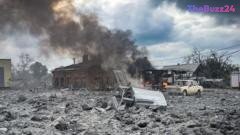
Mid-Air Breakup Suspected in Tragic Florida Learjet Crash Claiming Nine Lives
Investigators are exploring the possibility that a private Learjet 60 began to break apart in mid-air before it tragically crashed in Florida, killing all nine people on board. The aircraft, which was en route from Austin, Texas, to the Bahamas, plunged into a multi-lane highway in Palm Beach, exploding upon impact.
The fatalities include tech entrepreneur Adam Robinson, his wife Helen Sharp, their two young children, Emma (four) and Charlie (two), along with family friends Rachael Reed and Charmi Fehr, and nanny Anita Maria Cetina. The flight crew, identified as pilot Jeffrey Gregory and 20-year-old co-pilot Nathalia Filgueiras, also perished in the devastating incident. One individual in a vehicle on the ground sustained a leg injury.
The National Transportation Safety Board (NTSB) is leading the complex investigation, with weather conditions at the time of the crash being a significant focus. Severe thunderstorms and heavy rainfall were reported in the area when the jet crashed around 12:50 local time. A major challenge for investigators is accessing the main wreckage, which created a substantial crater on Military Trail, a six-lane road. This crater has since become partially filled with water due to the inclement weather, and debris from the aircraft was scattered across a wide area, including sports fields, businesses, and homes.
Preliminary flight analysis indicates the jet was plummeting at hundreds of feet per second in its final moments. Air traffic control recordings captured the crew reporting “moderate turbulence” and “managing the ice,” followed by urgent declarations of “picking up precipitation” and a need to climb. Moments later, the crew reported an “overspeed condition descending 20,000ft per minute” before stating, “we are going to crash into the ground.” Investigators are also working to determine if a cockpit voice recorder was on board and if it can be recovered to provide further insights into the final moments of the flight.
Key Takeaways
- A private Learjet 60 crashed in Florida, resulting in the deaths of all nine individuals onboard, including a tech entrepreneur and his young family.
- Investigators are examining evidence suggesting the aircraft may have experienced a mid-air breakup prior to its impact with a multi-lane highway.
- Severe weather, including heavy rainfall and thunderstorms, is a key focus of the NTSB investigation, which faces challenges recovering wreckage from a deep crater.
Editor’s Analysis & Impact
This tragic Learjet crash highlights critical aspects of private aviation safety and the challenges of flight operations in adverse weather. The suspected mid-air breakup, if confirmed, would point to a catastrophic structural or mechanical failure, or extreme aerodynamic stress. The NTSB’s meticulous investigation will be crucial in determining the exact sequence of events, potentially leading to revised safety protocols or aircraft maintenance guidelines for similar private jets. The human element, with the loss of a family and young professionals, underscores the profound impact of such disasters. The findings could influence insurance, manufacturing standards, and pilot training, particularly regarding severe weather encounters, and may prompt a broader review of private air travel safety measures.
Frequently Asked Questions
Q: What is the suspected cause of the Learjet 60 crash in Florida?
A: Investigators are currently exploring evidence suggesting the aircraft may have broken apart in mid-air before impact. Severe weather conditions, including heavy rainfall and thunderstorms, are also a major focus of the investigation.
Q: Who were the victims of the Florida jet crash?
A: All nine people on board perished. They include tech entrepreneur Adam Robinson, his wife Helen Sharp, their two children (Emma and Charlie), family friends Rachael Reed and Charmi Fehr, nanny Anita Maria Cetina, pilot Jeffrey Gregory, and co-pilot Nathalia Filgueiras.
Q: What challenges are investigators facing in the crash inquiry?
A: The National Transportation Safety Board (NTSB) is struggling to recover the main wreckage due to a deep crater created by the impact on the highway, which has been partially filled with water from severe storms. Debris is also scattered across a wide area, complicating recovery efforts.
AI Disclosure: This article is based on verified data and official reports. Our Team and AI have cross-referenced every financial detail with primary sources to ensure total accuracy.
More from this Category