US Intensifies Pressure on Venezuela for Prisoner Release and Electoral Reform
The United States is escalating its calls for Venezuela to release remaining political prisoners and implement crucial electoral reforms, following the capture and ongoing trial of former Venezuelan leader Nicolás Maduro. While over 1,000 political detainees have been freed since Maduro was taken to New York on January 3 to face drug-trafficking and torture charges, the Venezuelan prisoners’ rights group Foro Penal reports that 322 individuals remain in detention.
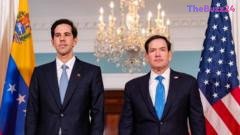
US Secretary of State Marco Rubio recently met with his Venezuelan counterpart, Oliver Blanco, to press for the release of these prisoners. During their discussions, Secretary Rubio also emphasized the need for reforms designed to establish the foundation for free, fair, and credible elections in the nation. This diplomatic push aligns with a long-standing demand from Venezuelan opposition leader María Corina Machado, a 2025 Nobel Peace Prize laureate, who returned from exile in October and immediately met with relatives of political detainees.
Many of those currently imprisoned were arrested in the aftermath of the disputed 2024 presidential election. That election, which saw the government-aligned National Electoral Council declare Nicolás Maduro the winner, was widely contested. Opposition tallies, verified by independent media, suggested an opposition victory, and the Carter Center, which deployed independent observers, stated the election “could not be considered democratic.” A UN fact-finding mission subsequently documented a period of “harsh repression” orchestrated by the Venezuelan government against perceived political opponents.
Following Maduro’s capture, his loyal vice-president, Delcy Rodríguez, was sworn in as interim president with the backing of the Trump administration. However, opposition parties within Venezuela have expressed growing impatience with the slow pace of reforms. The US State Department reiterated its commitment to President Donald Trump’s three-phase plan, which includes “stabilisation, economic recovery and political reconciliation, and democratic transition.” Secretary Rubio has stressed the urgency of replacing Venezuela’s “election infrastructure” for any future elections to be valid. While interim President Rodríguez has publicly stated that elections will occur under a “renewed” electoral authority, she has not provided a timeline, contrasting with opposition leader Machado’s push for elections within the next year, having previously suggested July 24, 2027.
Key Takeaways
- The United States is pressuring Venezuela to release 322 remaining political prisoners and implement swift electoral reforms following the capture and trial of former leader Nicolás Maduro.
- US Secretary of State Marco Rubio met with his Venezuelan counterpart to discuss a three-phase plan for stabilization, economic recovery, and democratic transition, emphasizing the need for a renewed electoral infrastructure.
- Venezuelan interim president Delcy Rodríguez has committed to future elections under a "renewed" electoral authority, while opposition leader María Corina Machado is advocating for a specific timeline, pushing for a vote within the next year.
Editor’s Analysis & Impact
Political instability and uncertainty in Venezuela continue to deter foreign investment and hinder economic recovery. The US-backed transition plan, if successful, could open doors for international aid and investment, particularly in the energy sector, but the current lack of a clear electoral timeline creates significant risk. The path to democratic transition remains fraught with challenges. The divergence in timelines between the interim government and the opposition, coupled with the need for fundamental electoral reforms, suggests a prolonged period of political negotiation and potential unrest. The US commitment to its three-phase plan indicates sustained international pressure, but internal Venezuelan dynamics will ultimately dictate the pace and success of reforms. This situation highlights the ongoing struggle for democratic governance in Latin America and the complexities of international intervention. The resolution of Venezuela’s political crisis could set a precedent for regional stability and the role of external actors in promoting democratic change. Continued detention of political prisoners also raises significant human rights concerns on the global stage.
Frequently Asked Questions
Q: Who is Nicolás Maduro and what are the charges against him?
A: Nicolás Maduro was the former leader of Venezuela. He was seized by US forces and is currently facing trial in New York on charges of drug-trafficking and torture.
Q: What is the US's three-phase plan for Venezuela?
A: The US President Donald Trump's administration has outlined a three-phase plan for Venezuela focusing on stabilization, economic recovery and political reconciliation, and democratic transition, including the establishment of free, fair, and credible elections.
Q: Why is the 2024 Venezuelan presidential election controversial?
A: The 2024 presidential election was widely disputed, with opposition tallies and independent observers, including the Carter Center, suggesting the opposition candidate won despite the government-dominated National Electoral Council declaring Nicolás Maduro the victor. A UN mission also reported "harsh repression" against political opponents in its aftermath.
AI Disclosure: This article is based on verified data and official reports. Our Team and AI have cross-referenced every financial detail with primary sources to ensure total accuracy.
More from this Category