Suspected Sabotage Cripples Dutch Rail Network, Prompts National Investigation
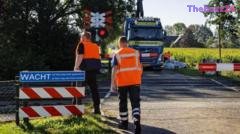
Major rail services across the Netherlands, including vital routes to Amsterdam and Schiphol Airport, experienced widespread disruption on Tuesday following suspected acts of sabotage. The country’s railway infrastructure operator, ProRail, reported over 35 incidents where pipes and cables were deliberately placed on tracks in central and northern regions, leading to extensive cancellations and delays.
The intentional placement of these materials caused ProRail’s computer systems to erroneously detect trains on the tracks, effectively preventing traffic control from clearing the railway for legitimate traffic. While no accidents were reported, ProRail emphasized the extreme danger of these actions, noting that a train near Steenwijk had struck metal on the track earlier, though fortunately at reduced speed, preventing further damage. The disruption was so severe that train operator Nederlandse Spoorwegen (NS) stated it was impossible to provide bus replacement services for many affected routes.
A comprehensive criminal investigation has been launched by the Netherlands Police, with support from the national public prosecutor’s office and the country’s intelligence agency, AIVD. As of now, no suspects have been identified, nor has a motive been established. Dutch Prime Minister Rob Jetten condemned the incidents as “disruptive and life-threatening,” underscoring the gravity of the situation.
The timing of the disruption coincided with Prinsjesdag, the day the Dutch government presents its budget. Separately, farmers’ protests, organized by groups like the Farmers Defence Force (FDF) against government nitrogen emission plans, involved lighting hay bales on roads. However, authorities have not established any link between these protests and the rail sabotage. FDF denied responsibility for the railway incidents but acknowledged the possibility of individual farmers’ involvement. Mirjam van Velthuizen, interim CEO of NS, highlighted the nation’s reliance on its railway system and called for increased investment in contingency planning to enhance resilience against future disruptions.
Key Takeaways
- The Netherlands experienced widespread rail disruption due to over 35 suspected sabotage incidents involving pipes and cables placed on tracks.
- A national criminal investigation is underway involving police, prosecutors, and the AIVD, though no suspects or motives have been identified.
- The incidents, which occurred on Prinsjesdag, prompted calls for increased investment in railway resilience despite no established link to concurrent farmer protests.
Editor’s Analysis & Impact
The suspected sabotage of the Dutch rail network highlights critical vulnerabilities in national infrastructure, with potential ripple effects across the European transport sector. Such deliberate acts, regardless of motive, can severely impact economic activity by disrupting supply chains, commuter travel, and international connections, as evidenced by the affected routes to Schiphol. The incident underscores the growing need for robust cybersecurity and physical security measures for critical infrastructure. Future outlook suggests increased scrutiny on infrastructure protection and potentially higher investment in resilient systems. The lack of identified suspects or motives creates uncertainty, raising concerns about potential copycat incidents or the emergence of new forms of protest or domestic terrorism targeting essential services.
Frequently Asked Questions
Q: What caused the major rail disruption in the Netherlands?
A: The disruption was caused by suspected sabotage, where pipes and cables were deliberately placed on railway tracks at over 35 locations. This tricked the computer systems into believing trains were present, preventing normal traffic control.
Q: Who is investigating the incidents?
A: A comprehensive criminal investigation has been launched by the Netherlands Police, supported by the national public prosecutor's office and the country's intelligence agency, AIVD.
Q: Were the rail disruptions linked to the farmer protests?
A: Authorities have not established any link between the rail sabotage and the concurrent farmer protests, which involved lighting hay bales on roads. The Farmers Defence Force (FDF) denied responsibility for the railway incidents.
AI Disclosure: This article is based on verified data and official reports. Our Team and AI have cross-referenced every financial detail with primary sources to ensure total accuracy.
More from this Category