Pioneering Space Health: NASA’s IMM Prepares for Lunar and Martian Missions
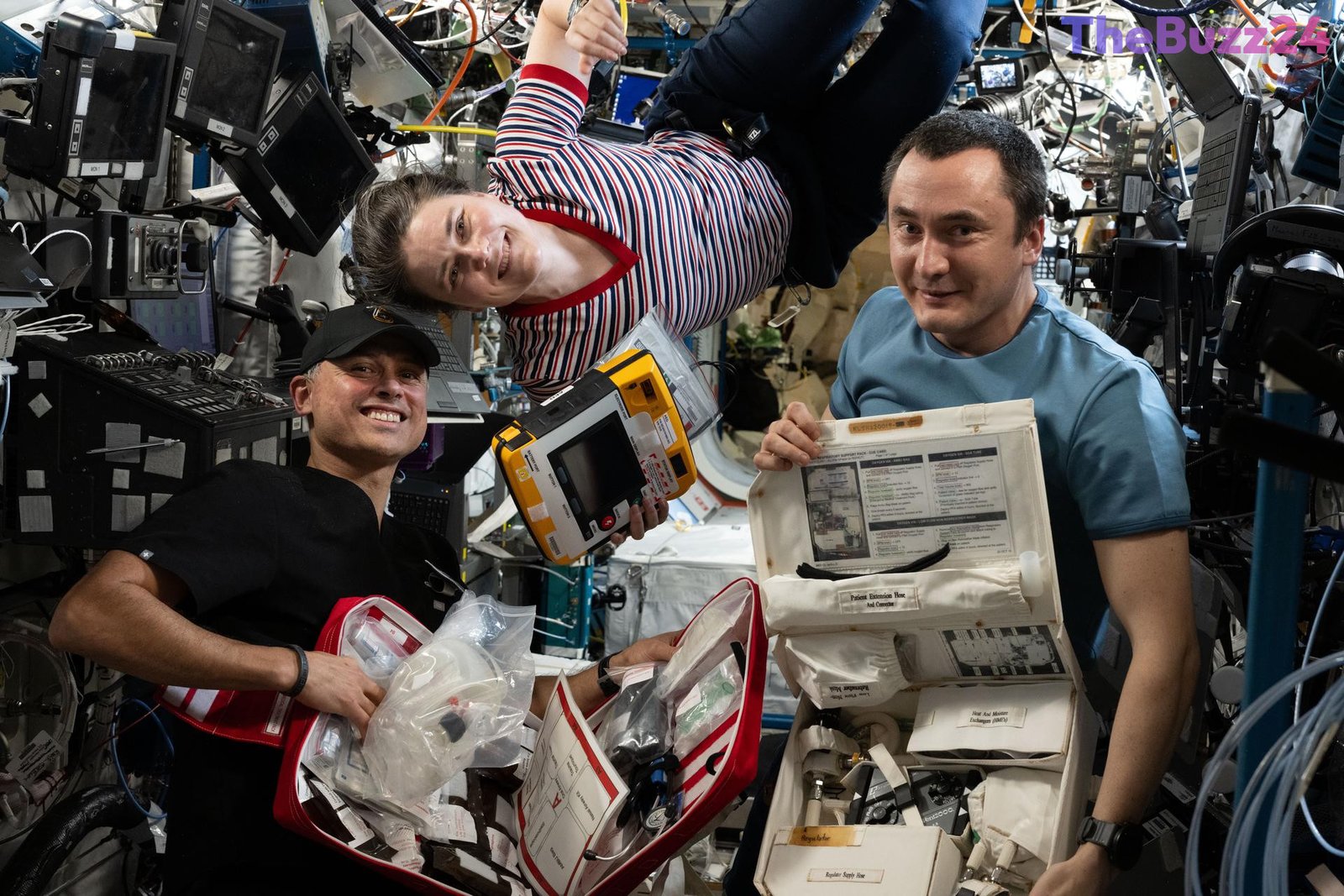
As humanity sets its sights on extended missions to the Moon and Mars, preparing for the unique medical challenges of long-duration space travel becomes paramount. Factors such as cosmic radiation, microgravity, and the vast distance from Earth introduce complex health considerations for astronauts. To proactively address these needs, NASA has developed the Integrated Medical Model (IMM), a sophisticated decision-support tool. Its development is critical, as evidenced by ongoing preparations, including flight engineers like Anil Menon of NASA and Roscosmos’s Anna Kikina and Pyotr Dubrov, who were recently observed checking emergency medical equipment aboard the International Space Station’s Destiny laboratory module.
The IMM operates by leveraging extensive medical evidence and advanced computational modeling to forecast potential health risks well before a mission commences. It draws upon decades of flight records and clinical research compiled within NASA’s Integrated Medical Evidence Database (iMED). Utilizing Monte Carlo simulations, the model can project thousands of distinct mission paths, factoring in specific parameters such as crew size, mission duration, planned spacewalks, and the spacecraft’s internal environment. This allows planners to assess risks even for novel mission profiles that lack historical precedents, evaluating over 100 medical conditions ranging from routine health concerns like infections and kidney stones to space-specific hazards such as decompression sickness, radiation sickness, and space motion sickness.
The model generates several quantitative metrics essential for mission preparation. These include the Total Medical Events (TME), which projects the number of illnesses or injuries; the Crew Health Index (CHI), indicating overall functional capacity; and Quality-Adjusted Time Lost (QTL), estimating time spent on diagnosis, treatment, and recovery. Crucially, it also calculates the Probability of Evacuation and Loss of Crew Life (EVAC / LOCL) and forecasts Resource Utilization, detailing necessary medical consumables, medications, and tools. Given the strict mass and volume constraints on spacecraft, these outputs are vital for guiding the composition of onboard medical kits, known as MedCaps, allowing planners to balance comprehensive medical coverage with available cargo space.
While emergency medical evacuation from the International Space Station can occur within hours, deep-space exploration dramatically alters this timeline, introducing significant communication delays and eliminating the option for a rapid return to Earth. The IMM provides flight surgeons and engineers with the critical data required to design and implement resilient, self-sufficient medical systems, ensuring the health and safety of astronauts on the long and challenging journeys that lie ahead.
Key Takeaways
- NASA's Integrated Medical Model (IMM) is a critical decision-support tool for planning astronaut health during long-duration space missions to the Moon and Mars.
- The IMM uses computational modeling and historical data to forecast over 100 potential health risks, from common ailments to space-specific conditions like radiation sickness.
- It generates vital metrics for mission planners, guiding the composition of onboard medical kits and ensuring crew self-sufficiency for deep-space journeys where rapid evacuation is impossible.
Editor’s Analysis & Impact
The development of NASA’s Integrated Medical Model (IMM) marks a significant leap in ensuring the safety and success of future human spaceflight. This technology enhances the viability of long-duration space travel, opening doors for more ambitious missions by both government agencies and private space companies, setting a new standard for medical preparedness in extreme environments. The IMM’s capabilities will become increasingly vital as humanity ventures further into space. Its predictive analytics could be adapted for other extreme environments on Earth or for future space habitats, fostering innovation in remote healthcare and autonomous medical systems. This model also underscores the complex challenges of human spaceflight beyond engineering, highlighting the critical role of medical science and potentially inspiring advancements in terrestrial telemedicine and predictive health analytics, benefiting remote communities or disaster response scenarios.
Frequently Asked Questions
Q: What is the primary purpose of NASA's Integrated Medical Model (IMM)?
A: The IMM is a decision-support tool designed to forecast potential health risks for astronauts during long-duration space missions, helping mission planners prepare for medical realities before launch.
Q: How does the IMM assess health risks for future space missions?
A: It utilizes decades of flight records and clinical research from NASA’s Integrated Medical Evidence Database (iMED), employing Monte Carlo simulations to model thousands of potential mission scenarios and evaluate over 100 medical conditions.
Q: Why is the IMM particularly important for deep-space exploration?
A: For missions to the Moon and Mars, rapid emergency evacuation back to Earth is not feasible. The IMM provides crucial data to build resilient, self-sufficient medical systems, ensuring astronaut health and safety far from Earth.
AI Disclosure: This article is based on verified data and official reports. Our Team and AI have cross-referenced every financial detail with primary sources to ensure total accuracy.
More from this Category