Revealed: Extensive Damage to US Bases in Middle East from Iranian Strikes Raises Readiness Concerns
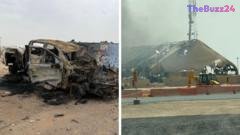
Recent revelations, supported by compelling photographic evidence, expose widespread destruction at multiple United States military installations across Saudi Arabia and Kuwait, stemming from Iranian strikes. The images, reportedly from active military personnel, depict a severed Boeing E-3 Sentry radar jet, its tail section crumpled, alongside flattened trailers and severely damaged buildings at sites including Prince Sultan Air Force Base, Camp Beuhring, and Camp Arifjan. These visuals underscore the significant impact of the attacks, with one military member noting the extent of damage has not been fully communicated to the American public.
Further corroborating the visual evidence, official reports have confirmed that hundreds of structures at US bases throughout the Middle East have sustained damage or been destroyed by Iranian actions. These assessments detail substantial equipment losses, amounting to billions of dollars, including multiple aircraft. The destruction of a Boeing E-3 Sentry, a critical early warning and control aircraft, highlights the strategic nature of the targets. Replacing such specialized assets, which are no longer in production, would necessitate costly upgrades to more modern equivalents like the E-7.
Experts, including former national security official Brian Katulis, have voiced concerns that the visible damage points to inadequate US defenses. Katulis, now a senior fellow at the Middle East Institute, suggests that adversaries like China and Russia may have assisted Iran in targeting these vulnerabilities. He emphasizes that the conflict has not only consumed precious military resources but also forced the diversion of assets from other strategic regions, potentially leaving US partners in Asia more exposed and impacting overall military readiness against global threats.
Amidst these revelations, political pressure has intensified within the United States to de-escalate the conflict with Iran. The House of Representatives has repeatedly voted to end US military action without congressional approval, reflecting a growing bipartisan desire to conclude the engagement. This legislative push, alongside discussions about the substantial financial cost and the impeachment attempt against Defense Secretary Pete Hegseth, underscores the domestic scrutiny surrounding the ongoing military presence and operations in the region.
Key Takeaways
- Photographic evidence and official reports confirm widespread damage to US military bases in Saudi Arabia and Kuwait from Iranian strikes, including critical aircraft like the Boeing E-3 Sentry.
- The attacks have resulted in billions of dollars in equipment losses and raised concerns among experts about the adequacy of US defenses and overall military readiness, potentially emboldening adversaries.
- Mounting political pressure in the US, including congressional votes, seeks to end military action in Iran, highlighting domestic scrutiny over the conflict's financial and strategic costs.
Editor’s Analysis & Impact
The revealed extent of damage to US military installations in the Middle East from Iranian strikes carries significant implications for defense strategy and geopolitical stability. The substantial financial cost, estimated in billions, will undoubtedly impact future defense budgets and procurement decisions, potentially accelerating the shift towards more resilient and modern defense systems. Furthermore, the assessment of inadequate defenses and the diversion of military assets from other regions could prompt a re-evaluation of US force posture globally, particularly concerning China and Russia. This situation underscores the complex challenges of maintaining global readiness while managing regional conflicts, potentially influencing defense industry investments in advanced missile defense and surveillance technologies. The ongoing political debate in the US also signals a potential shift in foreign policy, prioritizing de-escalation and a more measured approach to military engagements abroad.
Frequently Asked Questions
Q: What kind of damage did US bases in the Middle East sustain from Iranian strikes?
A: US military installations in Saudi Arabia and Kuwait suffered extensive damage, including a severed Boeing E-3 Sentry radar jet, flattened trailers, and severely damaged buildings at sites like Prince Sultan Air Force Base, Camp Beuhring, and Camp Arifjan.
Q: What are the financial implications of these attacks for the US?
A: Official reports indicate billions of dollars in equipment losses, including multiple aircraft. Replacing specialized assets like the Boeing E-3 Sentry, which is no longer in production, would require significant investment in modern equivalents.
Q: How has the US government responded to the ongoing conflict with Iran?
A: There is growing political pressure within the US to de-escalate the conflict. The House of Representatives has repeatedly voted to end US military action without congressional approval, reflecting a desire to conclude the engagement amidst scrutiny over its costs and strategic impact.
AI Disclosure: This article is based on verified data and official reports. Our Team and AI have cross-referenced every financial detail with primary sources to ensure total accuracy.
More from this Category