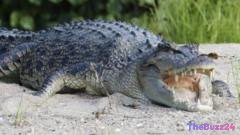
Crocodile-Infested Waters Approved as Rowing Venue for Brisbane 2032 Olympics
The Fitzroy River in Rockhampton, Queensland, has officially been cleared to host the rowing and canoeing events for the Brisbane 2032 Olympic and Paralympic Games. This decision comes despite the river being home to an estimated 500 saltwater crocodiles, a detail that has sparked both intrigue and concern. An independent technical assessment recently validated the venue’s suitability, focusing primarily on environmental conditions, water levels, and flood risks rather than the local wildlife.
International sporting bodies have thrown their support behind the venue. World Rowing President Jean-Christophe Rolland and Paddle Worldwide President Thomas Konietzko both expressed confidence in the course’s ability to deliver fair and high-quality competition. The Fitzroy River Flatwater Facility is not a new venue; it already serves as a hub for state championships, local regattas, and national training camps. Officials have emphasized that contingency plans are already established to manage crocodile sightings and ensure athlete safety.
However, not everyone is convinced. Three-time Australian Olympic rowing gold medalist Drew Ginn raised several concerns, pointing out the potential logistical nightmare of relocating crocodiles and questioning the fairness of the course conditions. Ginn also criticized the decision to host events so far from the main hub, noting that Rockhampton is a six-to-seven-hour journey from Brisbane, which could detract from the overall Olympic experience for athletes and spectators alike. In contrast, Brisbane 2032 President Andrew Liveris has previously downplayed the wildlife risks, drawing a parallel to surfing in shark-populated oceans and urging a “can-do” attitude.
Key Takeaways
- The Fitzroy River in Rockhampton has been officially approved for rowing and canoeing events at the Brisbane 2032 Olympics.
- Despite being home to roughly 500 saltwater crocodiles, international rowing and paddling federations have endorsed the venue's technical suitability.
- Critics, including Olympic gold medalist Drew Ginn, have raised concerns over athlete safety, competitive fairness, and the venue's remote location.
Editor’s Analysis & Impact
The approval of the Fitzroy River highlights a growing trend in Olympic planning: utilizing existing regional infrastructure to manage ballooning hosting costs. While decentralized venues ease the financial burden on host cities, they introduce unique logistical and environmental challenges. In this case, the presence of apex predators like saltwater crocodiles presents a public relations hurdle, even if local safety protocols are robust. Furthermore, placing events hours away from the main Olympic village risks diluting the unified “Games experience” for athletes and fans. Moving forward, the Brisbane 2032 organizing committee must balance these regional economic benefits against the practical realities of athlete safety, competitive integrity, and spectator accessibility. The success of this venue will depend heavily on flawless execution of wildlife management and transport logistics.
Frequently Asked Questions
Q: Are crocodiles a real threat to Olympic athletes on the Fitzroy River?
A: While saltwater crocodiles inhabit the river, the venue is already an active training facility with established safety protocols and contingency plans for wildlife sightings. Olympic officials have assured that athlete safety remains a top priority.
Q: Why was this venue chosen if it is so far from Brisbane?
A: The Fitzroy River Flatwater Facility in Rockhampton is an established, high-quality venue for flatwater sports. Utilizing existing regional infrastructure helps reduce the overall cost of building new venues for the 2032 Games.
Q: What did the technical assessment of the river focus on?
A: The independent assessment focused on how the course would perform under various weather conditions, water levels, and flood risks to ensure fair competition, rather than focusing on the local crocodile population.
AI Disclosure: This article is based on verified data and official reports. Our Team and AI have cross-referenced every financial detail with primary sources to ensure total accuracy.
More from this Category