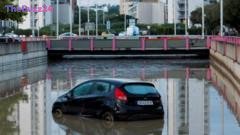
Torrential Rains Unleash Deadly Floods Across Spain’s Eastern Coast
Torrential downpours and flash floods have battered Spain’s northeastern regions, resulting in at least one fatality and significant travel disruptions. The national weather agency, AEMET, had issued severe weather warnings for Wednesday, including a red alert specifically for the Barcelona coastline, signaling the severity of the impending storms.
Tragically, the body of a man was recovered on Thursday in Olivella, a town located approximately 40 kilometers west of Barcelona. Authorities confirmed that his vehicle was swept away by a rapidly rising stream. This incident underscores the perilous conditions residents faced as floodwaters surged through the area. Emergency services in Catalonia reported an overwhelming volume of calls, exceeding 850, and documented over 500 separate incidents directly linked to the intense rainfall.
The severe weather has had a cascading effect on transportation networks. Flights were cancelled, and numerous roads became impassable due to submersion. In Barcelona, the disruption extended to public transport, with several metro stations temporarily closed and bus routes rerouted. Regional train services experienced significant delays, and El Prat airport faced cancellations and diversions. The neighboring Valencia region also bore the brunt of the storms, with some areas recording over 70 millimeters of rain in a mere 30-minute period, an exceptionally rare and intense rainfall event for such a short duration.
Emergency responders in Valencia province handled 478 incidents, primarily related to property damage, water ingress, and traffic chaos. The capital city’s metro system was entirely suspended, and its airport was forced to close for several hours, leading to flight diversions. Even sporting events were impacted, with a football match postponed due to a waterlogged pitch and flooding affecting player access areas. This extreme weather event follows Spain’s hottest summer on record and an unusually warm September, raising concerns among scientists about the increasing intensity of Mediterranean storms, potentially exacerbated by climate change.
Key Takeaways
- One person has died in Spain due to flash floods caused by torrential rain.
- Severe weather disrupted travel, including flight cancellations and road closures, across Catalonia and Valencia.
- The extreme rainfall event occurred after Spain experienced its hottest summer on record, prompting discussions about climate change impacts on Mediterranean storms.
Editor’s Analysis & Impact
This severe flooding event in Spain highlights the increasing vulnerability of coastal regions to extreme weather phenomena, a trend scientists attribute in part to climate change. The intense rainfall, occurring shortly after a record-breaking heatwave, suggests a pattern of more volatile weather systems. The economic impact, evident in travel disruptions and property damage, is substantial. For the tourism and infrastructure sectors, this underscores the need for enhanced climate resilience and disaster preparedness. The recurrence of such devastating events in Spain also points to broader implications for the Mediterranean region, necessitating adaptive strategies and policy interventions to mitigate future risks.
Frequently Asked Questions
Q: What caused the severe flooding in Spain?
A: The flooding was caused by torrential rain and flash floods that hit Spain's northeastern regions, particularly Catalonia and Valencia. These intense downpours overwhelmed drainage systems and caused rivers and streams to overflow.
Q: How did the flooding affect transportation?
A: The floods caused widespread disruption to transportation. Flights were cancelled or diverted, roads were submerged and impassable, and public transport systems like metro lines and regional trains experienced significant delays or suspensions.
Q: Is climate change a factor in these floods?
A: Scientists suggest that human-driven climate change may be intensifying Mediterranean storms. The Mediterranean Sea absorbs heat during summer, leading to increased evaporation and potentially heavier rainfall when storms develop in autumn, as observed in this event.
AI Disclosure: This article is based on verified data and official reports. Our Team and AI have cross-referenced every financial detail with primary sources to ensure total accuracy.
More from this Category