Stunning Wide-Field Image Captures the Cosmic ‘Comet-Like’ Cocoon Nebula
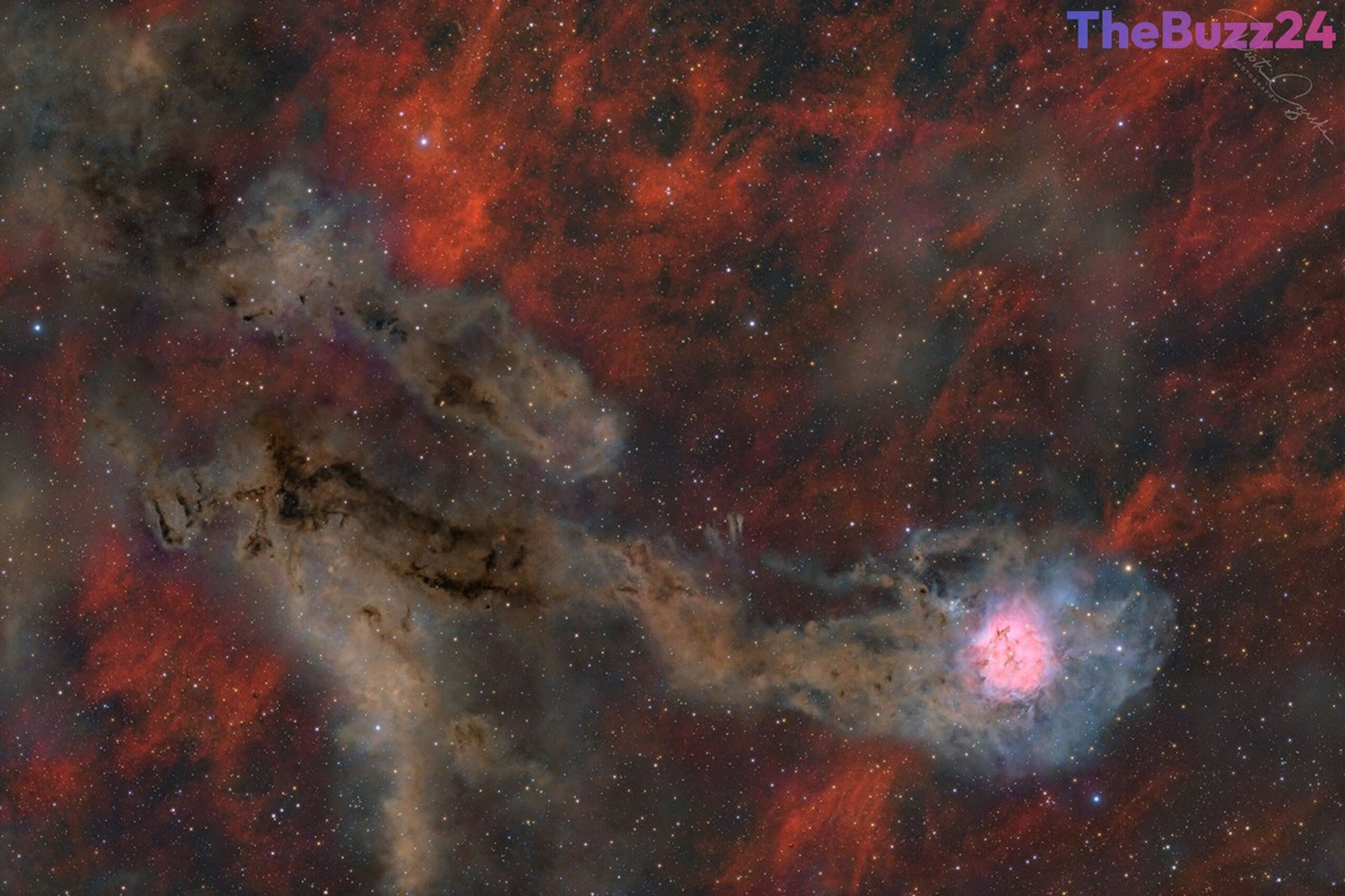
A breathtaking new wide-field astrophotography image has captured the imagination of stargazers, showcasing the Cocoon Nebula in the constellation Cygnus in striking detail. Spanning over two degrees of the crowded stellar landscape, the complex formation uncannily resembles a giant comet traversing the cosmos due to its bright, compact head and an extensive trailing tail of interstellar dust.
Officially cataloged as IC 5146, the central glowing head of the nebula measures approximately 10 light-years across. Meanwhile, the sprawling, dark dusty filaments stretching out to the left span nearly 100 light-years in length. Located roughly 2,500 light-years away from Earth, the glowing region is powered by a luminous young star nestled near its center, which also helps sculpt and clear out a cavity in the surrounding gas.
The intricate details of the nebula’s dusty tail act as a stellar nursery, hiding numerous protostars currently in the process of formation behind impenetrable veils of cosmic dust. The mesmerizing photograph was successfully captured in July from the dark skies of Death Valley, California, highlighting the incredible clarity achievable by modern astrophotographers utilizing specialized equipment in remote locations.
Key Takeaways
- A newly highlighted wide-field image showcases the Cocoon Nebula (IC 5146) in the constellation Cygnus.
- The nebula complex mimics the appearance of a comet, featuring a 10-light-year bright head and a 100-light-year dusty tail.
- The striking photograph was captured in July from the dark skies of Death Valley, California.
Editor’s Analysis & Impact
Astrophotography continues to bridge the gap between complex astronomical research and public engagement, sparking widespread interest in space sciences. High-resolution captures of stellar nurseries like the Cocoon Nebula not only provide aesthetic wonder but also offer valuable amateur and professional insights into star formation processes within our galaxy. As dark-sky preservation efforts grow and imaging technology becomes more accessible, the fidelity and reach of deep-space photography will likely continue to expand public participation in astronomy, fostering a deeper appreciation for cosmic phenomena.
Frequently Asked Questions
Q: What is the Cocoon Nebula?
A: The Cocoon Nebula, cataloged as IC 5146, is a star-forming region located approximately 2,500 light-years away in the constellation Cygnus.
Q: Why does the Cocoon Nebula look like a comet in the image?
A: The nebula features a bright, compact emission and reflection head paired with a long, sweeping trail of dark interstellar dust clouds, giving it a distinct comet-like appearance.
Q: Where was the featured photograph taken?
A: The image was captured in July from the dark-sky environment of Death Valley, California.
AI Disclosure: This article is based on verified data and official reports. Our Team and AI have cross-referenced every financial detail with primary sources to ensure total accuracy.
More from this Category