EU Faces Backlash Over Decision to Delist Russian Oligarchs from Sanctions
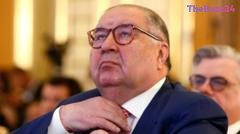
The European Union has moved to remove sanctions on two prominent Russian oligarchs, a decision that has sparked significant outrage from Ukrainian officials. The individuals in question, Alisher Usmanov and Mikhail Fridman, were originally targeted by restrictive measures following the 2022 invasion of Ukraine. The move follows intense lobbying efforts, with France reportedly advocating for Usmanov’s removal citing national security interests, while Luxembourg faced legal pressure from Fridman regarding his frozen assets.
The decision was finalized after a tense diplomatic compromise. Latvia, which had initially blocked the proposal, eventually shifted to an abstention after securing a deal that extends sanctions on approximately 2,600 other individuals and entities for a three-year period. Previously, these sanctions required renewal every six months. Additionally, the agreement included commitments from France to engage in discussions regarding military cooperation and nuclear deterrence initiatives with Latvia.
Ukrainian leadership has condemned the development, characterizing it as a dangerous signal of impunity that undermines the unity of the European bloc. Foreign Minister Andriy Sybiha expressed that the move serves as a victory for Moscow, suggesting it highlights divisions within Europe. While the EU moves to lift these specific restrictions, some member states, including Latvia, have indicated they will pursue national-level sanctions to ensure the individuals remain under pressure.
Both Usmanov and Fridman have long been identified by the EU as key figures with close ties to the Kremlin. Usmanov, the founder of USM Holding, and Fridman, who established the Alfa Group, have both contested the legitimacy of the sanctions. Despite the EU’s decision, the broader sanctions regime remains in place, with the bloc attempting to balance diplomatic negotiations with its ongoing policy of economic pressure against the Russian leadership.
Key Takeaways
- The EU is removing sanctions on Russian oligarchs Alisher Usmanov and Mikhail Fridman following intense diplomatic lobbying.
- The decision was part of a compromise that extends sanctions on over 2,600 other entities for three years instead of the previous six-month cycle.
- Ukrainian officials have strongly criticized the move, warning that it projects weakness and division to the Kremlin.
Editor’s Analysis & Impact
The decision to delist these oligarchs represents a complex intersection of realpolitik and legal vulnerability. By prioritizing long-term sanctions stability—extending the renewal period to three years—the EU is attempting to solidify its broader economic pressure campaign against Russia. However, the political cost is high. The move risks fracturing the unified front against Moscow and provides a propaganda victory for the Kremlin, which has consistently framed Western sanctions as illegal. For the business community, this highlights the ongoing legal risks associated with asset freezes and the potential for individual member states to diverge from EU-wide policy. The future outlook suggests that while the EU will maintain its core sanctions framework, individual nations may increasingly use national-level measures to bypass bloc-wide compromises, leading to a more fragmented and unpredictable regulatory environment for Russian-linked assets.
Frequently Asked Questions
Q: Why were Alisher Usmanov and Mikhail Fridman removed from the sanctions list?
A: Their removal was the result of a diplomatic compromise. France and Luxembourg lobbied for their removal citing national security concerns and legal challenges, respectively, while Latvia agreed to the move in exchange for a three-year extension on sanctions for thousands of other individuals.
Q: How has Ukraine reacted to the EU's decision?
A: Ukraine has expressed strong disapproval, with officials calling the move 'unacceptable' and arguing that it fosters a sense of impunity and division within the European Union.
AI Disclosure: This article is based on verified data and official reports. Our Team and AI have cross-referenced every financial detail with primary sources to ensure total accuracy.
More from this Category