Hubble Hits Historic 200,000th Orbit While Tracking Elusive Supernova Athena
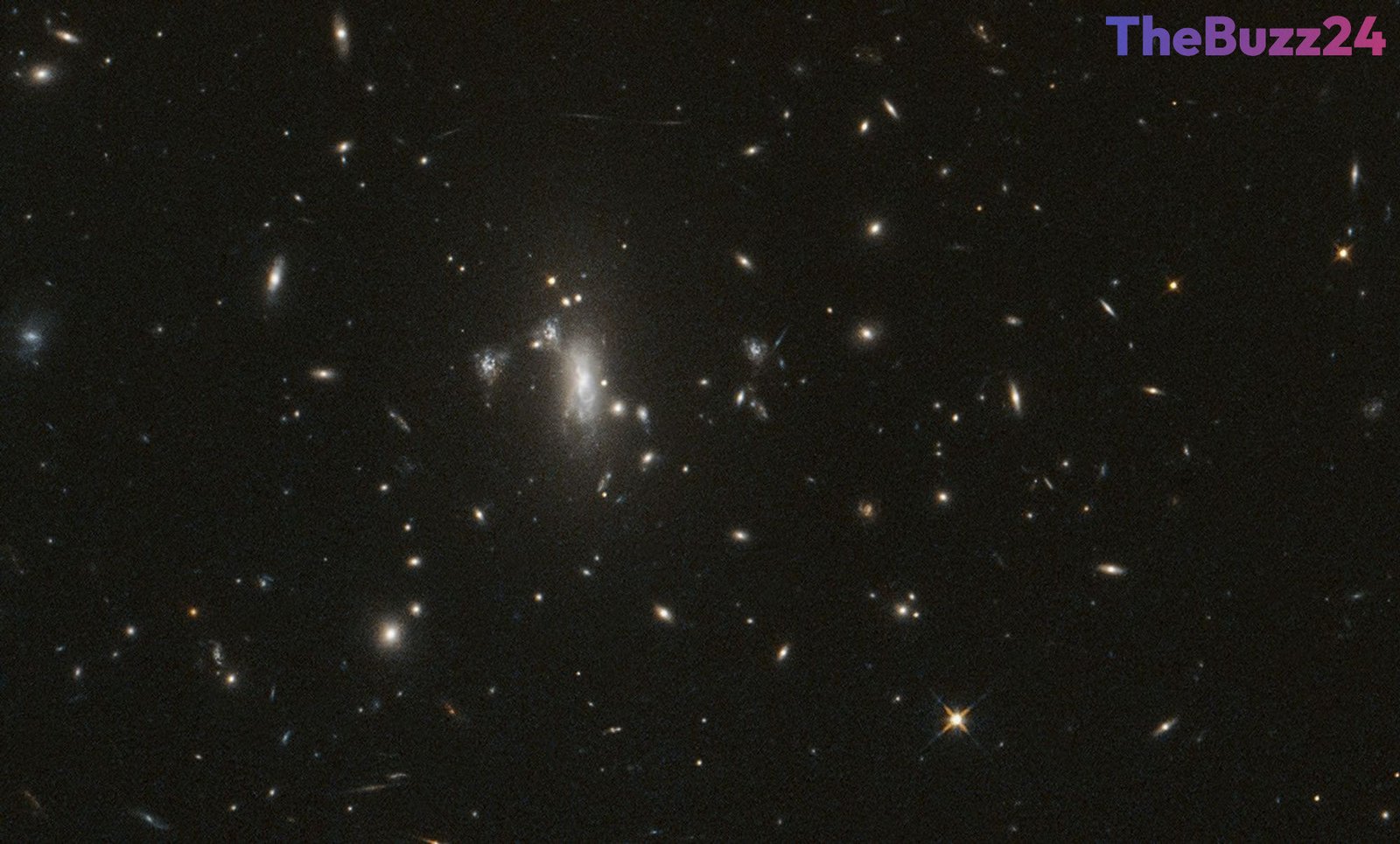
The legendary Hubble Space Telescope has achieved a remarkable milestone by completing its 200,000th orbit around Earth, continuing a decades-long legacy of transforming humanity’s view of the cosmos. Alongside this orbital achievement, the aging yet resilient observatory has turned its advanced optics toward a critical cosmic target: the massive galaxy cluster known as MACS J0417.
Operating as a natural cosmic magnifying glass, MACS J0417 bends and magnifies the light of celestial objects positioned far behind it through a phenomenon called gravitational lensing. Researchers are utilizing Hubble to monitor this cluster specifically for the predicted reappearance of supernova Athena. Originally discovered by the James Webb Space Telescope in 2025, Athena is anticipated to re-emerge in the field of view between now and early March 2027.
Accurately tracking the timing of these stellar reappearances provides scientists with invaluable data. It allows researchers to precisely map the distribution of mass within MACS J0417 while simultaneously refining calculations regarding the universe’s expansion rate. This ongoing observation campaign underscores Hubble’s enduring scientific utility, proving that the veteran space telescope remains a vital partner to newer observatories in unlocking the universe’s deepest mysteries.
Key Takeaways
- The Hubble Space Telescope successfully completed its 200,000th orbit around Earth on September 19.
- Hubble is currently monitoring the massive galaxy cluster MACS J0417 for the predicted reappearance of supernova Athena.
- Data from supernova Athena's expected return will help astronomers measure the universe's expansion rate and map cluster mass.
Editor’s Analysis & Impact
The continued productivity of the Hubble Space Telescope, highlighted by its 200,000th orbit, reinforces the immense value of long-term investments in space-based scientific infrastructure. By working in tandem with newer instruments like the James Webb Space Telescope, Hubble provides complementary datasets that bridge ultraviolet, visible, and infrared astronomy. Tracking phenomena like gravitational lenses and lensed supernovae is not merely an academic exercise; it directly impacts our fundamental cosmological models, including the ongoing debates surrounding the Hubble constant and the precise rate of cosmic expansion. As these veteran instruments continue to exceed their original design lifespans, they pave the way for upcoming observatories, ensuring that our cumulative understanding of the cosmos accelerates exponentially in the coming decades.
Frequently Asked Questions
Q: What is gravitational lensing?
A: Gravitational lensing occurs when a massive celestial body, such as a galaxy cluster, creates a gravitational field strong enough to bend and magnify light from distant objects located behind it.
Q: Why is supernova Athena important to astronomers?
A: Supernova Athena is valuable because tracking the exact timing of its reappearances allows scientists to map the mass of the foreground galaxy cluster MACS J0417 and refine calculations regarding the universe's expansion rate.
Q: How many orbits has Hubble completed around Earth?
A: The Hubble Space Telescope officially marked its 200,000th orbit around Earth on September 19, 2026.
AI Disclosure: This article is based on verified data and official reports. Our Team and AI have cross-referenced every financial detail with primary sources to ensure total accuracy.
More from this Category