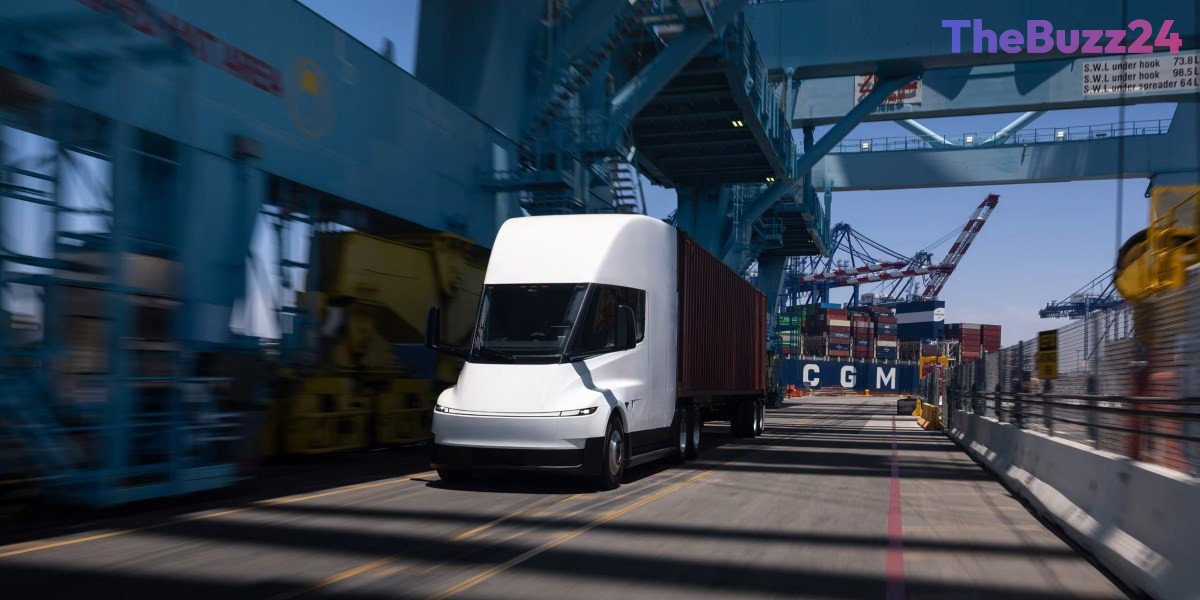
Tesla Launches Long-Awaited All-Electric Semi After Years of Delays
Tesla has officially begun handing over its highly anticipated all-electric Semi trucks to customers, marking a major milestone after nearly a decade of development and setbacks. Company leaders hosted a dedicated launch event at a new facility in Reno, Nevada, showcasing the vehicle’s capabilities to an audience of clients, employees, and industry influencers.
The commercial rollout represents a significant step forward for the EV pioneer as it attempts to break into the heavy-duty freight sector. During the presentation, executives highlighted the Semi’s impressive engineering feats, including a fully loaded range of up to 500 miles on a single charge and a price tag estimated just under $300,000 before standard incentives. Fleet operators are expected to benefit from a substantially lower total cost of ownership compared to traditional diesel-powered trucks, alongside dramatically reduced carbon emissions.
The path to production was far from straightforward. Originally unveiled in 2017 with a targeted rollout in 2019, the Semi faced a cascade of hurdles, ranging from the global pandemic and semiconductor shortages to essential design overhauls based on pilot feedback. Engineers addressed numerous critiques prior to final production, such as replacing the heavily criticized pop-down windows with standard roll-down configurations to improve driver usability at toll booths and security gates.
While scaling up production at the adjacent Reno manufacturing plant—with ambitions to build up to 50,000 trucks annually—remains the immediate priority, charging infrastructure continues to be a central challenge for widespread adoption. To mitigate this, Tesla is actively deploying its proprietary megawatt-charging network to support long-haul operations. As the company navigates this industrial transition, the successful deployment of the Semi could redefine heavy transport and compel legacy automakers to accelerate their own zero-emission freight initiatives.
Key Takeaways
- Tesla has officially begun customer deliveries of the all-electric Semi truck after nearly a decade of delays.
- The most capable version boasts a 500-mile range per charge and is priced just under $300,000 before incentives.
- Engineering updates included shedding 1,000 pounds of vehicle weight and adding practical roll-down windows.
Editor’s Analysis & Impact
The commercial launch of the Tesla Semi marks a critical inflection point for the heavy-duty commercial transport sector, which has historically been slow to decarbonize due to the sheer energy density requirements of long-haul freight. By proving that a fully loaded electric semi-truck can achieve a 500-mile range, Tesla has effectively silenced early skeptics who argued battery technology was insufficient for Class 8 vehicles. However, the broader market adoption will heavily rely on the rapid expansion of dedicated megawatt-scale charging corridors. If Tesla and its partners can successfully scale both vehicle production and charging infrastructure, it could trigger a structural shift across global supply chains, forcing traditional freight companies and legacy manufacturers to aggressively pivot toward electrification to remain competitive.
Frequently Asked Questions
Q: What is the driving range of the Tesla Semi on a single charge?
A: The most capable version of the Tesla Semi is designed to travel 500 miles or more on a single charge, depending on the weight of the load.
Q: Why was the Tesla Semi delayed for so many years?
A: The Semi faced multiple delays due to the COVID-19 pandemic, global semiconductor and parts shortages, and necessary engineering redesigns based on feedback from pilot customers.
Q: How much does the Tesla Semi cost?
A: The top-tier version of the Tesla Semi is priced just shy of $300,000 before applying any local or federal incentives.
AI Disclosure: This article is based on verified data and official reports. Our Team and AI have cross-referenced every financial detail with primary sources to ensure total accuracy.
More from this Category