AI Cracks Unsolved WWII Enigma Codes, Echoing Turing’s Legacy
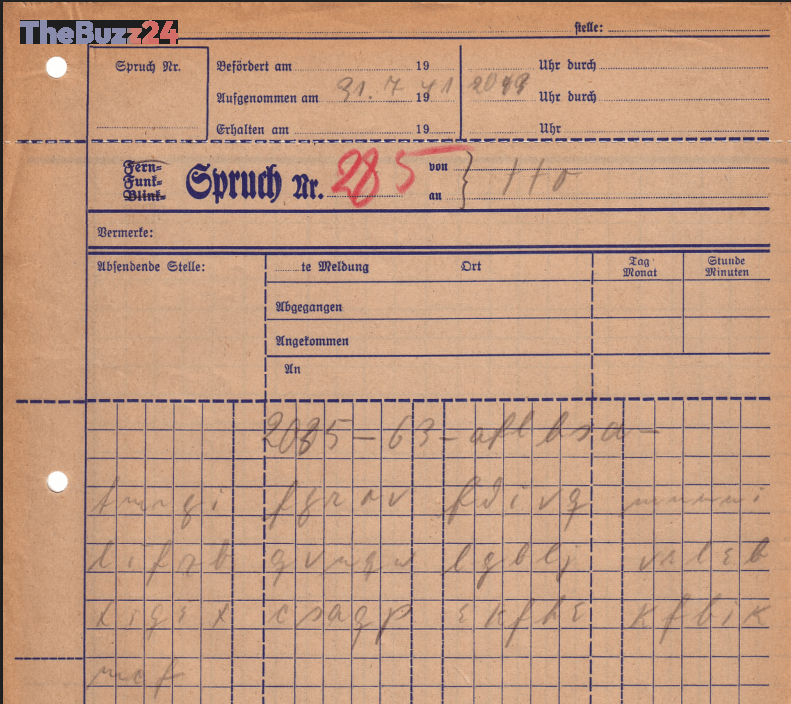
In a remarkable feat that echoes the groundbreaking work of Alan Turing, artificial intelligence models have successfully deciphered two long-standing unsolved messages encoded by Nazi Germany’s Enigma machines. This breakthrough comes decades after Turing and his team developed the Bombe computer, which was instrumental in breaking Enigma ciphers during World War II, though a small number of messages remained elusive due to errors or mistranscriptions.
One of the AI models, named Astra and developed by OpenAI, was tasked by developer Carter Leffen to find and decode an unbroken Enigma message from a database. The AI not only located a message that had baffled researchers since 2005 but also conducted its own archival research, identified contextual clues, and simulated the Enigma machine to recover the original plaintext. Leffen even utilized Astra to create an interactive website detailing the process, showcasing the AI’s comprehensive problem-solving capabilities.
Frode Weierud, a retired electrical engineer and cryptology enthusiast who maintains the Crypto Cellar website, validated Leffen’s solution, expressing astonishment at Astra’s performance. He noted that the AI’s process involved accessing and analyzing archived messages, potentially from private collections or even German government archives, a task that would typically require weeks or months of human effort. Weierud commented that Astra’s behavior resembled that of a highly professional cryptanalyst and researcher.
In a separate instance, cybersecurity executive Jack Willis employed Anthropic’s Claude Opus 5 model to break another unsolved Enigma message. While Willis provided more direct guidance to Claude, the AI successfully used the known signature of a specific officer’s name to decode the message. With only seven Enigma messages and one partially solved message remaining, these AI-driven successes suggest that Turing’s wartime enigma may soon be fully unraveled.
Key Takeaways
- AI models Astra (OpenAI) and Claude Opus 5 (Anthropic) have successfully decoded previously unsolved World War II Enigma messages.
- The AI's ability to perform archival research, simulate complex systems, and identify contextual clues significantly accelerated the cryptanalysis process.
- These breakthroughs highlight the growing capabilities of AI in historical research and complex problem-solving, potentially leading to the resolution of the few remaining Enigma mysteries.
Editor’s Analysis & Impact
The successful application of advanced AI models like OpenAI’s Astra and Anthropic’s Claude Opus 5 to crack historical Enigma codes marks a significant milestone. It demonstrates AI’s burgeoning capacity to not only process vast amounts of data but also to engage in complex reasoning, simulation, and archival research, mirroring and even surpassing human capabilities in specialized fields. This development has profound implications for historical research, cybersecurity, and the broader understanding of AI’s potential in tackling intricate, long-standing challenges. As AI continues to evolve, we can anticipate its application in deciphering other historical mysteries and enhancing national security efforts.
Frequently Asked Questions
Q: What was the Enigma code?
A: The Enigma code was a sophisticated cipher system used by Nazi Germany during World War II to encrypt their communications. Its complexity made it a significant challenge for Allied forces to break.
Q: How did AI models like Astra and Claude Opus 5 break the Enigma codes?
A: These AI models utilized advanced natural language processing and machine learning techniques. They were able to analyze patterns, simulate the Enigma machine's operations, conduct archival research for contextual clues, and even identify specific signatures within the encoded messages to decipher them.
Q: What is the significance of AI cracking these codes today?
A: The significance lies in demonstrating AI's advanced capabilities in complex problem-solving and historical research. It shows that AI can perform tasks that previously required extensive human expertise and time, potentially unlocking other historical secrets and improving modern cryptographic analysis.
AI Disclosure: This article is based on verified data and official reports. Our Team and AI have cross-referenced every financial detail with primary sources to ensure total accuracy.
More from this Category