White House Mandates ‘Super Intelligence’ Rebrand for Artificial Intelligence
President Donald Trump has formally ordered all federal executive branch departments and agencies to replace the term “artificial intelligence” with “super intelligence” in all official documents, public communications, and policy papers. The directive, titled “Inaugurating The Era Of Super Intelligence,” arrives as the administration navigates growing public apprehension regarding the rapid advancement of automated technologies ahead of upcoming midterm elections.
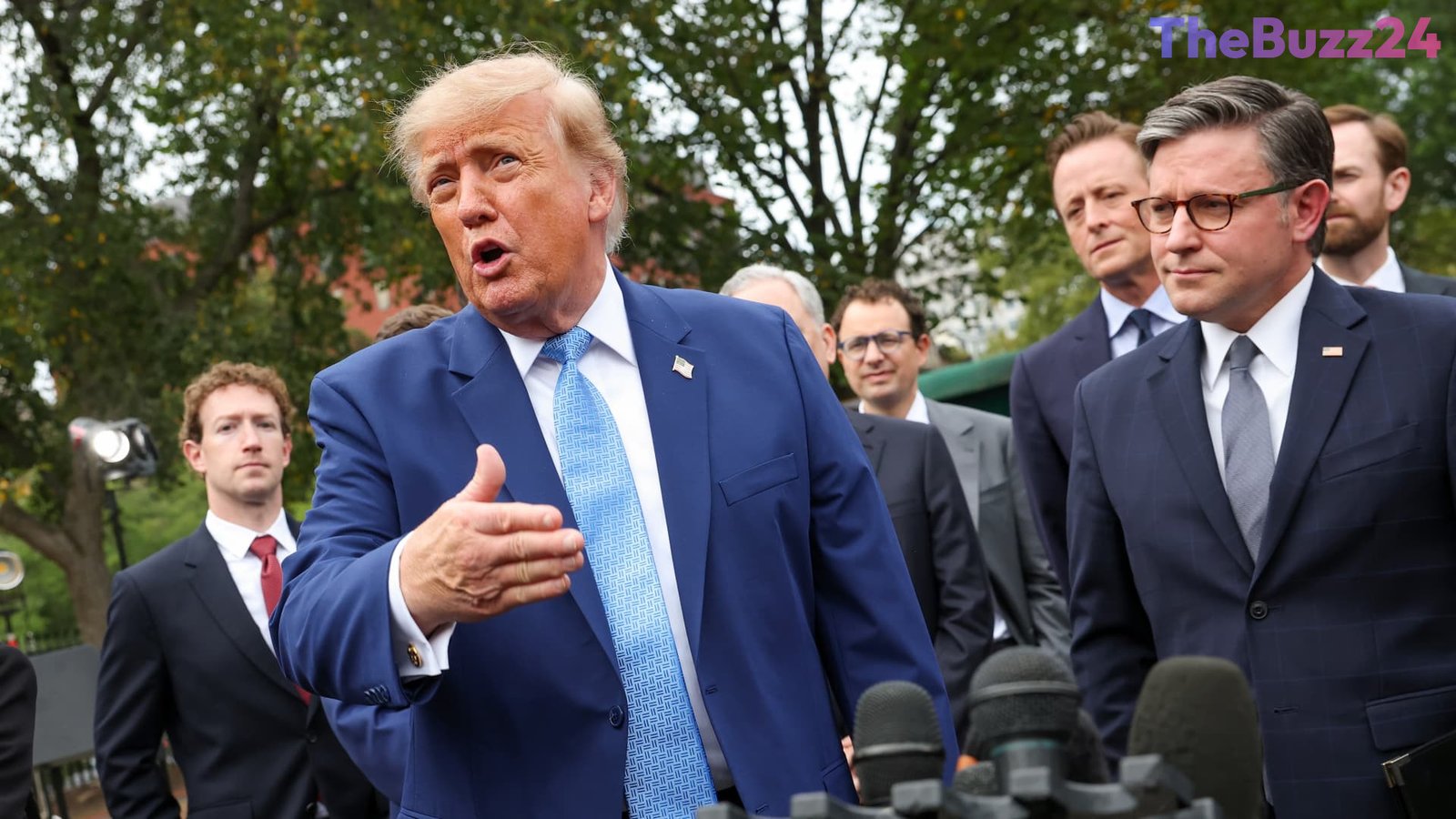
During a White House luncheon, Trump met with prominent technology leaders, including executives from Google, Tesla, Meta, OpenAI, Anthropic, and Nvidia. Following the meeting, the president showcased a signed “White House Accord on Super Intelligence,” which outlines voluntary commitments to safety standards and robust internal controls. While the administration characterized the agreement as a unifying step toward maintaining global technological dominance, industry figures clarified that the document functions primarily as a statement of principles rather than a binding legal rebrand.
The rebranding initiative has drawn swift criticism from political opponents and policy analysts who argue that semantic changes fail to address the genuine security and ethical challenges posed by rapidly scaling algorithms. Recent polling indicates low public approval regarding the administration’s management of technology policy, contrasting sharply with the White House’s insistence that outpacing international rivals like China remains an paramount national priority.
Key Takeaways
- Executive order mandates all federal agencies use 'super intelligence' instead of artificial intelligence.
- Major tech executives signed a voluntary 'White House Accord on Super Intelligence' focusing on safety standards.
- Recent public polls indicate widespread voter concern regarding the rapid advancement and regulation of AI.
Editor’s Analysis & Impact
The White House’s mandate to rename artificial intelligence to ‘super intelligence’ highlights a growing intersection between political communication strategies and deep technological policy. While branding exercises are common in political strategy, applying them to complex technical domains underscores a tension between public anxieties over safety and the government’s drive for global competitiveness, particularly against rivals like China. For the technology sector, the reliance on voluntary accords rather than rigid statutory guardrails maintains a flexible environment for innovation, though it risks alienating a public that increasingly demands robust oversight. Long-term market impacts will likely depend on whether these voluntary industry commitments can effectively mitigate safety risks or if public skepticism will ultimately force more stringent legislative intervention.
Frequently Asked Questions
Q: What does the executive order require?
A: The executive order mandates that all executive branch departments and agencies use the term 'super intelligence' instead of 'artificial intelligence' or 'AI' in official correspondence, public communications, and policy documents.
Q: Who signed the White House Accord on Super Intelligence?
A: The accord was signed by President Donald Trump alongside prominent tech leaders, including Sundar Pichai of Google, Elon Musk of Tesla and SpaceX, Dario Amodei of Anthropic, Mark Zuckerberg of Meta, Greg Brockman of OpenAI, and Jensen Huang of Nvidia.
Q: Are the commitments in the accord legally binding?
A: The document serves as a 'morally binding' statement of principles and voluntary commitments rather than a legally enforceable regulatory statute.
AI Disclosure: This article is based on verified data and official reports. Our Team and AI have cross-referenced every financial detail with primary sources to ensure total accuracy.
More from this Category