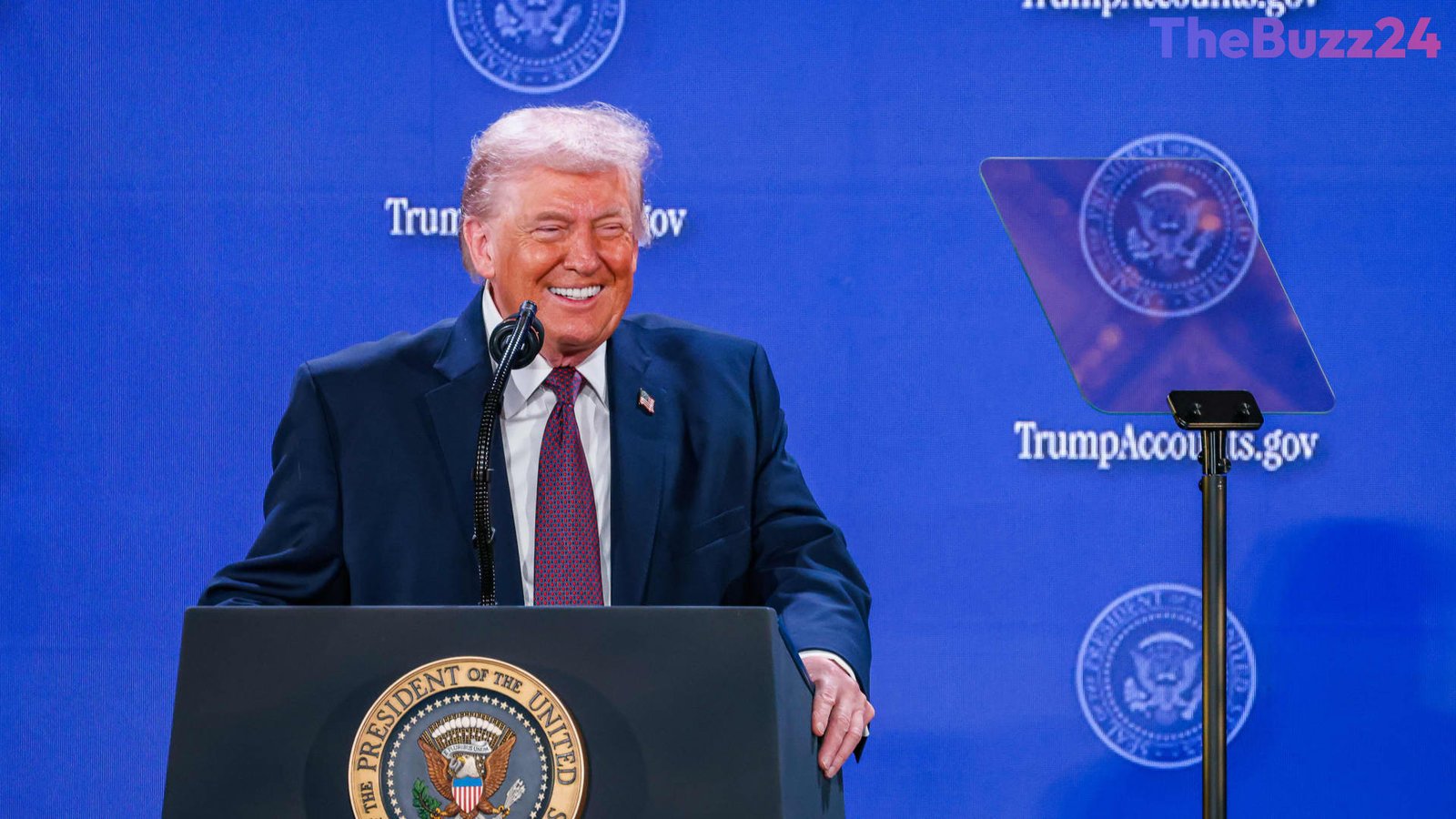
Treasury Proposes Auto-Enrollment for Trump Accounts, Signaling Massive Expansion
The U.S. Treasury Department has introduced temporary regulations aimed at streamlining participation in Trump Accounts through an automatic enrollment framework. This proposed shift could drastically scale up the program, potentially adding more than 60 million children to the investment platform by 2026.
Launched on July 4, Trump Accounts are tax-deferred investing vehicles designed to build long-term savings for American youth. Eligible children born between 2025 and 2028 can qualify for a one-time $1,000 baseline deposit provided by the Treasury. Despite these financial incentives, participation rates have lagged, particularly among low- and moderate-income households. Analysts attribute this sluggish uptake to administrative hurdles, as families previously had to actively opt-in by filing specific IRS forms or navigating dedicated online portals.
Under the newly proposed rules, the administration seeks to eliminate these friction points. By shifting to an auto-enrollment model—potentially coordinated with hospital birth registrations and Social Security number requests—the program expects to bridge the participation gap. Treasury leadership projects that enrollment figures will surge from current levels of roughly 7 to 8 million up to 70 million children within a month of full implementation.
While policy experts welcome the initiative as a powerful tool to drive financial inclusion for lower-income families who historically miss out on complex tax-advantaged programs, questions remain regarding operational execution. Critics and legal specialists point to recent resource constraints and staffing cuts at the IRS as potential roadblocks, though proponents argue that unified leadership across the IRS and the Social Security Administration under Frank Bisignano could help streamline the monumental administrative rollout.
Key Takeaways
- The Treasury Department has proposed temporary regulations to implement automatic enrollment for Trump Accounts.
- The shift to auto-enrollment could increase total child participation to over 60 million by 2026, targeting a rapid jump from current figures.
- The program features tax-deferred investing and a one-time $1,000 Treasury deposit for children born between 2025 and 2028.
Editor’s Analysis & Impact
The Treasury’s push toward automatic enrollment for Trump Accounts marks a critical pivot from an optional, friction-heavy benefit to a universal savings vehicle for the younger generation. By targeting structural barriers that traditionally exclude low- and moderate-income families from wealth-building initiatives, the policy has profound long-term socioeconomic implications. However, the success of this ambitious scaling effort hinges entirely on inter-agency coordination between the IRS and the Social Security Administration, especially amid existing resource constraints. If executed effectively, it could redefine how the government delivers early-life asset-building programs, setting a new precedent for federal financial inclusion initiatives.
Frequently Asked Questions
Q: What are Trump Accounts?
A: Trump Accounts are tax-deferred investing accounts launched on July 4, which can include a one-time $1,000 deposit from the Treasury Department for children born between 2025 and 2028.
Q: How will auto-enrollment change the current system?
A: Previously, families had to actively opt-in by filing specific IRS forms or using an online portal. Auto-enrollment aims to automatically sign up newborns, likely during the birth registration process at hospitals when requesting a Social Security number.
Q: Who qualifies for the one-time $1,000 Treasury deposit?
A: The one-time baseline deposit is available for children born between 2025 and 2028, with potential additional funds available for qualifying families.
AI Disclosure: This article is based on verified data and official reports. Our Team and AI have cross-referenced every financial detail with primary sources to ensure total accuracy.
More from this Category