Seoul Cautions on $200 Billion U.S. Energy Investment Hailed by Trump
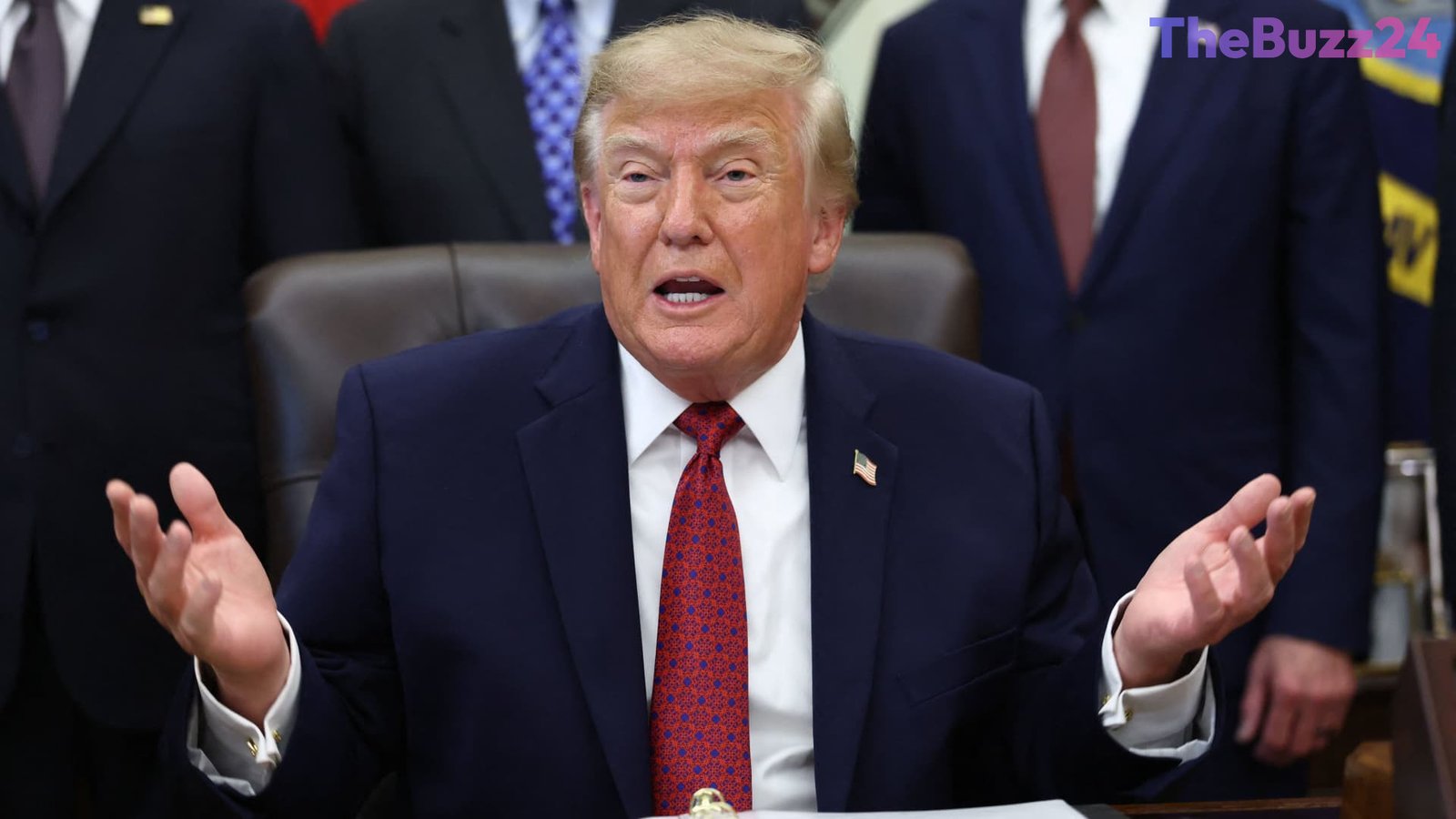
Former U.S. President Donald Trump recently heralded a massive $200 billion investment from South Korea into American energy infrastructure, calling it one of the largest such commitments in U.S. history. However, South Korean President Lee Jae Myung quickly moved to clarify that significant portions of this ambitious plan, particularly involvement in the long-discussed Alaska LNG project, remain subject to rigorous commercial viability assessments and domestic legal frameworks.
Trump, in a social media post, had valued the Alaska LNG project alone at $50 billion and suggested the total investment would transform America “for generations,” creating “tens of thousands of American jobs” through “huge construction projects.” The comprehensive investment package outlined includes substantial allocations for nuclear power plants, a natural gas power facility in Texas, and the potential for the Alaska LNG project.
President Lee Jae Myung reiterated that while discussions are ongoing, participation in the Alaska LNG project is contingent on its financial feasibility and adherence to legal requirements. He also noted that investments in nuclear power facilities would necessitate individual plant-by-plant commercial assessments. The joint statement preceding Trump’s announcement had indeed emphasized “commercial reasonableness” as a prerequisite for project involvement. The Alaska LNG project, which aims to transport natural gas roughly 1,300 kilometers from Alaska’s North Slope for liquefaction and export, has historically faced economic hurdles due to its substantial upfront capital requirements, with South Korean Industry Minister Kim Jung-kwan previously labeling it “high-risk.”
Beyond Alaska LNG, the investment package earmarks $22.3 billion for a 6,472-megawatt natural gas power facility in Encinal, Texas, designed to supply electricity to co-located data centers. This project, led by developer Related Companies and U.S. power company NextEra Energy, is slated for phased commercial operations starting in 2029. An additional $120 billion is allocated for eight large-scale nuclear reactors across the U.S., with $100 billion for construction and $20 billion for contingency. This nuclear agreement involves both governments, Westinghouse Electric, Korea Electric Power Corp., and Korea Hydro & Nuclear Power, and includes potential Korean minority investment in Westinghouse. Both nations expressed intentions to expand Korean companies’ participation in these projects, covering equipment supply, engineering, construction, and long-term operations, aiming to boost American manufacturing and employment.
Key Takeaways
- Former President Trump announced a potential $200 billion South Korean investment in U.S. energy infrastructure, including nuclear, natural gas, and the Alaska LNG project.
- South Korean President Lee Jae Myung clarified that involvement in key projects, especially Alaska LNG and nuclear plants, is strictly dependent on commercial viability and legal compliance.
- The investment package includes a $22.3 billion natural gas facility in Texas and $120 billion for eight new nuclear reactors, with Korean companies expected to play a significant role.
Editor’s Analysis & Impact
This news highlights the global push for energy security and infrastructure development, particularly in natural gas and nuclear power. South Korea’s potential investment could significantly boost the U.S. energy sector, creating jobs and enhancing energy independence. However, the emphasis on “commercial viability” from Seoul underscores the cautious approach investors take towards large-scale, capital-intensive projects like Alaska LNG, which has faced economic challenges. The realization of these investments hinges on detailed commercial negotiations and feasibility studies. While the Texas natural gas facility seems more concrete, the Alaska LNG project’s future remains uncertain. The nuclear power component signals a renewed interest in this energy source, potentially driven by climate goals and energy independence. This initiative strengthens economic ties between the U.S. and South Korea, positioning South Korean firms as key partners in American infrastructure development. It also reflects a broader trend of international collaboration in addressing energy demands and transitioning towards more diverse energy portfolios, albeit with a pragmatic focus on financial returns.
Frequently Asked Questions
Q: What is the total value of the potential South Korean investment in U.S. energy infrastructure?
A: The total potential investment announced by former President Trump is up to $200 billion.
Q: Which specific energy projects are included in this investment plan?
A: The plan includes investments in nuclear power plants, a natural gas power facility in Texas, and potentially the long-planned Alaska LNG project.
Q: Why is South Korea emphasizing "commercial viability" for these projects?
A: South Korea's President Lee Jae Myung stressed commercial viability and legal compliance to ensure that the investments are financially sound and meet domestic regulatory requirements, especially for high-risk, capital-intensive projects like the Alaska LNG initiative.
AI Disclosure: This article is based on verified data and official reports. Our Team and AI have cross-referenced every financial detail with primary sources to ensure total accuracy.
More from this Category