Former SpaceX Engineers Secure $100M to Revolutionize Freight Transport with Autonomous Rail Tech
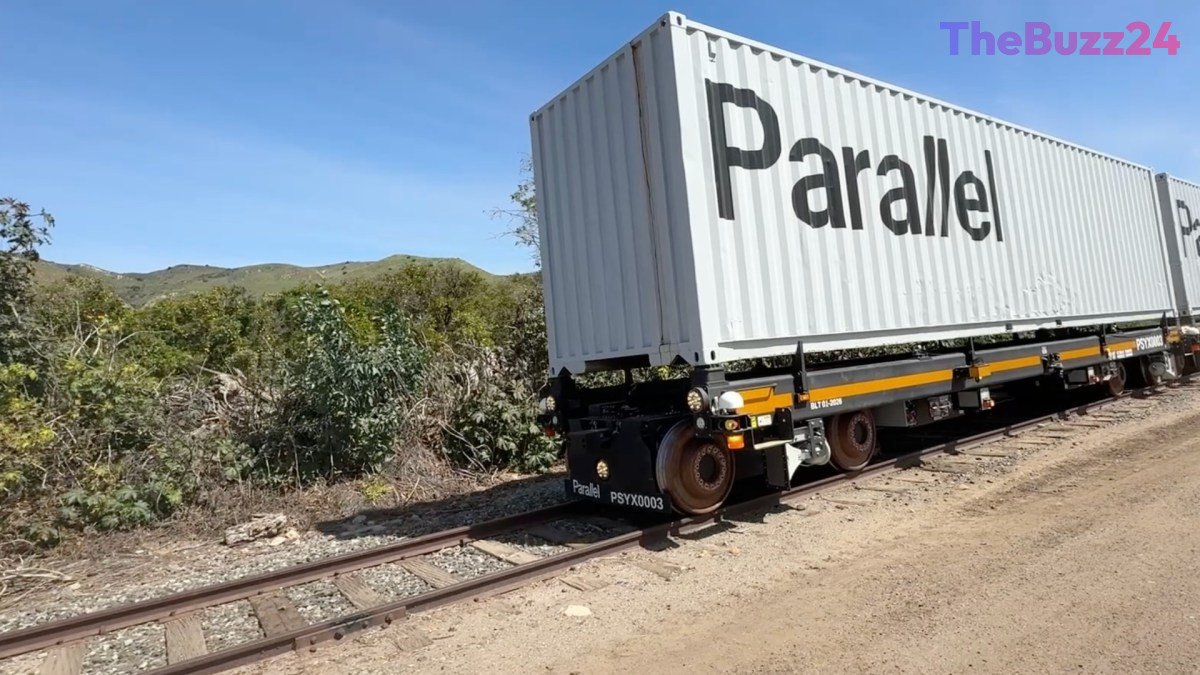
A group of former aerospace engineers aiming to transform the freight transport sector has secured $100 million in a Series C financing round. The startup, which was founded by alumni from the rocket manufacturer who previously designed advanced avionics, is developing autonomous, battery-powered rail vehicles designed to reclaim short-haul shipping routes currently dominated by the trucking industry.
The newly acquired capital will be directed toward scaling manufacturing operations for the company’s third-generation autonomous rail vehicle, known as the Panther, and accelerating its commercial deployment. The funding round was led by AVP, with contributions from a diverse group of investors including Hillspire, Agility Global, Cobalt Capital, Anthos Capital, Congruent Ventures, Riot Ventures, and Collaborative Fund.
For decades, traditional rail operators have focused on maximizing efficiency through increasingly massive, long-distance trains running on rigid schedules. This strategy inadvertently led railroads to abandon short-haul routes under 500 miles, leaving a massive gap that trucking companies quickly filled. However, soaring diesel costs and mounting highway congestion—particularly around major shipping hubs like the Port of Savannah—have exposed the vulnerabilities of relying heavily on long-distance trucking for regional deliveries.
The startup’s innovative solution features battery-powered rail vehicles capable of traveling up to 500 miles autonomously without an operator. Unlike conventional freight cars that rely on heavy mechanical couplers, these autonomous units can travel independently or form flexible, uncoupled platoons. This unique design enables individual vehicles to seamlessly separate upon arriving at a rail yard without requiring manual intervention, significantly reducing terminal bottlenecks and streamlining logistics.
Furthermore, the technology promises substantial environmental and urban planning benefits. By shifting freight from crowded highways back to rail networks, the system helps alleviate roadway traffic and eliminates direct carbon emissions. The startup has already achieved significant regulatory milestones, having secured approval from the Federal Railroad Administration to test its safety controls and operating protocols across a 160-mile stretch of track near the Port of Savannah in preparation for upcoming commercial payloads.
Key Takeaways
- Parallel Systems secured $100 million in a Series C funding round led by AVP to scale production of its autonomous freight vehicles.
- The company was founded by former SpaceX engineers aiming to recapture the lucrative short-haul freight market from traditional trucking.
- The Panther rail vehicle operates independently or in uncoupled platoons, offering a zero-emission, battery-powered alternative to diesel trucks.
Editor’s Analysis & Impact
The infusion of $100 million into autonomous rail technology highlights a growing investor appetite for disruptive logistics solutions that address both supply chain inefficiencies and environmental concerns. By targeting the sub-500-mile freight market—a notoriously difficult and costly segment for traditional railroad operators—this initiative bridges a critical gap between long-haul rail and regional trucking. If successfully scaled, autonomous rail platoons could drastically reduce highway congestion, lower carbon footprints, and offer trucking companies a reliable alternative to mitigate labor shortages and rising fuel costs. The broader implication is a potential renaissance for regional rail networks, proving that aerospace-derived innovation can successfully modernize legacy industrial sectors.
Frequently Asked Questions
Q: What is the primary function of Parallel Systems' Panther vehicle?
A: The Panther is an autonomous, battery-powered rail vehicle designed to transport freight over distances up to 500 miles without a human operator, specifically targeting short-haul shipping routes.
Q: How does the autonomous rail technology differ from traditional trains?
A: Unlike traditional trains that use heavy mechanical couplers and operate as massive, rigid units, these vehicles can travel independently or in flexible platoons that easily separate at rail yards without manual intervention.
Q: Who funded the recent $100 million investment round?
A: The Series C funding round was led by AVP, with participation from investors including Hillspire, Agility Global, Cobalt Capital, Anthos Capital, Congruent Ventures, Riot Ventures, and Collaborative Fund.
AI Disclosure: This article is based on verified data and official reports. Our Team and AI have cross-referenced every financial detail with primary sources to ensure total accuracy.
More from this Category