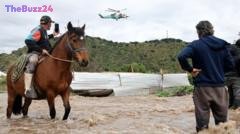
Chilean Floods: Residents Rescued as Record Rains Submerge Talagante
Central Chile is grappling with severe flooding after torrential rains caused the Mapocho River to overflow its banks, inundating significant areas of Talagante, a city located approximately 35 kilometers southwest of the capital, Santiago. Emergency services have been deployed, with police utilizing helicopters to airlift residents and their pets to safety from their homes, which were unexpectedly swamped by the rapidly rising waters.
The region has experienced an unprecedented amount of rainfall, with Santiago recording 74mm in the first seven days of October. Meteorologists have confirmed this as the wettest October in 76 years for the area. This extreme weather event is being linked to the unusually potent El Niño climate phenomenon, which experts predict will continue to bring severe weather, including heavy rains and strong winds, to the southern hemisphere’s spring season.
Tragically, the severe weather has not been without loss. Officials have reported the discovery of one deceased individual in a flooded underpass in San Bernardo, a city south of Santiago, though the exact cause of death is still under investigation. In Talagante, the situation was dire as dirt roads transformed into fast-flowing rivers, catching many residents off guard. Unlike previous storm events, this community had not been evacuated prior to the heavy downpours.
Climate experts are issuing broader warnings about the long-term impacts of the current El Niño, which is expected to cause significant global weather pattern disruptions. For central Chile, the forecast indicates a continuation of above-average rainfall, suggesting that further flooding and related challenges may lie ahead.
Key Takeaways
- Record rainfall in central Chile has led to severe flooding, particularly in Talagante.
- Helicopter rescues were conducted to save residents and pets trapped by rising waters.
- The extreme weather is attributed to a strong El Niño phenomenon, with experts warning of continued unusual weather patterns.
Editor’s Analysis & Impact
The recent flooding in central Chile underscores the increasing vulnerability of urban and riverside communities to extreme weather events, exacerbated by climate change and phenomena like El Niño. The record rainfall highlights the need for improved infrastructure and proactive disaster preparedness, especially in areas historically prone to riverine flooding. The economic impact on Talagante and surrounding regions, including potential damage to property and agriculture, will likely be significant. Looking ahead, the forecast for continued above-average rainfall suggests that authorities must prioritize long-term adaptation strategies and early warning systems to mitigate future risks associated with intensified weather patterns.
Frequently Asked Questions
Q: What caused the flooding in central Chile?
A: The flooding was caused by torrential rains that led the Mapocho River to burst its banks. This event is linked to an unusually strong El Niño climate phenomenon, which is bringing wetter weather to the region.
Q: What is El Niño and how does it affect weather?
A: El Niño is a climate pattern characterized by the unusual warming of surface waters in the eastern tropical Pacific Ocean. It can significantly alter weather patterns globally, leading to intensified droughts in some regions and increased rainfall and flooding in others, as seen in Chile.
Q: Have there been any fatalities reported due to the flooding?
A: Yes, officials have reported one death in San Bernardo, south of Santiago, found in a flooded underpass. The cause of death is still being confirmed.
AI Disclosure: This article is based on verified data and official reports. Our Team and AI have cross-referenced every financial detail with primary sources to ensure total accuracy.
More from this Category