Fed Rate Outlook, DeFi Lending Dynamics, and Ethereum’s Latest Glamsterdam Upgrade
As financial markets look ahead to the Federal Reserve’s upcoming monetary policy decisions, prediction platforms overwhelmingly indicate an expectation that interest rates will remain unchanged. Data from prominent prediction markets shows an 84 percent probability that the central bank will hold rates steady, a sharp pivot from earlier tightening expectations following stubborn inflation prints. Trading volumes surrounding these macroeconomic decisions have experienced substantial growth over recent months, underscoring the growing reliance on decentralized forecasting tools to gauge economic sentiment.
Simultaneously, the decentralized finance (DeFi) sector continues to experience shifting dynamics in stablecoin borrowing and lending. Prominent liquidity protocols such as Aave and Morpho exhibit generally aligned borrowing costs across major digital assets, though minor yield spreads persist. Notably, USDC displays the most pronounced variance between the two platforms, reflecting nuanced supply and demand conditions across distinct on-chain liquidity pools. Outflows of major stablecoins from centralized exchanges to self-custody and on-chain protocols suggest market participants are actively deploying capital into yield-generating avenues rather than positioning for immediate spot accumulation.
On the technological front, Ethereum has taken a significant step forward with the deployment of its Glamsterdam upgrade on the Sepolia testnet. This major network overhaul introduces critical structural improvements, including Enshrined Proposer-Builder Separation (ePBS) and Block Level Access Lists. By embedding block-building auctions directly into the consensus layer, the network aims to mitigate centralization risks historically associated with third-party relayers. Furthermore, the integration of access lists lays the groundwork for parallel transaction execution, complemented by a substantial increase in testnet block gas limits designed to enhance overall throughput and scalability.
Key Takeaways
- Prediction markets currently price in an 84% likelihood that the Federal Reserve will maintain current interest rates at its upcoming meeting.
- Decentralized finance lending protocols like Aave and Morpho show closely aligned borrowing costs, with minor spreads observed across stablecoin pools.
- Ethereum's Glamsterdam testnet upgrade introduces enshrined proposer-builder separation and prepares the network for parallel transaction execution.
Editor’s Analysis & Impact
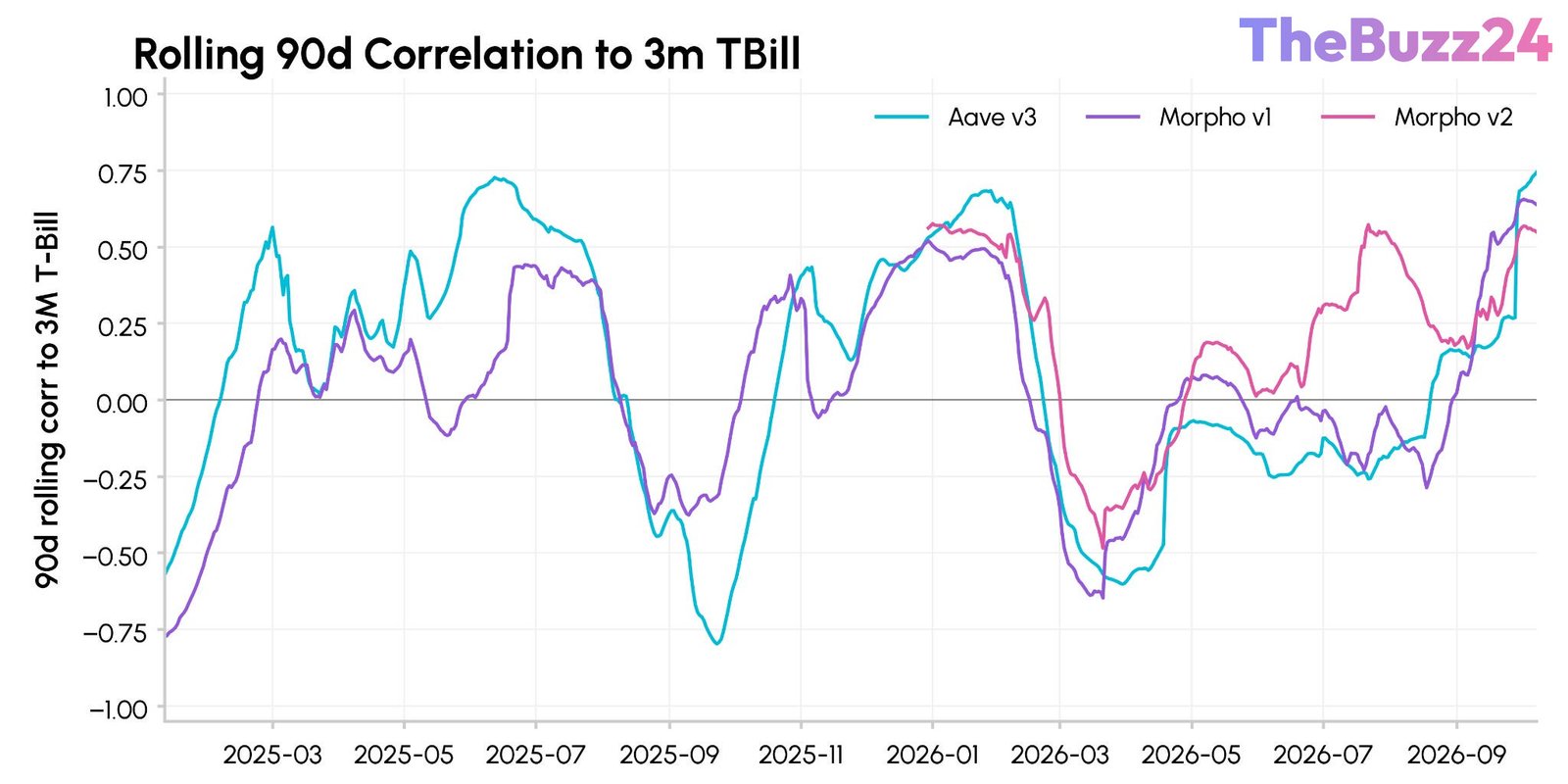
The intersection of macroeconomic monetary policy and blockchain infrastructure highlights a maturing digital asset ecosystem. While traditional interest rates continue to influence risk sentiment and capital allocation, the decoupling of short-term DeFi yields from traditional fixed-income instruments underscores the unique microeconomic forces driving decentralized protocols. Meanwhile, protocol-level upgrades like Ethereum’s Glamsterdam address fundamental bottlenecks in scalability and decentralization. By tackling proposer centralization and introducing pathways for parallel execution, these technical milestones are vital for accommodating institutional-grade volume and expanding utility across decentralized financial applications moving forward.
Frequently Asked Questions
Q: What are prediction markets signaling for the Federal Reserve's interest rate decision?
A: Prediction markets currently indicate an 84% probability that the Federal Reserve will hold interest rates steady at its upcoming meeting.
Q: How do borrowing rates compare between Aave and Morpho?
A: Borrowing rates for major assets like USDC, USDT, and WETH are generally similar across both protocols, though minor spreads exist, such as a 91 basis point difference for USDC.
Q: What are the main objectives of Ethereum's Glamsterdam upgrade?
A: The Glamsterdam upgrade aims to reduce centralization risks through Enshrined Proposer-Builder Separation (ePBS) and enable parallel transaction execution using Block Level Access Lists.
AI Disclosure: This article is based on verified data and official reports. Our Team and AI have cross-referenced every financial detail with primary sources to ensure total accuracy.
More from this Category