Cosmic Symphony: Astronomers Decode the Origins of the ‘Treble Clef’ Galaxy Cluster
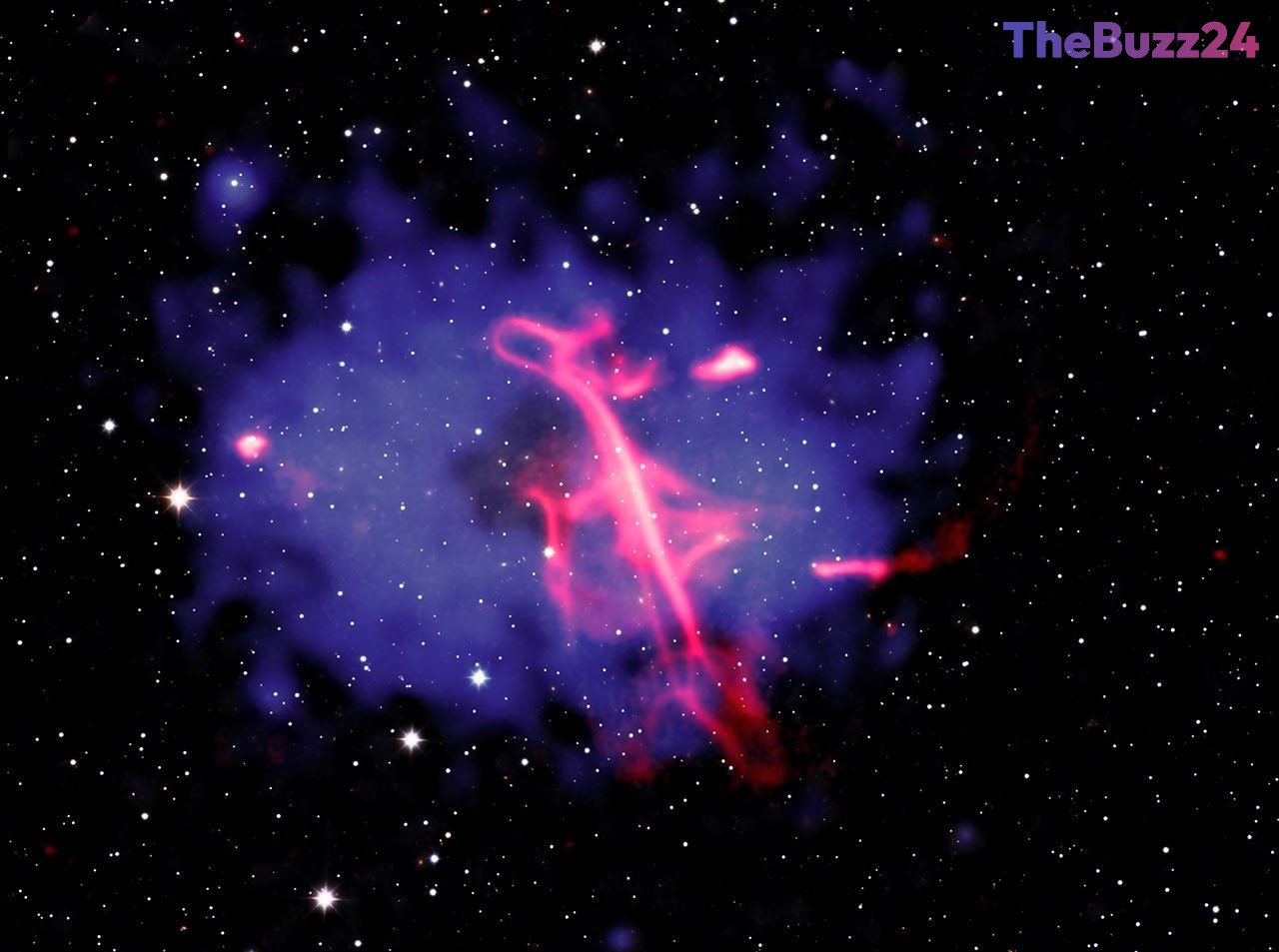
Using advanced telemetry from NASA’s Chandra X-ray Observatory alongside other powerful instruments, astronomers have finally unraveled the mystery behind a striking cosmic formation resembling a musical treble clef. Located deep behind the dense stellar fields of the Milky Way, this peculiar structure has long eluded clear observation due to intervening interstellar gas and dust that block standard optical views from Earth.
To peer through this galactic haze, researchers combined multi-wavelength data, utilizing X-ray insights from Chandra and the eROSITA telescope, radio observations from Europe’s LOFAR array, and infrared imaging. The composite data revealed that the treble clef formation is embedded within a massive galaxy cluster environment that is actively undergoing a collision between two separate clusters. This monumental impact spans millions of light-years and serves as the primary catalyst for the unusual radio wave patterns.
Scientific analysis suggests the unique musical symbol shape was forged through a fascinating two-stage cosmic sequence. Initially, an ancient eruption from a central supermassive black hole launched high-energy particles and magnetic fields far out into space, creating bright radio emissions that eventually dimmed as they aged. Subsequently, the violent collision of the twin galaxy clusters compressed and reenergized these lingering particle clouds, causing them to flare up brilliantly once again.
While the resemblance to the musical notation is ultimately a striking example of celestial pareidolia, the underlying astrophysics provides vital clues about the mechanics of galaxy cluster mergers and black hole feedback loops. By applying innovative residual imaging techniques to isolate non-symmetrical gas distributions, the research team was able to reconstruct the collision vector, offering a clearer picture of how massive structures evolve and interact in the deep universe.
Key Takeaways
- Astronomers utilized NASA's Chandra X-ray Observatory and other telescopes to decode the 'Treble Clef' radio wave structure.
- The formation is the result of a two-stage process involving an ancient supermassive black hole outburst and a subsequent galaxy cluster collision.
- Intervening dust from the Milky Way historically made the structure difficult to study until multi-wavelength composite imaging was applied.
Editor’s Analysis & Impact
The successful decoding of the ‘Treble Clef’ galaxy cluster highlights the immense value of multi-wavelength astronomy in overcoming observational barriers like the Milky Way’s galactic plane. By bridging X-ray, radio, and infrared data, researchers can extract high-precision dynamics from complex cosmic collisions that were previously hidden from view. This discovery not only refines our understanding of supermassive black hole feedback mechanisms but also demonstrates how advanced data processing, such as residual gas mapping, can extract subtle structural details from older telescope archives. As next-generation observatories come online, similar cross-spectral analyses will likely yield groundbreaking insights into how massive cosmic structures evolve, collide, and shape the large-scale architecture of the universe.
Frequently Asked Questions
Q: What caused the 'Treble Clef' formation in space?
A: The formation was created by a two-stage process: an initial outburst of particles from a supermassive black hole followed by a massive collision between two galaxy clusters that reenergized those particles.
Q: Why was the 'Treble Clef' structure difficult for astronomers to study?
A: It lies almost directly behind the plane of the Milky Way, meaning that dense clouds of stars, gas, and dust from our home galaxy heavily block the view from Earth.
Q: Is the treble clef shape physically related to music?
A: No, the resemblance to a treble clef is a coincidence known as pareidolia, where observers perceive familiar shapes in random or natural data.
AI Disclosure: This article is based on verified data and official reports. Our Team and AI have cross-referenced every financial detail with primary sources to ensure total accuracy.
More from this Category