Azerbaijan’s School Hijab Ban Ignites Protests and Diplomatic Spat
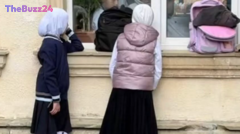
A strict enforcement of new uniform regulations in Azerbaijan has triggered rare public demonstrations and a diplomatic dispute with key ally Turkey. The policy, implemented by the Ministry of Education, prohibits female students from wearing Islamic headscarves in state schools, leading to scenes of young girls being turned away at school entrances. Videos circulating on social media depict defiant students questioning the ban, asking why they must abandon their religious attire to receive an education.
Protests have erupted in the capital, Baku, and several southern regions, marking a significant display of dissent in a nation where public opposition is seldom tolerated. Azerbaijan, a secular state with a population of over 10 million, has historically maintained a strong separation of religion and state, a principle President Ilham Aliyev’s administration rigorously upholds. The new rules, officially banning clothing that contradicts secularism in education, were extended to teachers earlier this month. Activists attempting to support the affected students have also faced repercussions, with reports of detentions and the blocking of online platforms offering alternative education.
The controversy has strained relations with Turkey, a close strategic partner and cultural ally. Turkish officials, including presidential advisor Oktay Saral, have publicly condemned the restrictions as “unacceptable” and urged Azerbaijan to reconsider. These statements have drawn a sharp response from Azerbaijan’s ruling party, which accused Turkish officials of an “information campaign” and warned against interference in internal affairs. The dispute highlights the complex geopolitical dynamics Azerbaijan navigates, balancing its relationships with Turkey, Iran, and Israel amidst regional tensions.
Key Takeaways
- Azerbaijan has implemented new school uniform rules banning the hijab, leading to protests and student expulsions.
- The ban has caused a diplomatic rift with Turkey, a close ally, whose officials have criticized the policy.
- The government defends the rules as upholding secularism, while critics and protesters argue it infringes on religious freedom.
Editor’s Analysis & Impact
Azerbaijan’s stringent enforcement of secular education policies, particularly the recent hijab ban, underscores a persistent tension between state ideology and religious expression. This move not only risks alienating a segment of its population but also complicates its foreign relations, especially with Turkey, a nation that champions religious identity. The government’s firm stance, coupled with crackdowns on dissent and online platforms, suggests a broader strategy to consolidate state control and potentially counter perceived external religious influences, possibly from Iran. The international reaction, particularly from Turkey, highlights the delicate balance Azerbaijan must strike between its secular governance model and its cultural and political alliances.
Frequently Asked Questions
Q: Why has Azerbaijan banned headscarves in schools?
A: Azerbaijan's Ministry of Education has introduced new uniform rules that prohibit clothing contradicting the principle of secularism in education. The government asserts this is to maintain a secular environment in state schools.
Q: How has Turkey reacted to the ban?
A: Turkey, a close ally of Azerbaijan, has expressed strong disapproval of the headscarf ban. Presidential advisor Oktay Saral called the restrictions "unacceptable" and urged Azerbaijan to reverse the decision, leading to a diplomatic exchange where Azerbaijan accused Turkey of interference.
Q: Are protests common in Azerbaijan?
A: Protests are rare in Azerbaijan, a country where dissent is often suppressed. The current demonstrations against the hijab ban are therefore notable and indicate significant public concern among affected communities.
AI Disclosure: This article is based on verified data and official reports. Our Team and AI have cross-referenced every financial detail with primary sources to ensure total accuracy.
More from this Category