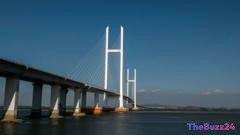
China and North Korea Inaugurate Long-Delayed Border Bridge, Signaling Renewed Ties
A crucial road bridge connecting China and North Korea, after a significant 12-year delay, has officially opened, marking a notable development in the relationship between the two neighboring nations. The New Yalu River Bridge, spanning approximately 3 kilometers (1.9 miles) from Dandong in China to Sinuiju in North Korea, is poised to become the primary land artery for bilateral trade.
The project, initially planned for completion in 2014, faced prolonged postponements. These delays were attributed to North Korea’s halting of its road and customs infrastructure development, coinciding with a period of strained relations between Pyongyang and Beijing. The bridge’s inauguration was marked by a video address from Chinese Premier Li Qiang, who described it as a “new landmark symbolising the traditional friendship between China and North Korea” and heralded the opening of a “new chapter” in their bilateral engagement.
This new infrastructure serves as an alternative to the historic Sino-Korean Friendship Bridge, which has been in operation since the 1940s. Chinese officials have emphasized the bridge’s role in enhancing connectivity, stating it will “further facilitate trade and people-to-people exchanges.” Bilateral trade between China and North Korea saw a recovery last year, reaching $2.7 billion, largely driven by Chinese exports to the isolated nation. However, experts suggest that the ongoing UN sanctions against North Korea will likely temper any immediate, dramatic surge in trade, with growth expected to be more gradual.
The opening of the bridge occurs amidst a complex geopolitical landscape. While China remains North Korea’s most significant trading partner and a key ally, their relationship has experienced periods of tension, particularly concerning Pyongyang’s nuclear ambitions. Recent years have seen North Korea deepen ties with Russia, especially in the context of the Ukraine war, prompting speculation that Beijing is seeking to reassert its influence. This renewed focus on bilateral infrastructure and connectivity, including the resumption of direct flights and passenger train services, underscores a strategic effort by China to strengthen its traditional alliance with North Korea.
Key Takeaways
- A new 3km road bridge connecting China and North Korea has opened after a 12-year delay, intended to be the main land trade route.
- The bridge's opening signifies an improvement in bilateral relations, with Chinese officials highlighting it as a symbol of friendship and a new chapter in ties.
- While trade is expected to increase, UN sanctions and North Korea's concerns about Chinese market influence will likely lead to gradual growth rather than a sudden surge.
Editor’s Analysis & Impact
The inauguration of the New Yalu River Bridge is a significant development, signaling a strategic recalibration of China’s relationship with North Korea. After years of strained ties due to Pyongyang’s nuclear program, Beijing appears to be actively reinforcing its traditional alliance, possibly in response to North Korea’s growing proximity to Russia. The bridge’s opening, coupled with recent diplomatic engagements and resumption of transport links, suggests China’s intent to bolster its economic and political leverage. However, the persistent international sanctions regime and North Korea’s own cautious approach to foreign economic influence will likely shape the pace and scale of trade expansion, making this a nuanced geopolitical play rather than an immediate economic boom.
Frequently Asked Questions
Q: Why was the New Yalu River Bridge delayed for so long?
A: The bridge's opening was postponed for 12 years primarily because North Korea halted the construction of its connecting roads and customs facilities. This occurred during a period when relations between Pyongyang and Beijing were strained, partly due to North Korea's nuclear weapons program.
Q: What is the significance of this new bridge for China-North Korea trade?
A: The New Yalu River Bridge is set to become the main land route for trade between China and North Korea. It offers an alternative to the older Sino-Korean Friendship Bridge and is expected to facilitate increased connectivity, trade, and people-to-people exchanges, although the growth is anticipated to be gradual due to existing sanctions.
Q: How does this bridge opening relate to North Korea's alliances?
A: The opening of the bridge is seen by some observers as an effort by China to reassert its influence over North Korea, especially as Pyongyang has deepened ties with Russia. It suggests a strategic move by Beijing to strengthen its traditional alliance and diplomatic standing with its neighbor amidst shifting regional dynamics.
AI Disclosure: This article is based on verified data and official reports. Our Team and AI have cross-referenced every financial detail with primary sources to ensure total accuracy.
More from this Category